Sofia to Istanbul is 290 miles (467 km), a flight of about 1 hour 5 minutes.
While the departure from Sofia favors the right side with mountain views, the approach into Istanbul on the left side offers a much more distinctive payoff — the Black Sea coast, Bosphorus strait, and Istanbul's iconic skyline — making it the stronger side over the full flight.
Flight Path
Thracian plain of southern Bulgaria and Turkish Thrace, with the Rhodope Mountains visible to the south along the route
Great circle distance and headings ›Phase by phase
Takeoff from SOF
RIGHTDeparting Sofia, the initial climb and turn give right-side passengers a view of Vitosha Mountain looming just south of the city, followed by glimpses of the Rila and Rhodope ranges as the aircraft turns onto its southeastern course toward Turkey.
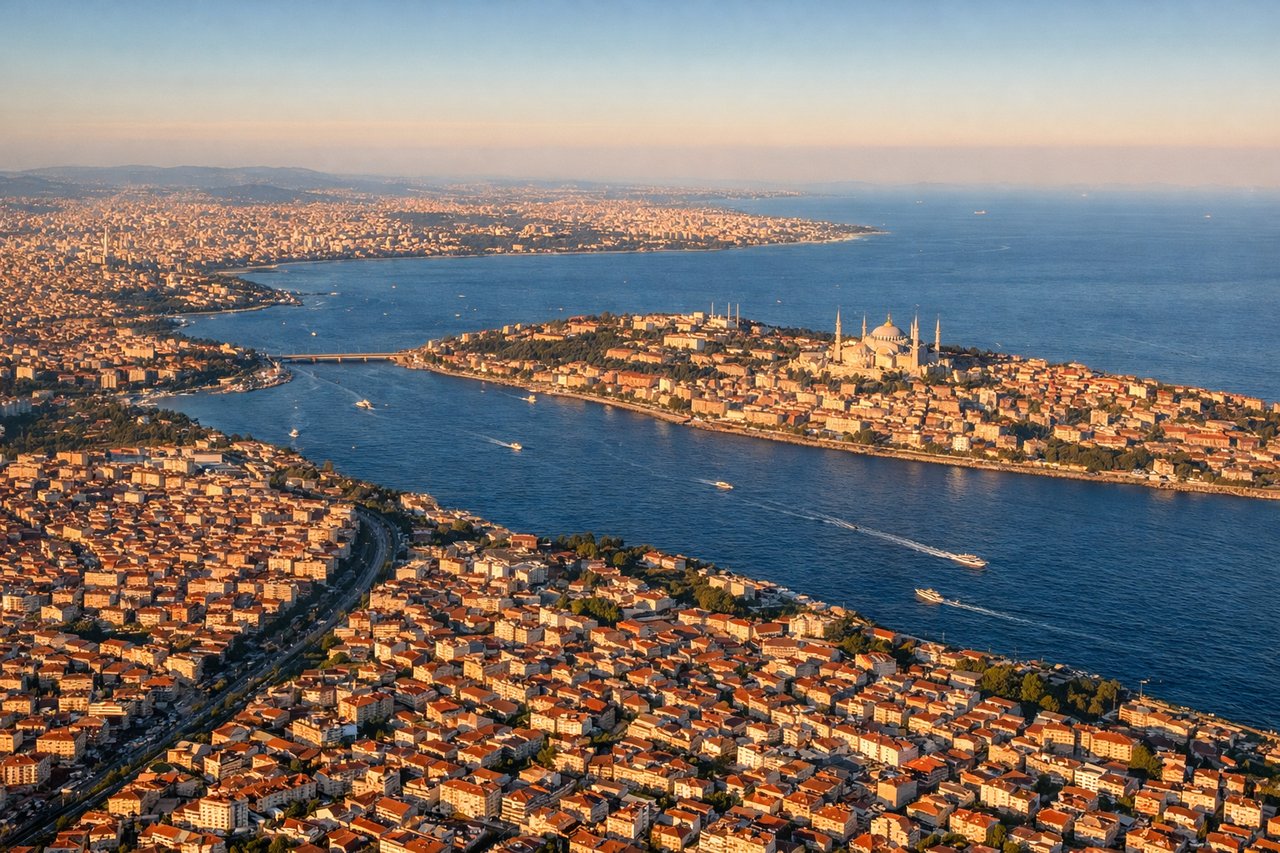
Landing at IST
LEFTOn approach into Istanbul Airport, arrivals from the north often descend southbound over the Black Sea coastline before lining up on the runway, giving left-side passengers a sweeping view of the Bosphorus strait and Istanbul's dense skyline off to the east.
Landmarks on this routeAll landmarks →
Will your flight be in sunlight?
Pick a date and time in the Sun Map to watch the sun move across your whole flight.
About This Route
Which side of the plane should I sit on flying from Sofia (SOF) to İstanbul Airport (IST)?
Sit on the Left side of the plane for the best views on flights from Sofia to Istanbul. While the departure from Sofia favors the right side with mountain views, the approach into Istanbul on the left side offers a much more distinctive payoff — the Black Sea coast, Bosphorus strait, and Istanbul's iconic skyline — making it the stronger side over the full flight.
What can I see during takeoff from Sofia in Sofia?
During takeoff from Sofia (SOF), sit on the Right side for the best views. Departing Sofia, the initial climb and turn give right-side passengers a view of Vitosha Mountain looming just south of the city, followed by glimpses of the Rila and Rhodope ranges as the aircraft turns onto its southeastern course toward Turkey. Notable sights include: Vitosha Mountain, Sofia basin, Rila Mountains foothills, Rhodope range in the distance.
What can I see when landing at İstanbul Airport in Istanbul?
When landing at İstanbul Airport (IST), sit on the Left side for the best views. On approach into Istanbul Airport, arrivals from the north often descend southbound over the Black Sea coastline before lining up on the runway, giving left-side passengers a sweeping view of the Bosphorus strait and Istanbul's dense skyline off to the east. Notable sights include: Black Sea coastline, Bosphorus strait, Istanbul's historic peninsula skyline, Marmara Sea in the distance.
How long is the flight from Sofia to Istanbul?
The flight from Sofia (SOF) to İstanbul Airport (IST) takes about 1 hour 5 minutes. The shortest flight path between them is 290 miles (467 km); winds and air traffic control usually add a few percent.
What does the Sofia to Istanbul flight path pass over?
Thracian plain of southern Bulgaria and Turkish Thrace, with the Rhodope Mountains visible to the south along the route