Stuttgart to London is 470 miles (756 km), a flight of about 2 hours.
Left side wins both takeoff and landing. During the cruise over France and the English Channel, the left side also faces south toward the Alps on departure and later gives better angles over northern France and the Channel crossing near Calais.
Flight Path
The route tracks northwest over Baden-Württemberg, crosses the Rhine into France near Strasbourg, then flies over the Vosges hills and the Champagne plains of northeastern France. The route passes north of Paris before crossing the English Channel near the Pas-de-Calais, where the white cliffs of both the French and English coasts are briefly visible on descent. The Channel crossing is roughly 20-25 miles wide at this point.
Great circle distance and headings ›
.jpeg?width=600)
Phase by phase
Takeoff from STR
LEFTStuttgart airport sits on the Filder plateau southeast of the city. Departing on runway 25 (westbound), the left side faces north toward Stuttgart city center and the Neckar valley. You get a clear view of the city's basin setting and the forested Swabian highlands to the northeast.
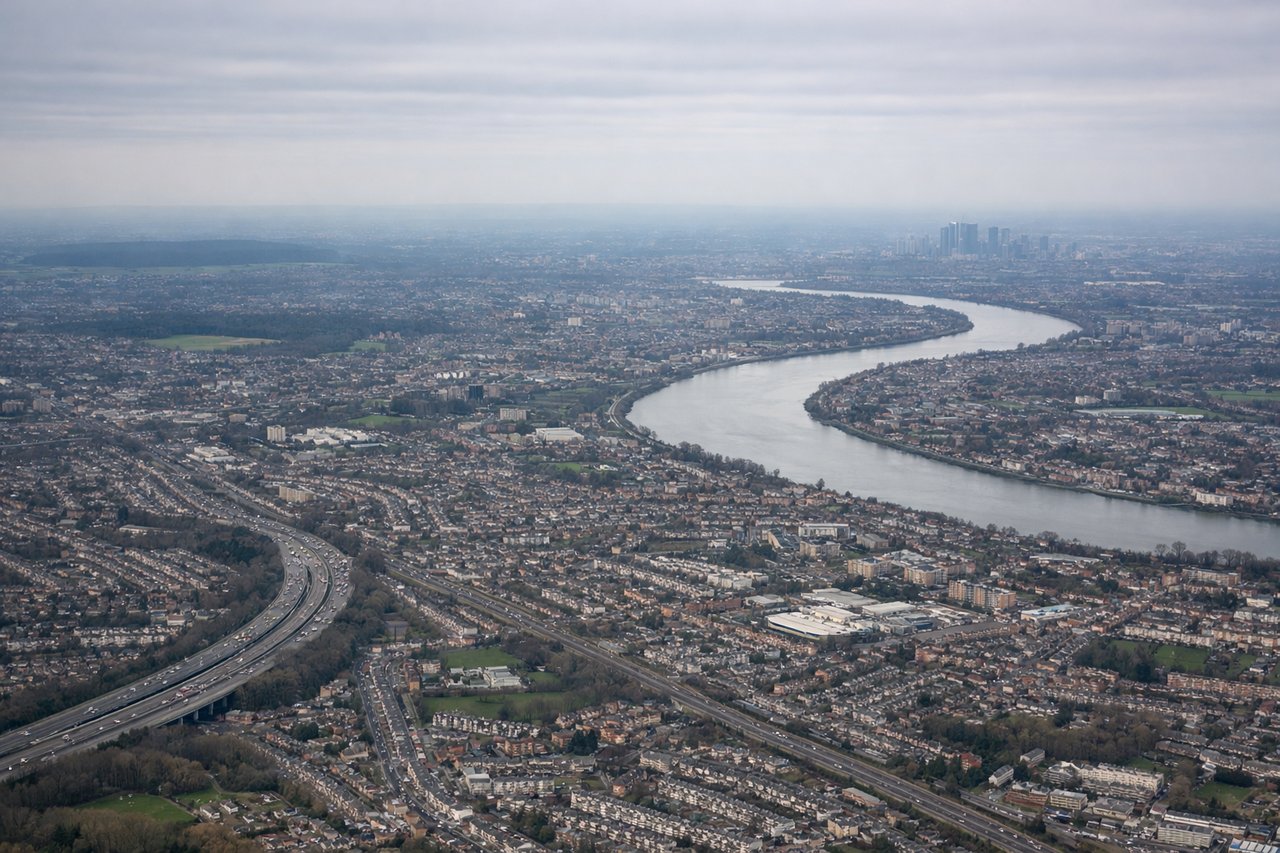
Landing at LHR
LEFTHeathrow's dominant runway 27L/27R means aircraft approach from the east over London. On the left side you track directly over central London — the Thames, the City, and West London landmarks are laid out clearly beneath you on final approach.
Landmarks on this routeAll landmarks →
Will your flight be in sunlight?
Pick a date and time in the Sun Map to watch the sun move across your whole flight.
About This Route
Which side of the plane should I sit on flying from Stuttgart (STR) to Heathrow (LHR)?
Sit on the Left side of the plane for the best views on flights from Stuttgart to London. Left side wins both takeoff and landing. During the cruise over France and the English Channel, the left side also faces south toward the Alps on departure and later gives better angles over northern France and the Channel crossing near Calais.
What can I see during takeoff from Stuttgart in Stuttgart?
During takeoff from Stuttgart (STR), sit on the Left side for the best views. Stuttgart airport sits on the Filder plateau southeast of the city. Departing on runway 25 (westbound), the left side faces north toward Stuttgart city center and the Neckar valley. You get a clear view of the city's basin setting and the forested Swabian highlands to the northeast. Notable sights include: Stuttgart city center and its valley basin, Neckar River valley, Swabian Alb escarpment to the southeast, Black Forest ridgeline to the west.
What can I see when landing at Heathrow in London?
When landing at Heathrow (LHR), sit on the Left side for the best views. Heathrow's dominant runway 27L/27R means aircraft approach from the east over London. On the left side you track directly over central London — the Thames, the City, and West London landmarks are laid out clearly beneath you on final approach. Notable sights include: River Thames snaking through central London, Windsor Castle and Windsor Great Park to the southwest, Wembley Stadium arch visible to the north, M25 motorway ring visible as a broad arc.
How long is the flight from Stuttgart to London?
The flight from Stuttgart (STR) to Heathrow (LHR) takes about 2 hours. The shortest flight path between them is 470 miles (756 km); winds and air traffic control usually add a few percent.
What does the Stuttgart to London flight path pass over?
The route tracks northwest over Baden-Württemberg, crosses the Rhine into France near Strasbourg, then flies over the Vosges hills and the Champagne plains of northeastern France. The route passes north of Paris before crossing the English Channel near the Pas-de-Calais, where the white cliffs of both the French and English coasts are briefly visible on descent. The Channel crossing is roughly 20-25 miles wide at this point.