The left side wins primarily because of the spectacular Himalayan departure from Srinagar—Dal Lake, the Zabarwan Range, and the Pir Panjal foothills are all visible from that side during climb-out—plus a slightly more interesting Deccan terrain view on arrival into Hyderabad.
Flight Path
The route crosses the flat agricultural plains of Punjab and Haryana, the Thar Desert fringe in Rajasthan, and the Vindhya-Satpura hill belt before descending toward the Deccan plateau near Hyderabad; most of this stretch is featureless farmland and dry plains best viewed only for its scale, not dramatic landmarks.
Great circle distance and headings ›Phase by phase
Takeoff from SXR
LEFTDeparting Srinagar on runway 13, the aircraft banks southeast over the Kashmir valley, giving left-side passengers a sweeping view of Dal Lake, the Zabarwan Range, and the snow-dusted Pir Panjal foothills as the plane climbs out of the valley. This is one of the most dramatic departures in India, with terraced fields and the Jhelum River visible below the mountain walls.
Landing at HYD
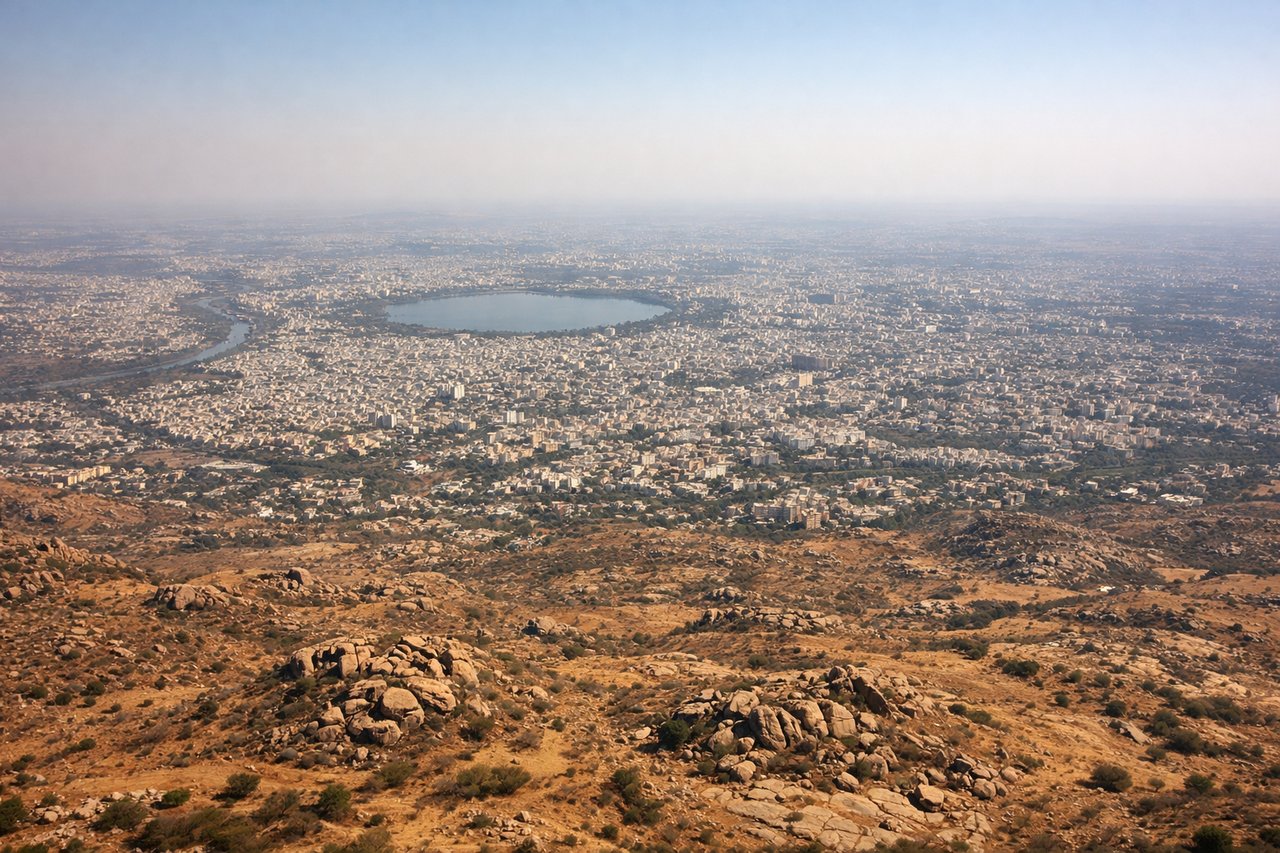
LEFTOn approach into Hyderabad, arrivals from the north typically bank over the city's rocky Deccan plateau terrain, giving left-side views of granite boulder hills and the Hussain Sagar Lake area before the final turn onto the runway. It's a modest but distinctly Deccan landscape compared to the flatter agricultural land visible on the right.
Will your flight be in sunlight?
See exactly which side of the plane gets sun and shade at your departure time.
About This Route
Which side of the plane should I sit on flying from Srinagar (SXR) to Rajiv Gandhi International Airport (HYD)?
Sit on the Left side of the plane for the best views on flights from Srinagar to Hyderabad. The left side wins primarily because of the spectacular Himalayan departure from Srinagar—Dal Lake, the Zabarwan Range, and the Pir Panjal foothills are all visible from that side during climb-out—plus a slightly more interesting Deccan terrain view on arrival into Hyderabad.
What can I see during takeoff from Srinagar in Srinagar?
During takeoff from Srinagar (SXR), sit on the Left side for the best views. Departing Srinagar on runway 13, the aircraft banks southeast over the Kashmir valley, giving left-side passengers a sweeping view of Dal Lake, the Zabarwan Range, and the snow-dusted Pir Panjal foothills as the plane climbs out of the valley. This is one of the most dramatic departures in India, with terraced fields and the Jhelum River visible below the mountain walls. Notable sights include: Dal Lake, Zabarwan Range, Pir Panjal foothills, Jhelum River.
What can I see when landing at Rajiv Gandhi International Airport in Hyderabad?
When landing at Rajiv Gandhi International Airport (HYD), sit on the Left side for the best views. On approach into Hyderabad, arrivals from the north typically bank over the city's rocky Deccan plateau terrain, giving left-side views of granite boulder hills and the Hussain Sagar Lake area before the final turn onto the runway. It's a modest but distinctly Deccan landscape compared to the flatter agricultural land visible on the right. Notable sights include: Hussain Sagar Lake, Deccan Plateau granite outcrops, Hyderabad city skyline, Musi River.
How long is the flight from Srinagar to Hyderabad?
The flight from Srinagar (SXR) to Rajiv Gandhi International Airport (HYD) takes 2h 55m.
What does the Srinagar to Hyderabad flight path pass over?
The route crosses the flat agricultural plains of Punjab and Haryana, the Thar Desert fringe in Rajasthan, and the Vindhya-Satpura hill belt before descending toward the Deccan plateau near Hyderabad; most of this stretch is featureless farmland and dry plains best viewed only for its scale, not dramatic landmarks.