The right side captures the two scenic highlights of this route: Sydney Harbour and its coastline during departure, and Diamond Head with Waikiki during arrival into Honolulu. The left side offers only inland suburbs at takeoff and Oahu's flatter interior at landing, with both sides otherwise sharing nearly ten hours of open Pacific Ocean during cruise.
Flight Path
Vast open South Pacific Ocean with no landmasses along the route; the great-circle path passes south of Fiji and Samoa, crosses the equator east of the Phoenix Islands, and approaches the Hawaiian archipelago from the southeast.
Great circle distance and headings ›.jpg?width=600)

Phase by phase
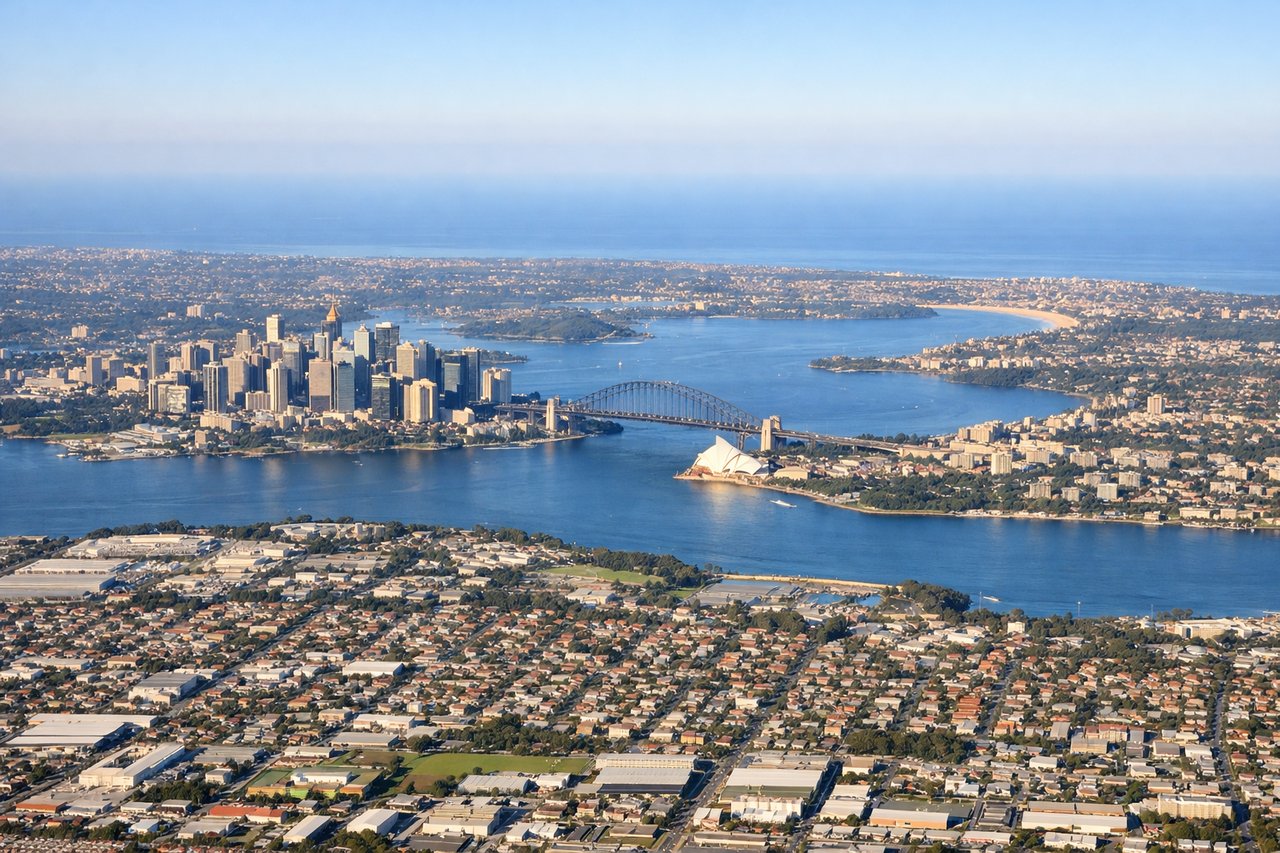
Takeoff from SYD
RIGHTDeparting Sydney on a northeast-bound long-haul routing, the aircraft climbs out and banks toward the Pacific, putting Sydney Harbour, the CBD skyline and the eastern beaches into view on the right side. The left side mostly shows inland western suburbs with no strong landmarks.
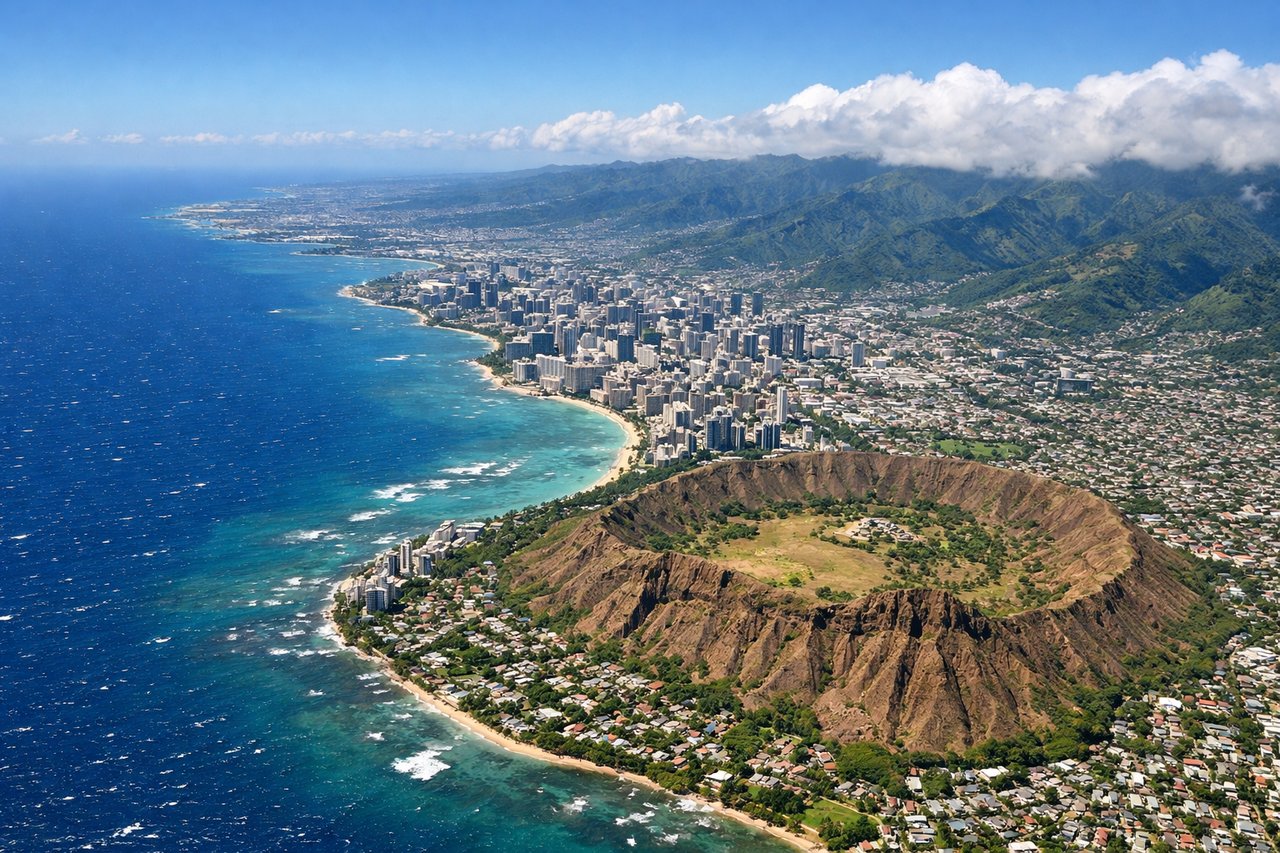
Landing at HNL
RIGHTArrivals into Honolulu from the south typically track along Oahu's south shore before turning onto final approach for the Reef Runway, bringing Diamond Head and Waikiki's beachfront hotels into view on the right side. The left side faces more toward central Oahu's flatter, industrial Pearl Harbor area.
Landmarks on this routeAll landmarks →
Will your flight be in sunlight?
See exactly which side of the plane gets sun and shade at your departure time.
About This Route
Which side of the plane should I sit on flying from Kingsford Smith International Airport (SYD) to Honolulu International (HNL)?
Sit on the Right side of the plane for the best views on flights from Sydney to Honolulu. The right side captures the two scenic highlights of this route: Sydney Harbour and its coastline during departure, and Diamond Head with Waikiki during arrival into Honolulu. The left side offers only inland suburbs at takeoff and Oahu's flatter interior at landing, with both sides otherwise sharing nearly ten hours of open Pacific Ocean during cruise.
What can I see during takeoff from Kingsford Smith International Airport in Sydney?
During takeoff from Kingsford Smith International Airport (SYD), sit on the Right side for the best views. Departing Sydney on a northeast-bound long-haul routing, the aircraft climbs out and banks toward the Pacific, putting Sydney Harbour, the CBD skyline and the eastern beaches into view on the right side. The left side mostly shows inland western suburbs with no strong landmarks. Notable sights include: Sydney Harbour and Harbour Bridge, Sydney Opera House, Bondi Beach coastline, Tasman Sea horizon.
What can I see when landing at Honolulu International in Honolulu?
When landing at Honolulu International (HNL), sit on the Right side for the best views. Arrivals into Honolulu from the south typically track along Oahu's south shore before turning onto final approach for the Reef Runway, bringing Diamond Head and Waikiki's beachfront hotels into view on the right side. The left side faces more toward central Oahu's flatter, industrial Pearl Harbor area. Notable sights include: Diamond Head crater, Waikiki Beach hotel skyline, turquoise reef waters near the Reef Runway, Honolulu downtown in the distance.
How long is the flight from Sydney to Honolulu?
The flight from Kingsford Smith International Airport (SYD) to Honolulu International (HNL) takes 9h 50m.
What does the Sydney to Honolulu flight path pass over?
Vast open South Pacific Ocean with no landmasses along the route; the great-circle path passes south of Fiji and Samoa, crosses the equator east of the Phoenix Islands, and approaches the Hawaiian archipelago from the southeast.