Tashkent to Warsaw is 2,360 miles (3,798 km), a flight of about 4 hours 15 minutes.
Takeoff views of the Tian Shan foothills and Chirchik valley are more visually distinctive than landing views. While Warsaw's Vistula meanders are notable, the dramatic mountain terrain at Tashkent departure gives the right side the edge for the overall journey.
Flight Path
Flight path crosses the Aral Sea region (now largely desiccated, visible as pale salt flats and remnant water bodies), then proceeds northwest over the Ustyurt Plateau, Mangystau Region steppes, and the Caspian Depression. The Caspian Sea's eastern shore may be visible on clear days around the 2-hour mark. Continuing northwest, the flight crosses the Kazakh steppes and enters Eastern European Plain near the Ural River region. The landscape transitions from arid steppe to increasingly green agricultural zones as the aircraft approaches Poland. The Dnieper River basin becomes visible in the final hour before reaching Warsaw airspace.
Great circle distance and headings ›

Phase by phase
Takeoff from TAS
RIGHTTashkent typically departs eastbound (runways 06L/06R or 24L/24R depending on wind). Right-side seats offer views of the Tian Shan foothills and the Chirchik River valley as you climb out. Left side faces the flat Fergana Basin extension with less dramatic terrain.
Landing at WAW
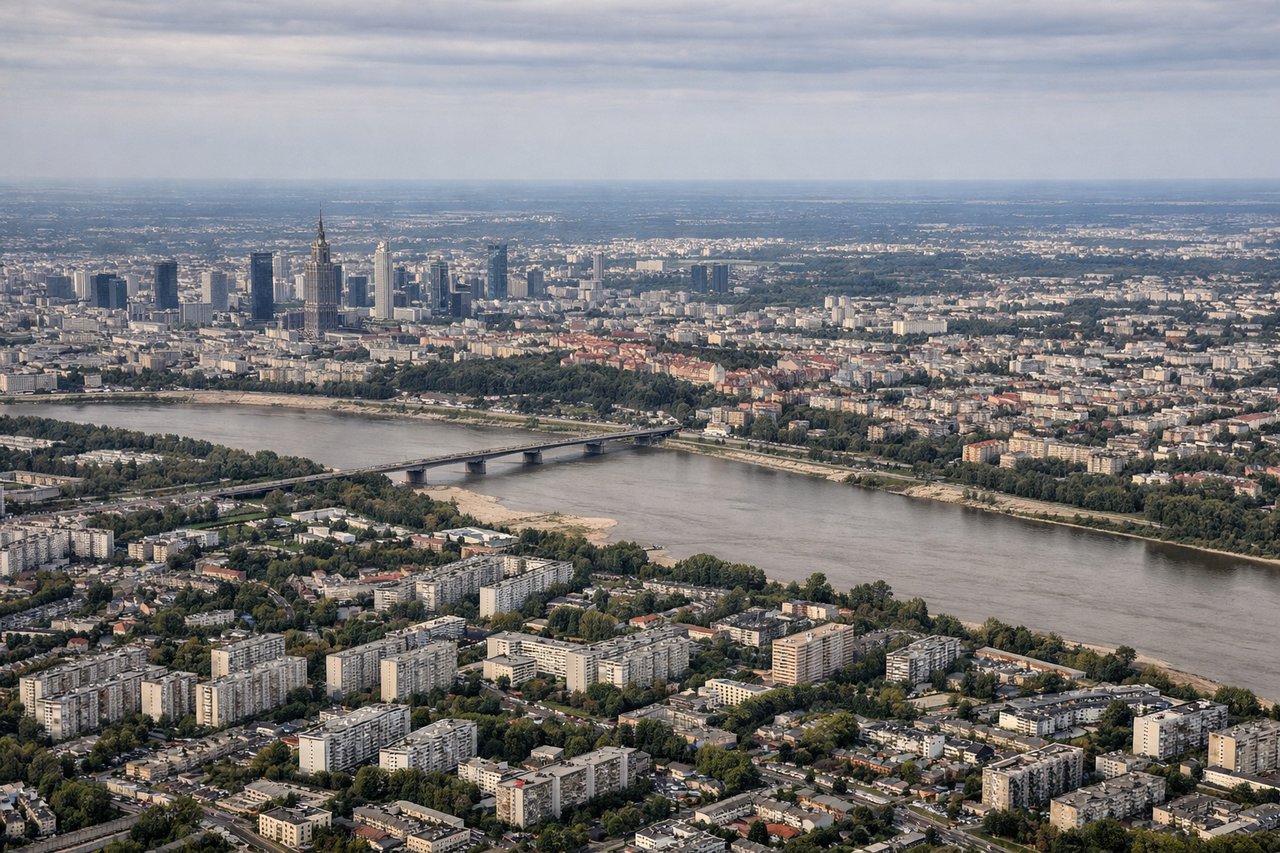
LEFTWarsaw typically lands westbound (runways 33L/33R). Left-side seats provide excellent views of the Vistula River's distinctive meanders through Warsaw's city center, the Masovian Lowlands, and approach over the Mazovia region. Right side faces less populated areas north of the city.
Landmarks on this routeAll landmarks →
Will your flight be in sunlight?
Pick a date and time in the Sun Map to watch the sun move across your whole flight.
About This Route
Which side of the plane should I sit on flying from Tashkent International Airport (TAS) to Okecie (WAW)?
Sit on the Right side of the plane for the best views on flights from Tashkent to Warsaw. Takeoff views of the Tian Shan foothills and Chirchik valley are more visually distinctive than landing views. While Warsaw's Vistula meanders are notable, the dramatic mountain terrain at Tashkent departure gives the right side the edge for the overall journey.
What can I see during takeoff from Tashkent International Airport in Tashkent?
During takeoff from Tashkent International Airport (TAS), sit on the Right side for the best views. Tashkent typically departs eastbound (runways 06L/06R or 24L/24R depending on wind). Right-side seats offer views of the Tian Shan foothills and the Chirchik River valley as you climb out. Left side faces the flat Fergana Basin extension with less dramatic terrain. Notable sights include: Tian Shan mountain range (eastern horizon), Chirchik River valley (below), Tashkent urban sprawl (immediate vicinity), Charvak Reservoir (southeast, visible on clear days).
What can I see when landing at Okecie in Warsaw?
When landing at Okecie (WAW), sit on the Left side for the best views. Warsaw typically lands westbound (runways 33L/33R). Left-side seats provide excellent views of the Vistula River's distinctive meanders through Warsaw's city center, the Masovian Lowlands, and approach over the Mazovia region. Right side faces less populated areas north of the city. Notable sights include: Vistula River with Old Town meanders (central), Warsaw city center with high-rises (immediate), Masovian Lowlands (surrounding terrain), Narew River confluence (northeast of approach).
How long is the flight from Tashkent to Warsaw?
The flight from Tashkent International Airport (TAS) to Okecie (WAW) takes about 4 hours 15 minutes. The shortest flight path between them is 2,360 miles (3,798 km); winds and air traffic control usually add a few percent.
What does the Tashkent to Warsaw flight path pass over?
Flight path crosses the Aral Sea region (now largely desiccated, visible as pale salt flats and remnant water bodies), then proceeds northwest over the Ustyurt Plateau, Mangystau Region steppes, and the Caspian Depression. The Caspian Sea's eastern shore may be visible on clear days around the 2-hour mark. Continuing northwest, the flight crosses the Kazakh steppes and enters Eastern European Plain near the Ural River region. The landscape transitions from arid steppe to increasingly green agricultural zones as the aircraft approaches Poland. The Dnieper River basin becomes visible in the final hour before reaching Warsaw airspace.