While takeoff favors left seats for Teide views, the landing experience over Manchester's urban geography and the Pennines from the right side is more visually rewarding for most passengers. Right seats capture the approach to a major city with surrounding topography.
Flight Path
The flight path crosses the Atlantic at roughly 40,000 feet, passing west of the Iberian Peninsula and the Bay of Biscay. At cruise altitude, the curvature of the Earth becomes apparent, and on clear days, the Welsh coast and Irish Sea become visible during the final descent phase. No major landmarks are visible at cruise altitude over open ocean, but the transition from Atlantic to European airspace occurs roughly 2 hours into the flight.
Great circle distance and headings ›

Phase by phase
Takeoff from TFS
LEFTTFS typically departs runway 07 (heading northeast). Left seats face northwest initially, giving direct views of Tenerife's northern coast and the dramatic volcanic terrain. Right seats face the Atlantic immediately.
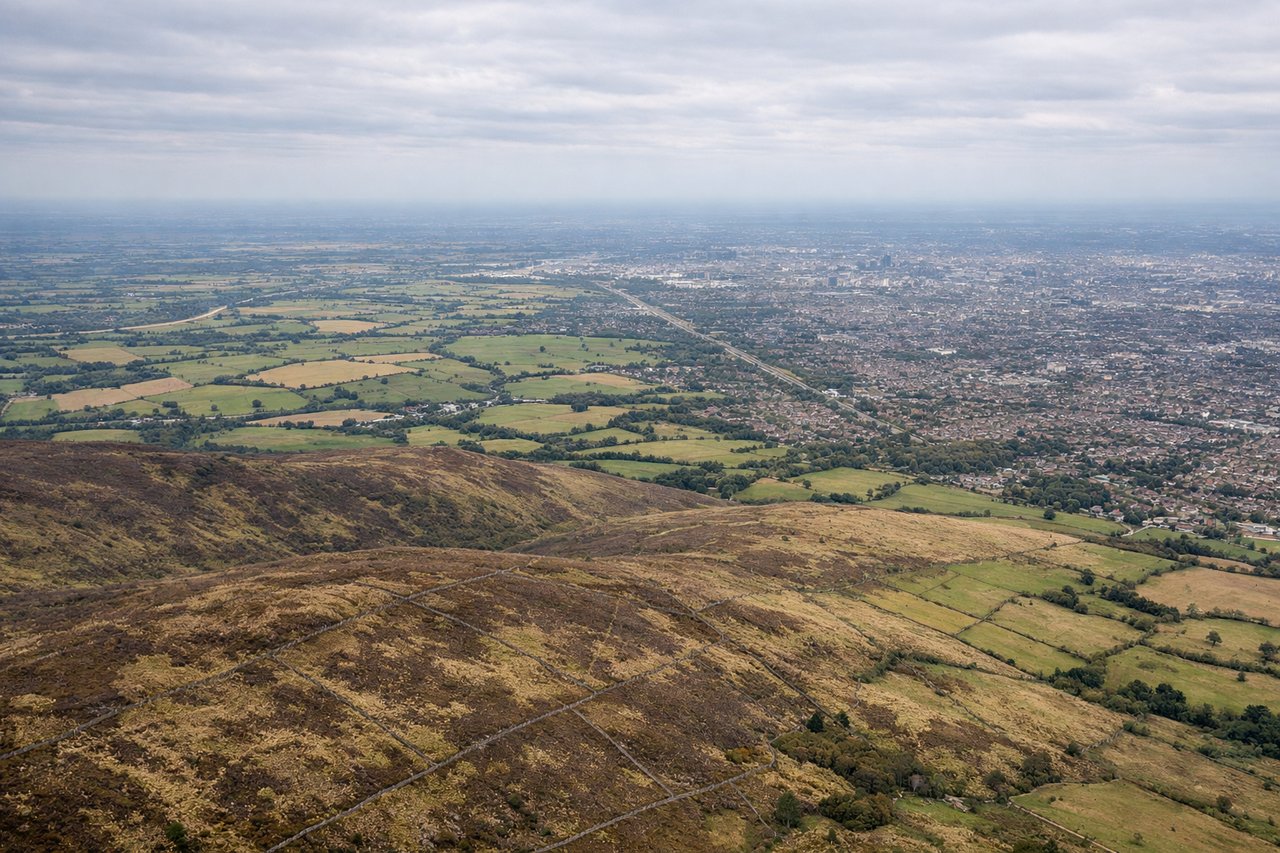
Landing at MAN
RIGHTManchester typically uses runways 05 or 23 depending on wind. For northbound approach (runway 05), right seats face east and provide views of the Pennine Hills and Greater Manchester's urban sprawl. For southbound approach (runway 23), right seats still capture the city and surrounding moorland better.
Landmarks on this routeAll landmarks →
Will your flight be in sunlight?
See exactly which side of the plane gets sun and shade at your departure time.
About This Route
Which side of the plane should I sit on flying from Tenerife Sur (TFS) to Manchester (MAN)?
Sit on the Right side of the plane for the best views on flights from Tenerife to Manchester. While takeoff favors left seats for Teide views, the landing experience over Manchester's urban geography and the Pennines from the right side is more visually rewarding for most passengers. Right seats capture the approach to a major city with surrounding topography.
What can I see during takeoff from Tenerife Sur in Tenerife?
During takeoff from Tenerife Sur (TFS), sit on the Left side for the best views. TFS typically departs runway 07 (heading northeast). Left seats face northwest initially, giving direct views of Tenerife's northern coast and the dramatic volcanic terrain. Right seats face the Atlantic immediately. Notable sights include: Mount Teide (3,718m, visible as a massive snow-capped peak 50km north), the northern coastline near Puerto de la Cruz, the Anaga Mountains (northeastern peninsula), Atlantic Ocean.
What can I see when landing at Manchester in Manchester?
When landing at Manchester (MAN), sit on the Right side for the best views. Manchester typically uses runways 05 or 23 depending on wind. For northbound approach (runway 05), right seats face east and provide views of the Pennine Hills and Greater Manchester's urban sprawl. For southbound approach (runway 23), right seats still capture the city and surrounding moorland better. Notable sights include: Greater Manchester urban area (city center visible as dense development), the Pennine Hills (moorland ridge to the east), Cheshire Plain (flat agricultural land to the south), Mersey Estuary.
How long is the flight from Tenerife to Manchester?
The flight from Tenerife Sur (TFS) to Manchester (MAN) takes Approximately 4 hours 15 minutes.
What does the Tenerife to Manchester flight path pass over?
The flight path crosses the Atlantic at roughly 40,000 feet, passing west of the Iberian Peninsula and the Bay of Biscay. At cruise altitude, the curvature of the Earth becomes apparent, and on clear days, the Welsh coast and Irish Sea become visible during the final descent phase. No major landmarks are visible at cruise altitude over open ocean, but the transition from Atlantic to European airspace occurs roughly 2 hours into the flight.