Right side captures the dramatic Arctic fjord landscape during departure and maintains good views of the Scandinavian interior and Alpine foothills during the long southern descent. Left side has strong landing views but misses the distinctive Tromsø departure scenery.
Flown TOS to MUC? Did we get it right?
Flight Path
Tromso to Munich is 1,493 miles (2,403 km), a flight of about 4 hours 15 minutes.
The flight path crosses central Scandinavia, passing over the Swedish interior (forests and lakes around Jämtland and Värmland), then enters German airspace over the Bavarian plateau. Notable midpoint landmarks include the Scandinavian forest belt, the Vänern and Vättern lakes in Sweden (visible from altitude on clear days), and the transition zone between the North European Plain and the Alpine foothills as the aircraft approaches Bavaria.
Great circle distance and headings ›Phase by phase
Takeoff from TOS
RIGHTRight side offers immediate views of Tromsøya island and the surrounding fjord system. The aircraft departs southbound, so right-side passengers see the intricate coastline and islands of the Tromsø region as the plane climbs.
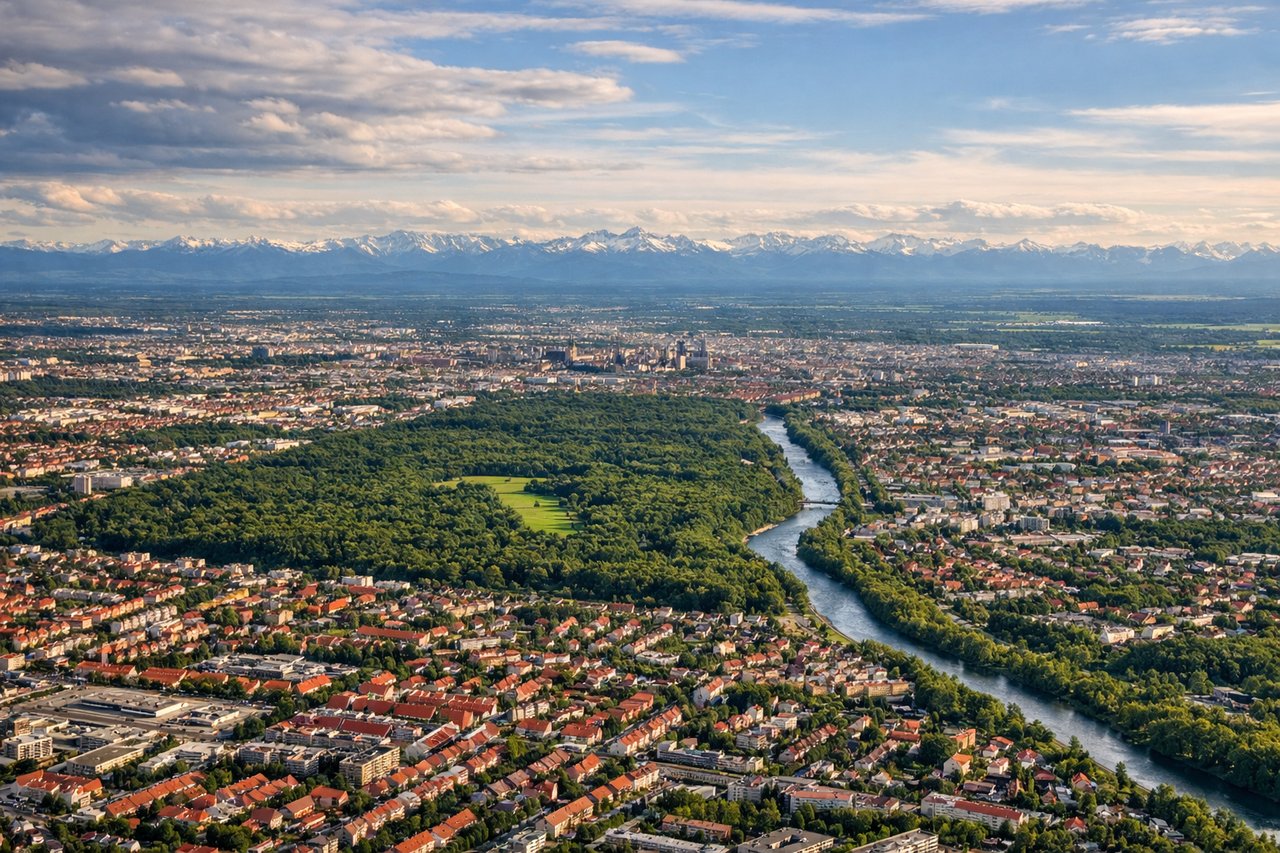
Landing at MUC
LEFTLeft side provides views of the Bavarian Alps and the approach corridor into Munich. The aircraft descends from the north, so left-side passengers see the dramatic Alpine foothills and the Isar River valley as the plane approaches the airport.
Will your flight be in sunlight?
Pick a date and time in the Sun Map to watch the sun move across your whole flight.
About This Route
Which side of the plane should I sit on flying from Tromso (TOS) to Munich (MUC)?
Sit on the Right side of the plane for the best views on flights from Tromso to Munich. Right side captures the dramatic Arctic fjord landscape during departure and maintains good views of the Scandinavian interior and Alpine foothills during the long southern descent. Left side has strong landing views but misses the distinctive Tromsø departure scenery.
What can I see during takeoff from Tromso in Tromso?
During takeoff from Tromso (TOS), sit on the Right side for the best views. Right side offers immediate views of Tromsøya island and the surrounding fjord system. The aircraft departs southbound, so right-side passengers see the intricate coastline and islands of the Tromsø region as the plane climbs. Notable sights include: Tromsøya island, Tromsø fjord, Kvaløya island to the west, Arctic Ocean coastline.
What can I see when landing at Munich in Munich?
When landing at Munich (MUC), sit on the Left side for the best views. Left side provides views of the Bavarian Alps and the approach corridor into Munich. The aircraft descends from the north, so left-side passengers see the dramatic Alpine foothills and the Isar River valley as the plane approaches the airport. Notable sights include: Bavarian Alps (northern ranges), Isar River valley, Starnberger See lake, Munich city sprawl.
How long is the flight from Tromso to Munich?
The flight from Tromso (TOS) to Munich (MUC) takes about 4 hours 15 minutes. The shortest flight path between them is 1,493 miles (2,403 km); winds and air traffic control usually add a few percent.
What does the Tromso to Munich flight path pass over?
The flight path crosses central Scandinavia, passing over the Swedish interior (forests and lakes around Jämtland and Värmland), then enters German airspace over the Bavarian plateau. Notable midpoint landmarks include the Scandinavian forest belt, the Vänern and Vättern lakes in Sweden (visible from altitude on clear days), and the transition zone between the North European Plain and the Alpine foothills as the aircraft approaches Bavaria.