Taipei to Los Angeles is 6,773 miles (10,900 km), a flight of about 11 hours 30 minutes.
Right side wins both takeoff and landing. Over the Pacific the views are largely featureless ocean on both sides, but the right side also catches the Aleutian arc on the northern horizon during the great circle routing and the California coastline on approach.
Flight Path
The great circle route arcs northeast over the western Pacific, passing south of Japan's Ryukyu Islands, then northeast across the open North Pacific toward the Aleutian Island chain visible as a distant volcanic arc, before curving southeast along the Gulf of Alaska coast and descending over the California coast near Point Conception into the Los Angeles Basin
Great circle distance and headings ›Phase by phase
Takeoff from TSA
RIGHTSongshan airport's primary departure runway 10 sends aircraft eastward over Taipei city before turning northeast. The right side gives you a clear look back over central Taipei, the Tamsui River basin, and the northern Taiwan mountain spine as you climb out.
Landing at LAX
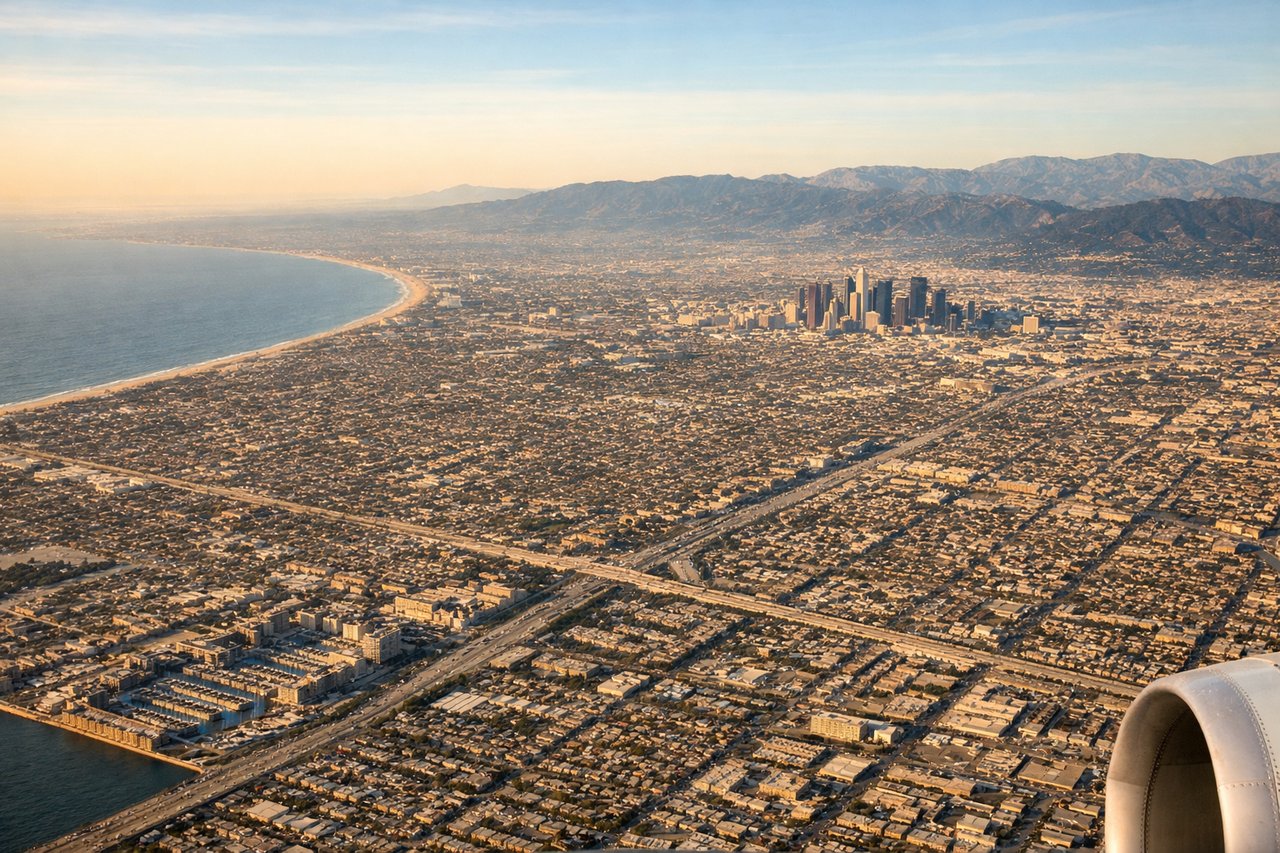
RIGHTLAX's primary arrival runways 24L and 24R have aircraft approaching from the east over the Los Angeles Basin. The right side faces north, giving you the Santa Monica Mountains, the Hollywood Hills, downtown LA skyline, and the San Fernando Valley spread out clearly during the descent.
Landmarks on this routeAll landmarks →
Will your flight be in sunlight?
Pick a date and time in the Sun Map to watch the sun move across your whole flight.
About This Route
Which side of the plane should I sit on flying from Sungshan (TSA) to Los Angeles International (LAX)?
Sit on the Right side of the plane for the best views on flights from Taipei to Los Angeles. Right side wins both takeoff and landing. Over the Pacific the views are largely featureless ocean on both sides, but the right side also catches the Aleutian arc on the northern horizon during the great circle routing and the California coastline on approach.
What can I see during takeoff from Sungshan in Taipei?
During takeoff from Sungshan (TSA), sit on the Right side for the best views. Songshan airport's primary departure runway 10 sends aircraft eastward over Taipei city before turning northeast. The right side gives you a clear look back over central Taipei, the Tamsui River basin, and the northern Taiwan mountain spine as you climb out. Notable sights include: Taipei 101 tower in the Xinyi district, Tamsui River winding toward the coast, Yangmingshan volcanic massif to the north, Keelung Harbor on the northeast coast.
What can I see when landing at Los Angeles International in Los Angeles?
When landing at Los Angeles International (LAX), sit on the Right side for the best views. LAX's primary arrival runways 24L and 24R have aircraft approaching from the east over the Los Angeles Basin. The right side faces north, giving you the Santa Monica Mountains, the Hollywood Hills, downtown LA skyline, and the San Fernando Valley spread out clearly during the descent. Notable sights include: Downtown Los Angeles skyline, Santa Monica Mountains and Hollywood Hills, San Fernando Valley floor, Santa Monica Bay coastline.
How long is the flight from Taipei to Los Angeles?
The flight from Sungshan (TSA) to Los Angeles International (LAX) takes about 11 hours 30 minutes. The shortest flight path between them is 6,773 miles (10,900 km); winds and air traffic control usually add a few percent.
What does the Taipei to Los Angeles flight path pass over?
The great circle route arcs northeast over the western Pacific, passing south of Japan's Ryukyu Islands, then northeast across the open North Pacific toward the Aleutian Island chain visible as a distant volcanic arc, before curving southeast along the Gulf of Alaska coast and descending over the California coast near Point Conception into the Los Angeles Basin