Right side scores higher due to superior landing scenery—Osaka Bay, Kobe's urban waterfront, and the Kii Peninsula mountains provide dramatic visual variety during descent and approach. While takeoff is comparable on both sides, the landing experience on the right significantly outweighs the left side's open-ocean monotony during the final approach phase.
Flown VIE to KIX? Did we get it right?
Flight Path
Vienna to Osaka is 5,596 miles (9,006 km), a flight of about 11 hours 15 minutes.
The flight path crosses the Carpathian Mountains (eastern Romania/southern Poland border), the Black Sea coast near the Bosphorus, the Caucasus Mountains, the Caspian Sea, the Tian Shan range (Kyrgyzstan/Kazakhstan), the Gobi Desert (Mongolia/China), and the Korean Peninsula before descending into Osaka Bay. Cruise altitude typically 35,000-43,000 feet; most of these features appear as distant ridges or hazy landmasses on the horizon rather than dominant foreground elements.
Great circle distance and headings ›Phase by phase
Takeoff from VIE
RIGHTRight side captures Vienna's urban sprawl and the Danube River valley during initial climb. Left side faces open plains with minimal early visual interest.
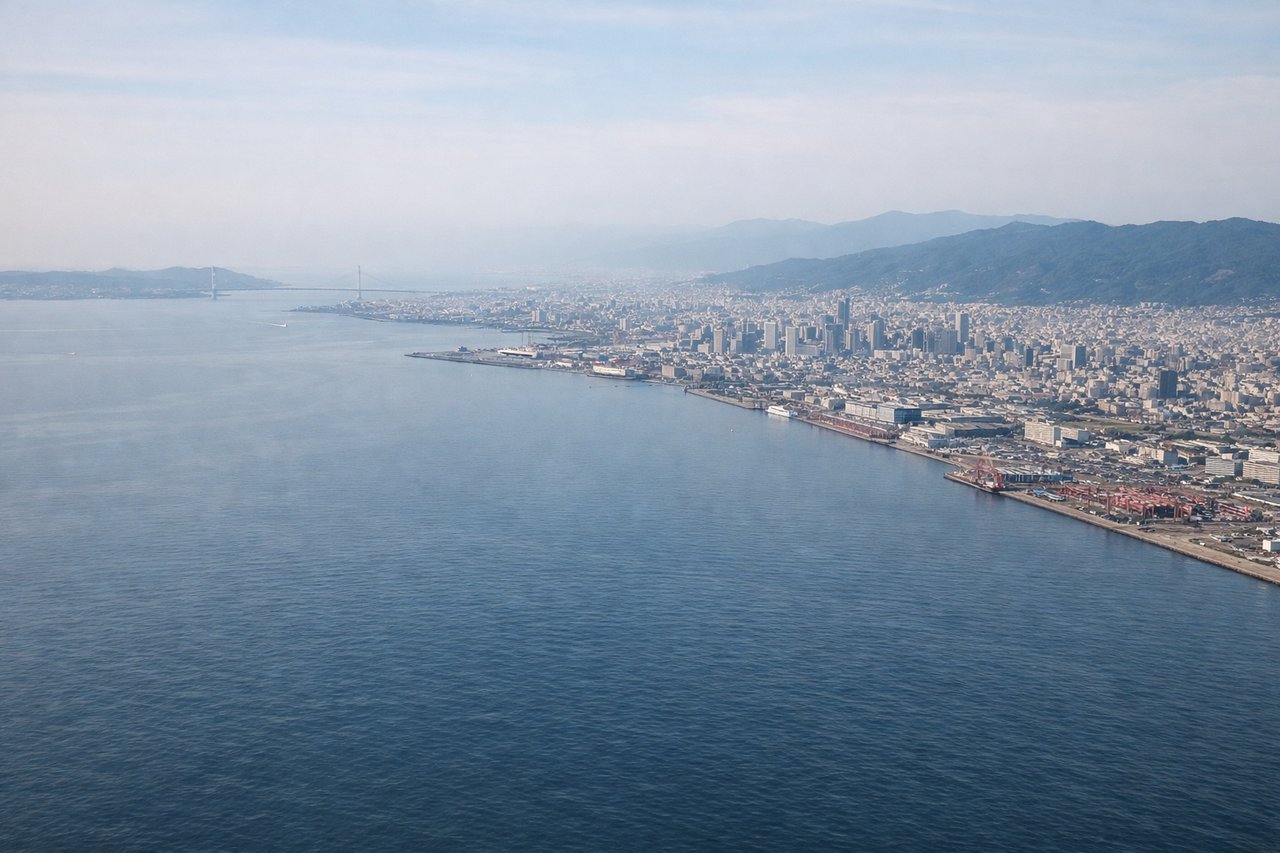
Landing at KIX
RIGHTRight side offers the dramatic approach to Kansai International Airport with views of Osaka Bay, the Kobe-Osaka urban corridor, and surrounding coastal geography. Left side sees primarily open ocean and lacks distinctive landmarks during descent.
Will your flight be in sunlight?
Pick a date and time in the Sun Map to watch the sun move across your whole flight.
About This Route
Which side of the plane should I sit on flying from Schwechat (VIE) to Kansai International (KIX)?
Sit on the Right side of the plane for the best views on flights from Vienna to Osaka. Right side scores higher due to superior landing scenery—Osaka Bay, Kobe's urban waterfront, and the Kii Peninsula mountains provide dramatic visual variety during descent and approach. While takeoff is comparable on both sides, the landing experience on the right significantly outweighs the left side's open-ocean monotony during the final approach phase.
What can I see during takeoff from Schwechat in Vienna?
During takeoff from Schwechat (VIE), sit on the Right side for the best views. Right side captures Vienna's urban sprawl and the Danube River valley during initial climb. Left side faces open plains with minimal early visual interest. Notable sights include: Danube River winding through Vienna suburbs, Vienna city center and St. Stephen's Cathedral district, Carpathian foothills rising to the east.
What can I see when landing at Kansai International in Osaka?
When landing at Kansai International (KIX), sit on the Right side for the best views. Right side offers the dramatic approach to Kansai International Airport with views of Osaka Bay, the Kobe-Osaka urban corridor, and surrounding coastal geography. Left side sees primarily open ocean and lacks distinctive landmarks during descent. Notable sights include: Osaka Bay and its industrial waterfront, Kobe city and port facilities across the bay to the north, Awaji Island in the center of the bay, Kii Peninsula mountains rising to the south.
How long is the flight from Vienna to Osaka?
The flight from Schwechat (VIE) to Kansai International (KIX) takes about 11 hours 15 minutes. The shortest flight path between them is 5,596 miles (9,006 km); winds and air traffic control usually add a few percent.
What does the Vienna to Osaka flight path pass over?
The flight path crosses the Carpathian Mountains (eastern Romania/southern Poland border), the Black Sea coast near the Bosphorus, the Caucasus Mountains, the Caspian Sea, the Tian Shan range (Kyrgyzstan/Kazakhstan), the Gobi Desert (Mongolia/China), and the Korean Peninsula before descending into Osaka Bay. Cruise altitude typically 35,000-43,000 feet; most of these features appear as distant ridges or hazy landmasses on the horizon rather than dominant foreground elements.