Left side wins both takeoff and landing. During the flight itself, the routing over Siberia and northern China means neither side has a dramatic advantage at cruise altitude — it is largely boreal forest and tundra — but the left side catches the better views at both ends of the journey.
Flown VIE to NRT? Did we get it right?
Flight Path
Vienna to Tokyo is 5,688 miles (9,154 km), a flight of about 11 hours 30 minutes.
The route tracks northeast over Slovakia and Poland, then across the Baltic states or Belarus, into western Russia and across the vast West Siberian Plain. The flight crosses the Yenisei and Ob river systems — enormous rivers visible even from 35,000 feet as wide silver bands cutting through boreal taiga. Over eastern Siberia, Lake Baikal may be visible to the south depending on exact routing — the world's largest freshwater lake is unmistakable as a long narrow dark blue shape. The route then descends over northeastern China, crossing Manchuria and the Korean Peninsula or Yellow Sea before approaching Japan from the east.
Great circle distance and headings ›

Phase by phase
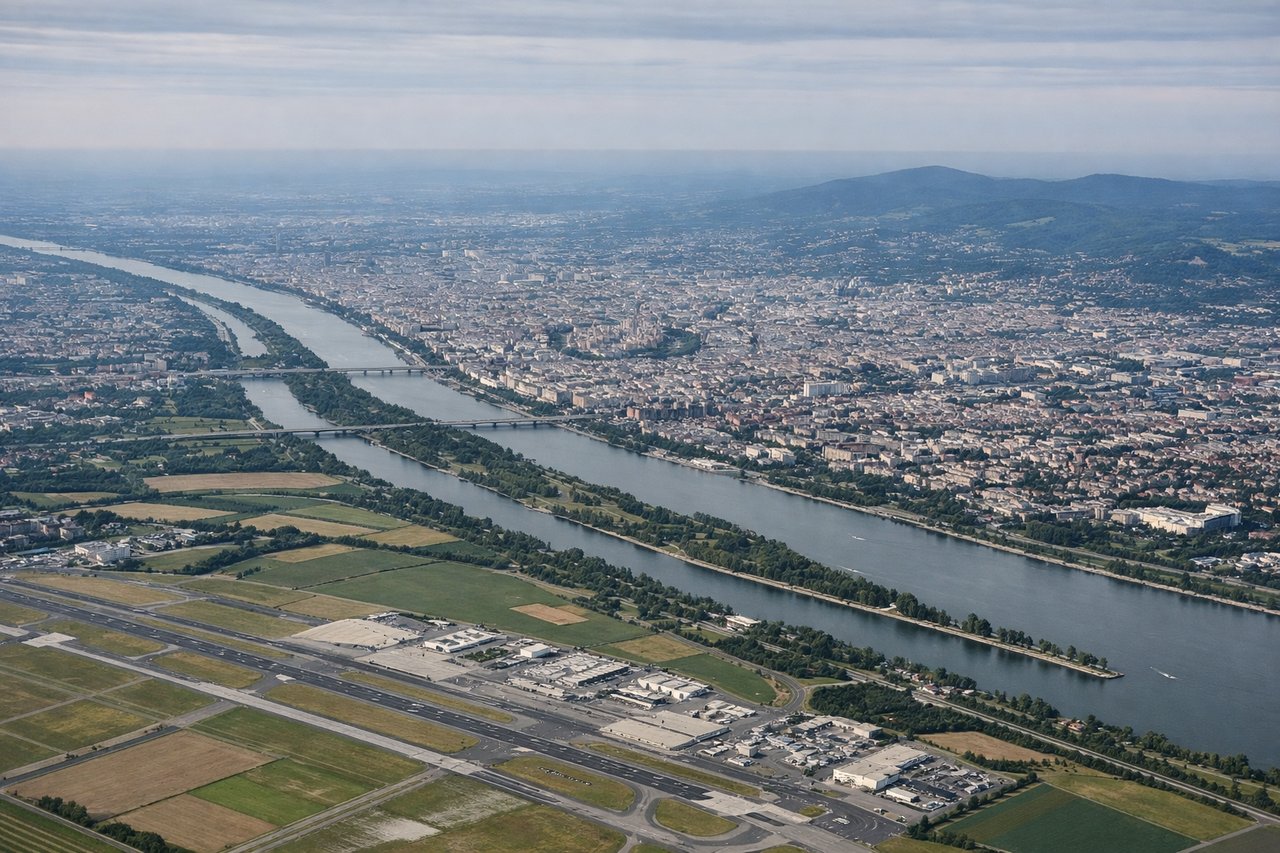
Takeoff from VIE
LEFTVienna Schwechat typically departs eastward on runway 16/34 or 11/29. A left-side seat during an eastbound departure gives you a clear view back over central Vienna — the Ringstrasse, the Danube, and the Wienerwald hills to the west. The city grid is unmistakable from low altitude.
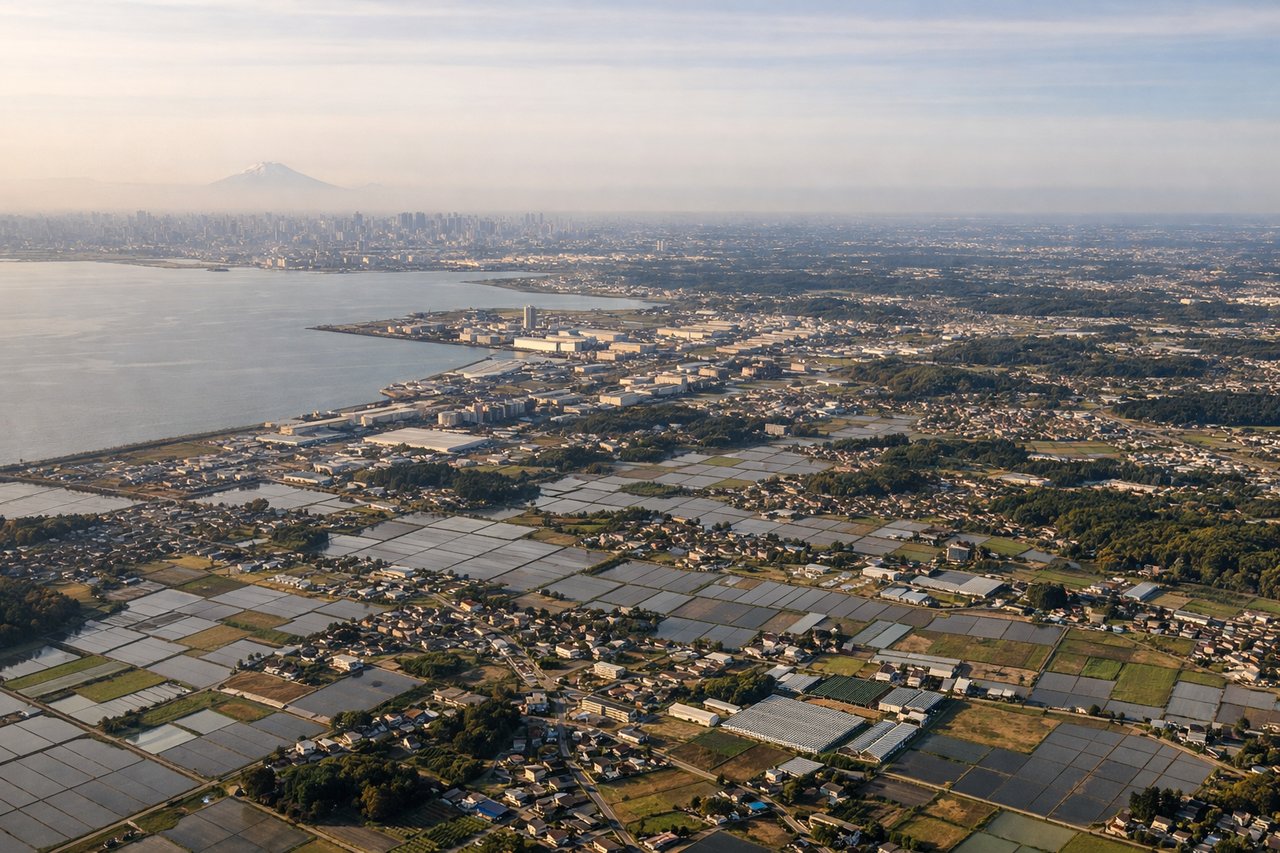
Landing at NRT
LEFTNRT approaches are typically from the east or southeast on runway 34L/34R, meaning the aircraft tracks northward over the Chiba Peninsula and Tokyo Bay. A left-side seat gives you the view over Tokyo Bay, the Tokyo metropolitan area, and Mount Fuji on the distant western horizon on clear days. The right side faces the Pacific Ocean.
Will your flight be in sunlight?
Pick a date and time in the Sun Map to watch the sun move across your whole flight.
About This Route
Which side of the plane should I sit on flying from Schwechat (VIE) to New Tokyo International (NRT)?
Sit on the Left side of the plane for the best views on flights from Vienna to Tokyo. Left side wins both takeoff and landing. During the flight itself, the routing over Siberia and northern China means neither side has a dramatic advantage at cruise altitude — it is largely boreal forest and tundra — but the left side catches the better views at both ends of the journey.
What can I see during takeoff from Schwechat in Vienna?
During takeoff from Schwechat (VIE), sit on the Left side for the best views. Vienna Schwechat typically departs eastward on runway 16/34 or 11/29. A left-side seat during an eastbound departure gives you a clear view back over central Vienna — the Ringstrasse, the Danube, and the Wienerwald hills to the west. The city grid is unmistakable from low altitude. Notable sights include: Vienna city center and Ringstrasse, the Danube river bend northwest of the airport, Wienerwald (Vienna Woods) hills to the west, Neusiedler See (Lake Neusiedl) to the southeast.
What can I see when landing at New Tokyo International in Tokyo?
When landing at New Tokyo International (NRT), sit on the Left side for the best views. NRT approaches are typically from the east or southeast on runway 34L/34R, meaning the aircraft tracks northward over the Chiba Peninsula and Tokyo Bay. A left-side seat gives you the view over Tokyo Bay, the Tokyo metropolitan area, and Mount Fuji on the distant western horizon on clear days. The right side faces the Pacific Ocean. Notable sights include: Tokyo Bay and its reclaimed land structures, Tokyo metropolitan skyline to the northwest, Chiba city and peninsula below, Mount Fuji on the far western horizon (clear days only).
How long is the flight from Vienna to Tokyo?
The flight from Schwechat (VIE) to New Tokyo International (NRT) takes about 11 hours 30 minutes. The shortest flight path between them is 5,688 miles (9,154 km); winds and air traffic control usually add a few percent.
What does the Vienna to Tokyo flight path pass over?
The route tracks northeast over Slovakia and Poland, then across the Baltic states or Belarus, into western Russia and across the vast West Siberian Plain. The flight crosses the Yenisei and Ob river systems — enormous rivers visible even from 35,000 feet as wide silver bands cutting through boreal taiga. Over eastern Siberia, Lake Baikal may be visible to the south depending on exact routing — the world's largest freshwater lake is unmistakable as a long narrow dark blue shape. The route then descends over northeastern China, crossing Manchuria and the Korean Peninsula or Yellow Sea before approaching Japan from the east.