Wroclaw to Milano is 531 miles (855 km), a flight of about 2 hours 15 minutes.
Right-side seats provide superior views on departure (Oder River, Sudetes) and the midpoint crossing of the Carpathian foothills and Czech-Moravian Highlands. While landing favors the left, the longer departure and cruise phases make right-side the better overall choice for this route.
Flight Path
The flight crosses the Czech-Moravian Highlands (Česko-moravská vrchovina) and approaches the Bohemian Massif. Around the midpoint near the Czech-Austrian border, the terrain transitions from flat Silesian plains to rolling forested highlands. The Vltava River valley may be visible in clearer conditions. As you approach the Alps, the Bavarian foothills and the transition into the Alpine system becomes increasingly prominent, with the Ötztal and other major Alpine valleys becoming visible in the final descent phase toward Malpensa.
Great circle distance and headings ›

.jpg?width=600)
Phase by phase
Takeoff from WRO
RIGHTWroclaw typically departs eastbound (runways 10/28), and right-side seats capture the Oder River valley and the city's medieval layout as you climb. The Sudetes Mountains appear on the horizon to the south within minutes of departure.
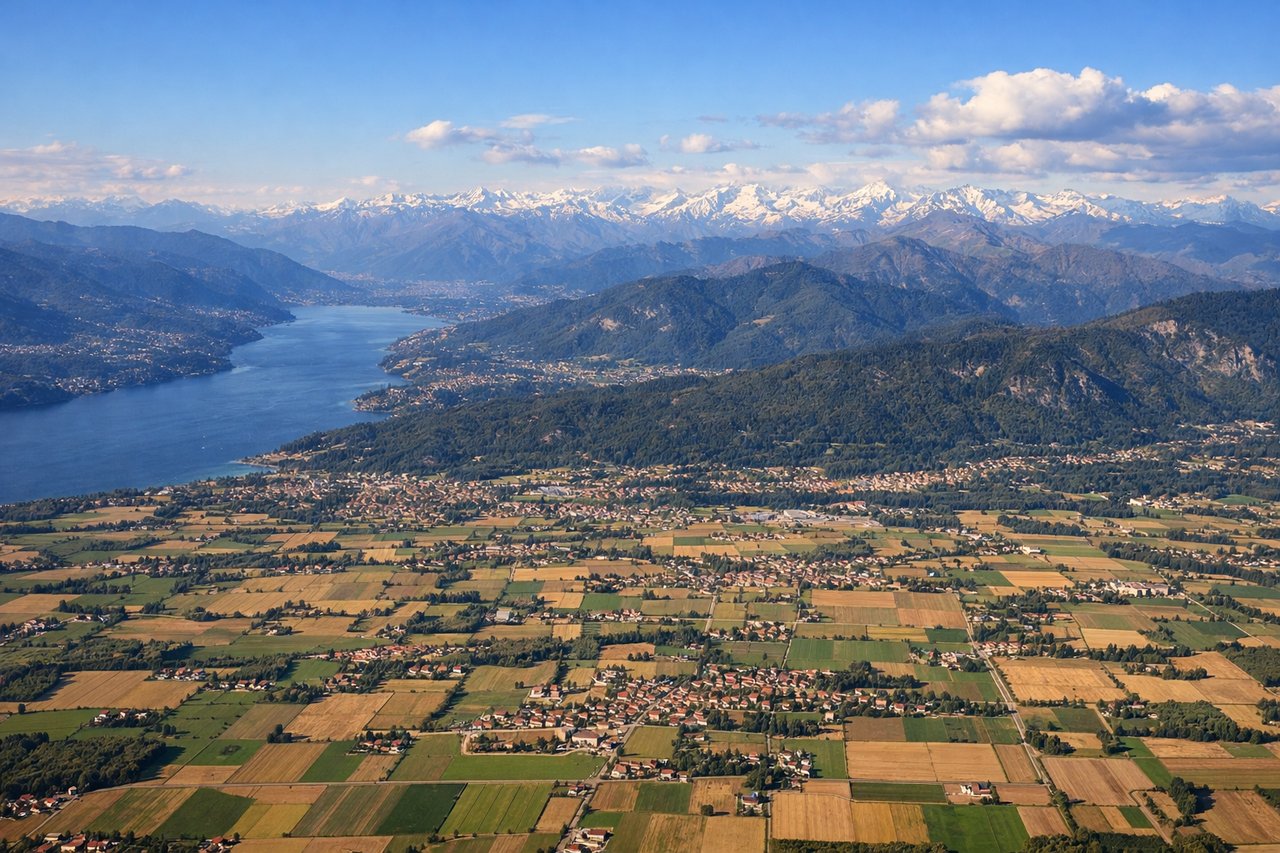
Landing at MXP
LEFTMalpensa typically uses runways 35L/35R for landing from the northeast. Left-side seats offer views of the Ticino River valley, Lake Maggiore to the east, and the Alpine foothills as you descend into the Milan basin. The approach crosses the Lombardy plain with excellent visibility of the terrain transition.
Landmarks on this routeAll landmarks →
Will your flight be in sunlight?
Pick a date and time in the Sun Map to watch the sun move across your whole flight.
About This Route
Which side of the plane should I sit on flying from Strachowice (WRO) to Malpensa (MXP)?
Sit on the Right side of the plane for the best views on flights from Wroclaw to Milano. Right-side seats provide superior views on departure (Oder River, Sudetes) and the midpoint crossing of the Carpathian foothills and Czech-Moravian Highlands. While landing favors the left, the longer departure and cruise phases make right-side the better overall choice for this route.
What can I see during takeoff from Strachowice in Wroclaw?
During takeoff from Strachowice (WRO), sit on the Right side for the best views. Wroclaw typically departs eastbound (runways 10/28), and right-side seats capture the Oder River valley and the city's medieval layout as you climb. The Sudetes Mountains appear on the horizon to the south within minutes of departure. Notable sights include: Oder River (Odra) winding through Wroclaw's center, Wroclaw's Old Town grid pattern, Sudetes Mountains southern horizon, Silesian Plain extending northward.
What can I see when landing at Malpensa in Milano?
When landing at Malpensa (MXP), sit on the Left side for the best views. Malpensa typically uses runways 35L/35R for landing from the northeast. Left-side seats offer views of the Ticino River valley, Lake Maggiore to the east, and the Alpine foothills as you descend into the Milan basin. The approach crosses the Lombardy plain with excellent visibility of the terrain transition. Notable sights include: Lake Maggiore (Verbano) to the east, Ticino River valley, Alpine foothills and pre-Alps to the north, Lombardy Plain agricultural grid.
How long is the flight from Wroclaw to Milano?
The flight from Strachowice (WRO) to Malpensa (MXP) takes about 2 hours 15 minutes. The shortest flight path between them is 531 miles (855 km); winds and air traffic control usually add a few percent.
What does the Wroclaw to Milano flight path pass over?
The flight crosses the Czech-Moravian Highlands (Česko-moravská vrchovina) and approaches the Bohemian Massif. Around the midpoint near the Czech-Austrian border, the terrain transitions from flat Silesian plains to rolling forested highlands. The Vltava River valley may be visible in clearer conditions. As you approach the Alps, the Bavarian foothills and the transition into the Alpine system becomes increasingly prominent, with the Ötztal and other major Alpine valleys becoming visible in the final descent phase toward Malpensa.