The right side wins on the strength of the Singapore skyline glimpse at departure, a possible pass near Taiwan's mountainous coast mid-flight, and the scenic Incheon island approach at the end — giving it more landmark variety than the largely featureless open-ocean views on the left.
Flight Path
South China Sea, Taiwan Strait (with Taiwan's coastal mountains occasionally visible), East China Sea, Yellow Sea approach to Korea
Great circle distance and headings ›

.jpg?width=600)
Phase by phase
Takeoff from XSP
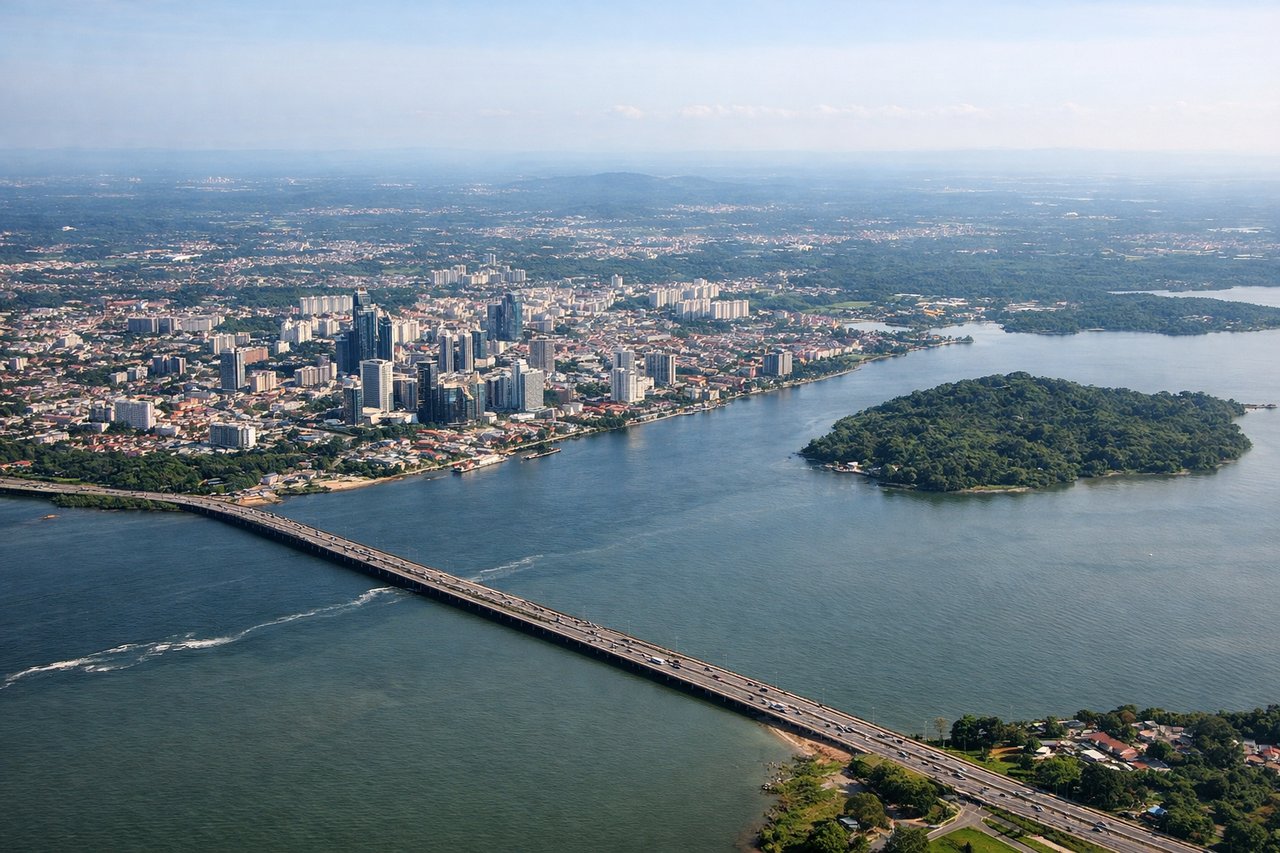
RIGHTDeparting Seletar on runway 03 with a climb toward the northeast, the right side offers a brief but clear view back over Singapore's skyline and the Johor Strait before the aircraft settles onto its oceanic track. The left side mainly shows flat Malaysian terrain with little contrast.
Landing at ICN
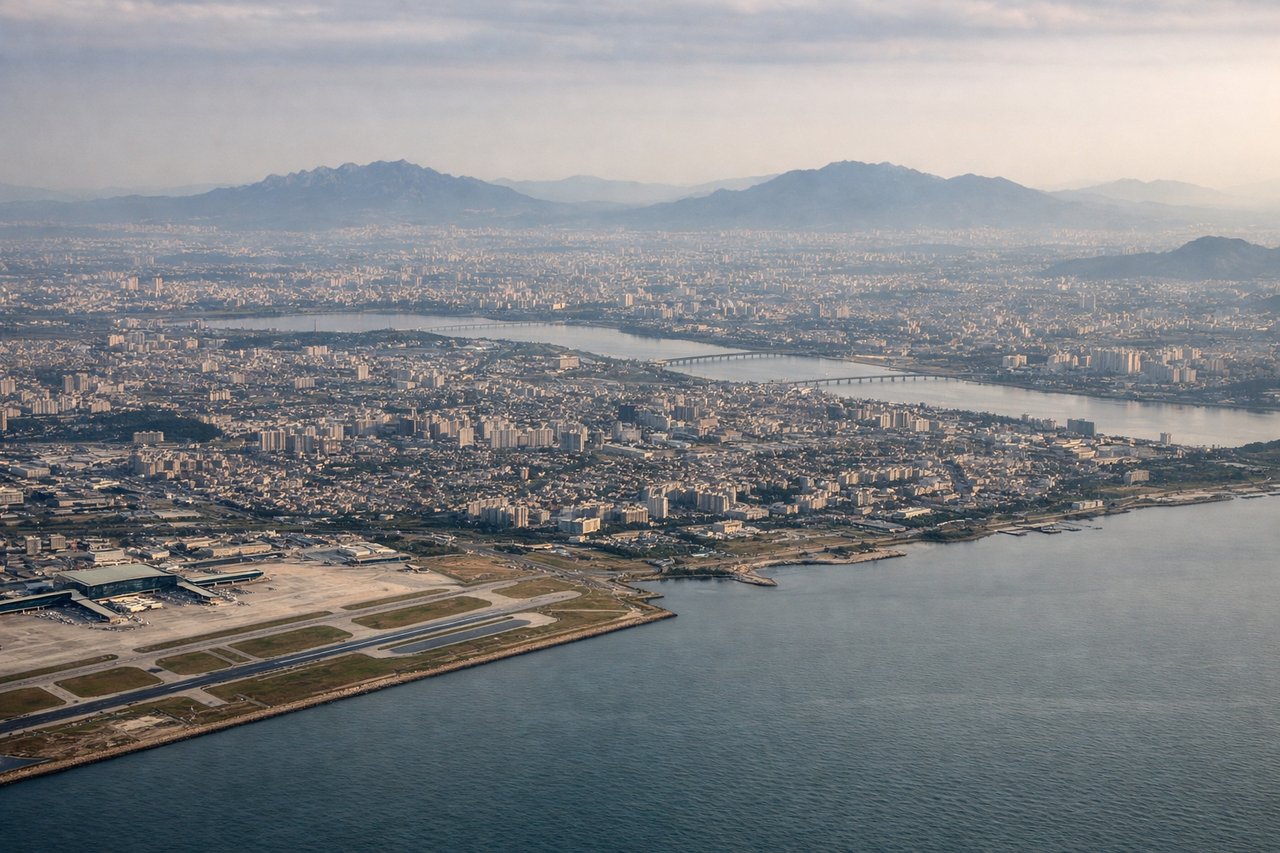
RIGHTOn approach into Incheon from the south over the Yellow Sea, the right side reveals the rugged, forested outer islands like Yeongjong and the tidal mudflats fringing the Korean coast, plus distant hills toward Seoul. The left side stays over open water until very late in the descent.
Landmarks on this routeAll landmarks →
Will your flight be in sunlight?
See exactly which side of the plane gets sun and shade at your departure time.
About This Route
Which side of the plane should I sit on flying from Seletar (XSP) to Incheon International (ICN)?
Sit on the Right side of the plane for the best views on flights from Singapore to Seoul. The right side wins on the strength of the Singapore skyline glimpse at departure, a possible pass near Taiwan's mountainous coast mid-flight, and the scenic Incheon island approach at the end — giving it more landmark variety than the largely featureless open-ocean views on the left.
What can I see during takeoff from Seletar in Singapore?
During takeoff from Seletar (XSP), sit on the Right side for the best views. Departing Seletar on runway 03 with a climb toward the northeast, the right side offers a brief but clear view back over Singapore's skyline and the Johor Strait before the aircraft settles onto its oceanic track. The left side mainly shows flat Malaysian terrain with little contrast. Notable sights include: Marina Bay skyline, Singapore Strait, Johor Strait, Straits of Malacca approaches.
What can I see when landing at Incheon International in Seoul?
When landing at Incheon International (ICN), sit on the Right side for the best views. On approach into Incheon from the south over the Yellow Sea, the right side reveals the rugged, forested outer islands like Yeongjong and the tidal mudflats fringing the Korean coast, plus distant hills toward Seoul. The left side stays over open water until very late in the descent. Notable sights include: Yeongjong Island, Incheon tidal mudflats, Yellow Sea coastline, distant hills toward Seoul.
How long is the flight from Singapore to Seoul?
The flight from Seletar (XSP) to Incheon International (ICN) takes 6h 20m.
What does the Singapore to Seoul flight path pass over?
South China Sea, Taiwan Strait (with Taiwan's coastal mountains occasionally visible), East China Sea, Yellow Sea approach to Korea