While takeoff favors the right, the landing view from the left is more dramatic and geographically significant—the Blue Mountains and Sydney Harbour approach are iconic. For a long flight, the landing experience typically outweighs the departure.
Flight Path
The flight path crosses the Coral Sea and passes east of the Great Barrier Reef (not directly visible at cruise altitude but the reef system lies to the north of the track). You'll overfly the Queensland coast near Cairns or further south depending on routing, then cross inland over the Australian interior before descending toward Sydney. At cruise altitude (typically 35,000-37,000 feet), the curvature of the Earth becomes apparent, and on clear days, the contrast between the deep blue Coral Sea and the brown-red interior of Queensland is striking.
Great circle distance and headings ›


.jpg?width=600)
Phase by phase

Takeoff from XSP
RIGHTSeletar typically departs eastbound (Runway 03). Right-side seats face the South China Sea and Malaysian peninsula as you climb, with clear views of the Strait of Johor and the northern coastline of Singapore Island receding below.
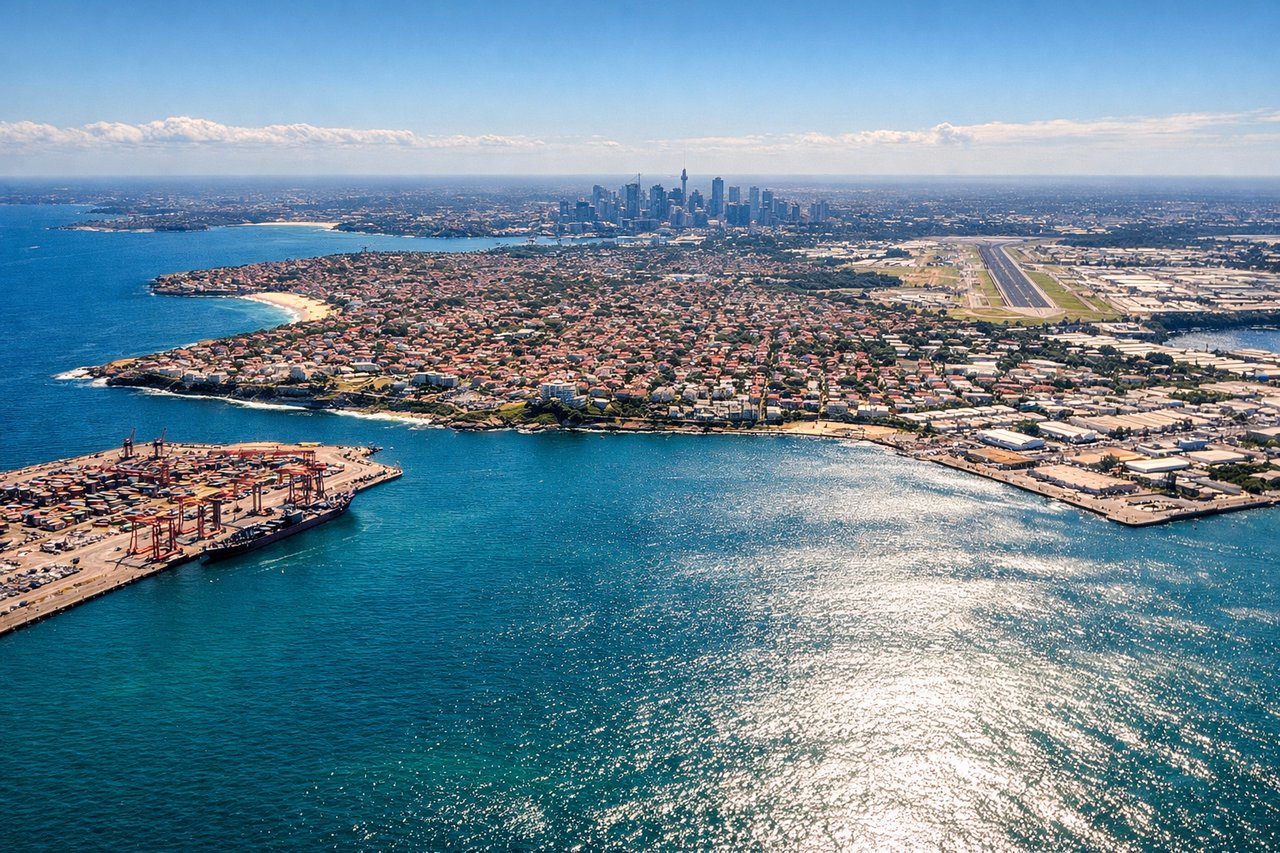
Landing at SYD
LEFTSydney typically lands westbound on Runway 16L/16R. Left-side seats during descent offer views of the Blue Mountains on the western horizon, the Nepean River valley, and the approach path over the Cumberland Plain—all classic Sydney geography.
Landmarks on this routeAll landmarks →
Will your flight be in sunlight?
See exactly which side of the plane gets sun and shade at your departure time.
About This Route
Which side of the plane should I sit on flying from Seletar (XSP) to Kingsford Smith International Airport (SYD)?
Sit on the Left side of the plane for the best views on flights from Singapore to Sydney. While takeoff favors the right, the landing view from the left is more dramatic and geographically significant—the Blue Mountains and Sydney Harbour approach are iconic. For a long flight, the landing experience typically outweighs the departure.
What can I see during takeoff from Seletar in Singapore?
During takeoff from Seletar (XSP), sit on the Right side for the best views. Seletar typically departs eastbound (Runway 03). Right-side seats face the South China Sea and Malaysian peninsula as you climb, with clear views of the Strait of Johor and the northern coastline of Singapore Island receding below. Notable sights include: Strait of Johor, Johor Bahru (Malaysian coast to the north), Singapore's northern reservoirs, Pulau Ubin island.
What can I see when landing at Kingsford Smith International Airport in Sydney?
When landing at Kingsford Smith International Airport (SYD), sit on the Left side for the best views. Sydney typically lands westbound on Runway 16L/16R. Left-side seats during descent offer views of the Blue Mountains on the western horizon, the Nepean River valley, and the approach path over the Cumberland Plain—all classic Sydney geography. Notable sights include: Blue Mountains (distant western horizon), Nepean River valley, Cumberland Plain, Sydney Harbour (visible on final approach).
How long is the flight from Singapore to Sydney?
The flight from Seletar (XSP) to Kingsford Smith International Airport (SYD) takes Approximately 7.5 to 8 hours.
What does the Singapore to Sydney flight path pass over?
The flight path crosses the Coral Sea and passes east of the Great Barrier Reef (not directly visible at cruise altitude but the reef system lies to the north of the track). You'll overfly the Queensland coast near Cairns or further south depending on routing, then cross inland over the Australian interior before descending toward Sydney. At cruise altitude (typically 35,000-37,000 feet), the curvature of the Earth becomes apparent, and on clear days, the contrast between the deep blue Coral Sea and the brown-red interior of Queensland is striking.