Montreal to Tokyo is 6,465 miles (10,404 km), a flight of about 13 hours 20 minutes.
Right side captures the most dramatic scenery on both legs: Laurentian Mountains during departure and Tokyo Bay with Mount Fuji during arrival. The left side offers less visually distinctive features across the Pacific crossing.
Flight Path
The flight path crosses the Canadian Arctic Archipelago (Parry Channel, Queen Elizabeth Islands), the Bering Strait region, and the Aleutian Islands. Over the Pacific, the route passes north of the Hawaiian Islands and approaches Japan from the northeast, crossing the Sea of Japan. Notable en route features include the Canadian Shield's lakes and tundra, the Aleutian volcanic arc, and the Japanese Alps visible on approach to Honshu.
Great circle distance and headings ›Phase by phase
Takeoff from YHU
LEFTLeft side offers views of the St. Lawrence River valley and the Laurentian Mountains as the aircraft climbs northwestward out of St. Hubert. Right side faces south toward the Appalachian foothills with less dramatic relief.
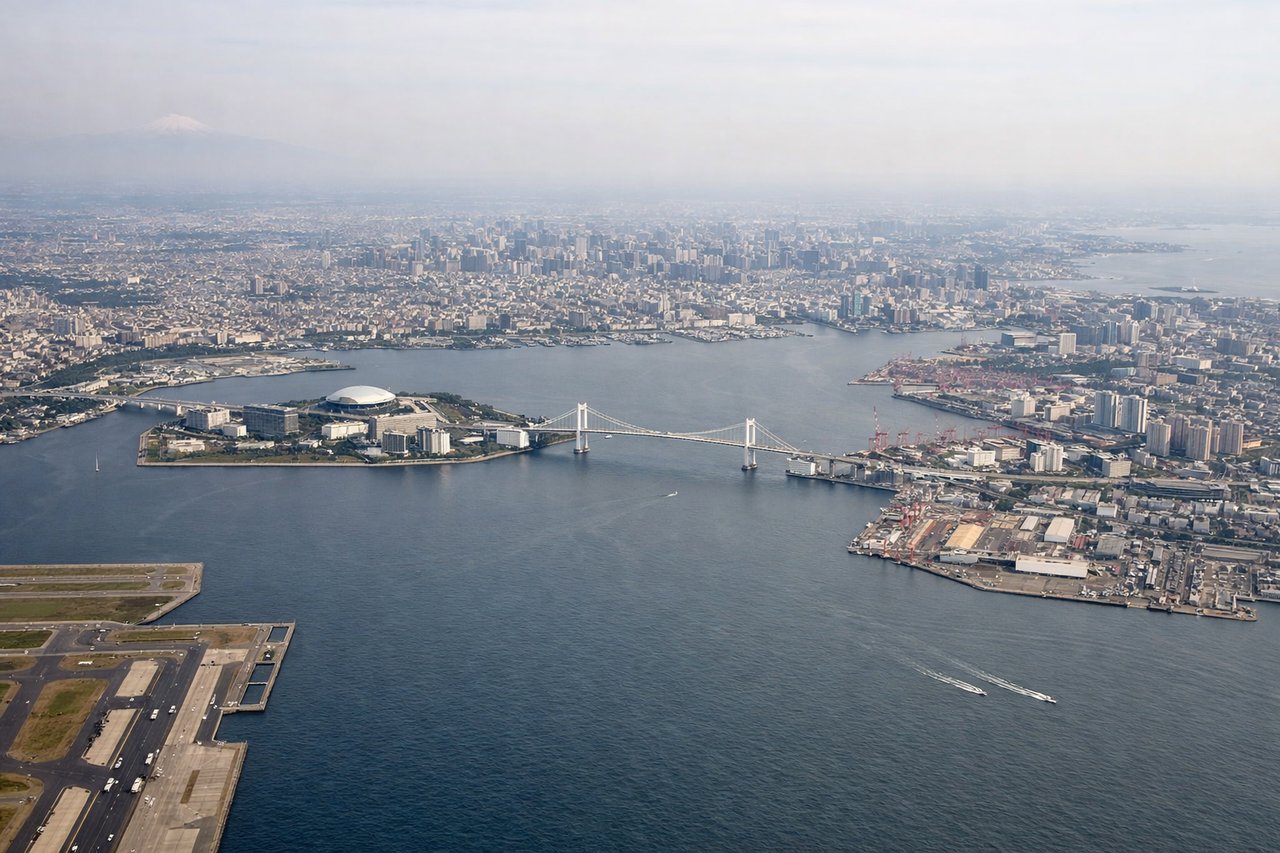
Landing at HND
RIGHTRight side during descent into Haneda provides views of Tokyo Bay, the Kanto Plain's urban sprawl, and Mount Fuji on clear days. Left side faces the Pacific Ocean with less distinctive features during final approach.
Landmarks on this routeAll landmarks →
Will your flight be in sunlight?
Pick a date and time in the Sun Map to watch the sun move across your whole flight.
About This Route
Which side of the plane should I sit on flying from St Hubert (YHU) to Tokyo International (HND)?
Sit on the Right side of the plane for the best views on flights from Montreal to Tokyo. Right side captures the most dramatic scenery on both legs: Laurentian Mountains during departure and Tokyo Bay with Mount Fuji during arrival. The left side offers less visually distinctive features across the Pacific crossing.
What can I see during takeoff from St Hubert in Montreal?
During takeoff from St Hubert (YHU), sit on the Left side for the best views. Left side offers views of the St. Lawrence River valley and the Laurentian Mountains as the aircraft climbs northwestward out of St. Hubert. Right side faces south toward the Appalachian foothills with less dramatic relief. Notable sights include: St. Lawrence River, Laurentian Mountains (Chaîne de la Laurentide), Montreal urban sprawl, Ottawa River valley.
What can I see when landing at Tokyo International in Tokyo?
When landing at Tokyo International (HND), sit on the Right side for the best views. Right side during descent into Haneda provides views of Tokyo Bay, the Kanto Plain's urban sprawl, and Mount Fuji on clear days. Left side faces the Pacific Ocean with less distinctive features during final approach. Notable sights include: Tokyo Bay, Kanto Plain urban grid, Mount Fuji (Fujisan, visible on clear days from 30+ miles), Izu Peninsula.
How long is the flight from Montreal to Tokyo?
The flight from St Hubert (YHU) to Tokyo International (HND) takes about 13 hours 20 minutes. The shortest flight path between them is 6,465 miles (10,404 km); winds and air traffic control usually add a few percent.
What does the Montreal to Tokyo flight path pass over?
The flight path crosses the Canadian Arctic Archipelago (Parry Channel, Queen Elizabeth Islands), the Bering Strait region, and the Aleutian Islands. Over the Pacific, the route passes north of the Hawaiian Islands and approaches Japan from the northeast, crossing the Sea of Japan. Notable en route features include the Canadian Shield's lakes and tundra, the Aleutian volcanic arc, and the Japanese Alps visible on approach to Honshu.