Right side wins both ends of the flight. At takeoff you get the St. Lawrence and Montreal skyline; on landing you get Biscayne Bay and the Miami Beach coastline. Along the mid-flight cruise the right side also faces east, giving better views of the Appalachian ridgelines over Pennsylvania and Virginia and the Carolina coastline.
Flown YHU to MIA? Did we get it right?
Flight Path
Montreal to Miami is 1,415 miles (2,277 km), a flight of about 3 hours 25 minutes.
The Adirondacks of upstate New York are visible early in the flight. The flight then tracks over the Appalachian Ridge and Valley province through Pennsylvania and Virginia, with parallel folded ridgelines clearly visible from altitude. Over the Carolinas the coastal plain widens and the Outer Banks barrier islands appear to the east. Crossing into Florida, Lake Okeechobee — one of the largest freshwater lakes in the US — is a prominent flat circular feature visible from cruise altitude, followed by the vast flat green expanse of the Everglades on descent into Miami.
Great circle distance and headings ›


Phase by phase
Takeoff from YHU
RIGHTSt-Hubert's primary runway 24L/06R means departures heading southwest put the St. Lawrence River and Montreal island to the right. You get a clear view of the broad St. Lawrence, the South Shore suburbs, and the city skyline receding to the northwest as you climb out.
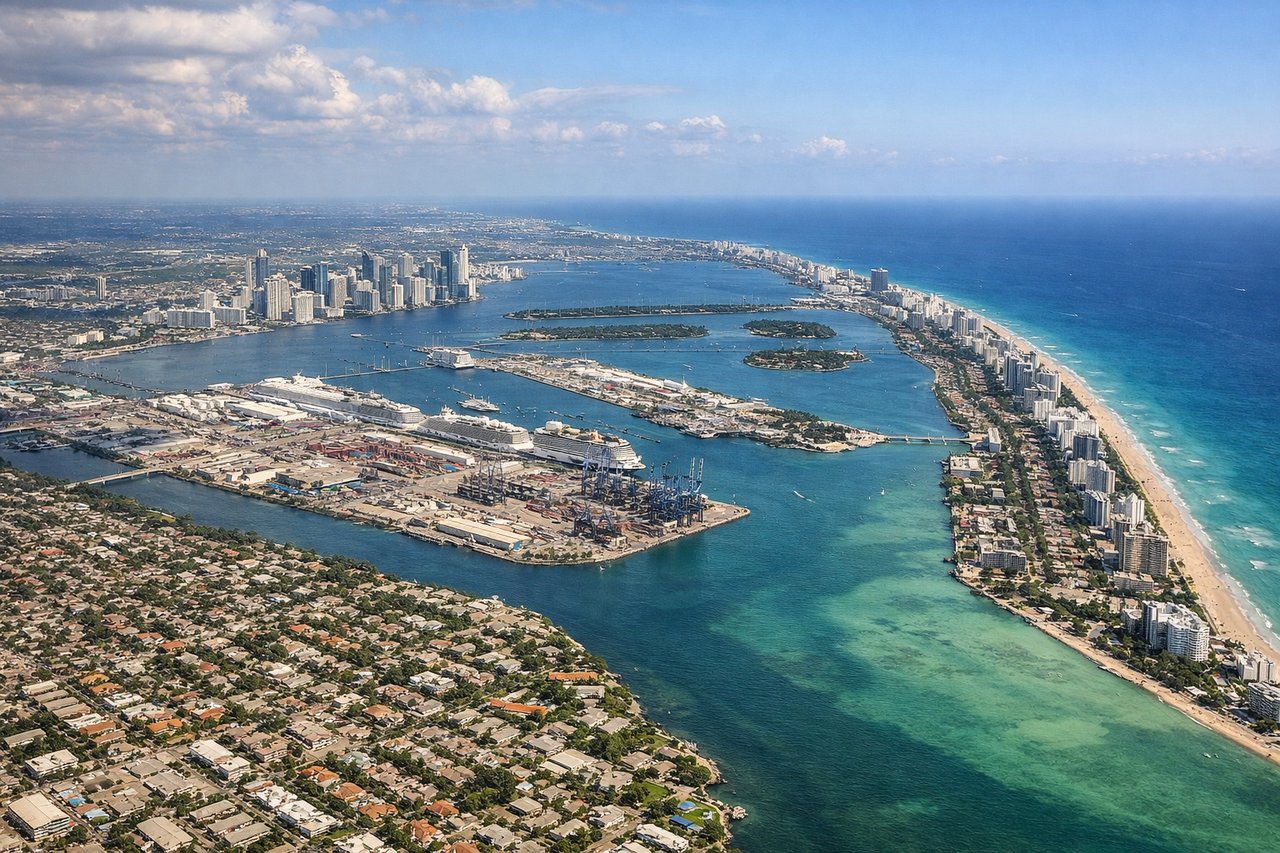
Landing at MIA
RIGHTMIA's primary arrival runways 08L/08R bring aircraft in from the west over the Everglades. A right-side seat gives you the Miami Beach barrier island, Biscayne Bay, and the downtown Miami skyline laid out clearly to the north as you descend on final approach.
Will your flight be in sunlight?
Pick a date and time in the Sun Map to watch the sun move across your whole flight.
About This Route
Which side of the plane should I sit on flying from St Hubert (YHU) to Miami International (MIA)?
Sit on the Right side of the plane for the best views on flights from Montreal to Miami. Right side wins both ends of the flight. At takeoff you get the St. Lawrence and Montreal skyline; on landing you get Biscayne Bay and the Miami Beach coastline. Along the mid-flight cruise the right side also faces east, giving better views of the Appalachian ridgelines over Pennsylvania and Virginia and the Carolina coastline.
What can I see during takeoff from St Hubert in Montreal?
During takeoff from St Hubert (YHU), sit on the Right side for the best views. St-Hubert's primary runway 24L/06R means departures heading southwest put the St. Lawrence River and Montreal island to the right. You get a clear view of the broad St. Lawrence, the South Shore suburbs, and the city skyline receding to the northwest as you climb out. Notable sights include: St. Lawrence River, Montreal island and downtown skyline, Montérégie farmland patchwork, Mont Saint-Bruno provincial park.
What can I see when landing at Miami International in Miami?
When landing at Miami International (MIA), sit on the Right side for the best views. MIA's primary arrival runways 08L/08R bring aircraft in from the west over the Everglades. A right-side seat gives you the Miami Beach barrier island, Biscayne Bay, and the downtown Miami skyline laid out clearly to the north as you descend on final approach. Notable sights include: Biscayne Bay, Miami Beach barrier island, downtown Miami skyline, Port of Miami cruise terminals.
How long is the flight from Montreal to Miami?
The flight from St Hubert (YHU) to Miami International (MIA) takes about 3 hours 25 minutes. The shortest flight path between them is 1,415 miles (2,277 km); winds and air traffic control usually add a few percent.
What does the Montreal to Miami flight path pass over?
The Adirondacks of upstate New York are visible early in the flight. The flight then tracks over the Appalachian Ridge and Valley province through Pennsylvania and Virginia, with parallel folded ridgelines clearly visible from altitude. Over the Carolinas the coastal plain widens and the Outer Banks barrier islands appear to the east. Crossing into Florida, Lake Okeechobee — one of the largest freshwater lakes in the US — is a prominent flat circular feature visible from cruise altitude, followed by the vast flat green expanse of the Everglades on descent into Miami.