Kelowna to Calgary is 249 miles (401 km), a flight of about 55 minutes.
While the Okanagan Lake takeoff is scenic, the left side offers the more dramatic and sustained visual payoff — the Columbia and Rocky Mountain ranges dominate the cruise phase and the approach into Calgary, giving a longer stretch of high-relief terrain.
Flight Path
Monashee Mountains, Columbia River valley, and the western edge of the Rocky Mountains near Golden, BC, are crossed during the cruise phase before the descent into the Alberta foothills.
Great circle distance and headings ›.jpg?width=600)

Phase by phase
Takeoff from YLW
RIGHTDeparting YLW on runway 34, the aircraft climbs out over the Okanagan Valley, giving right-side passengers a clear view down the length of Okanagan Lake and the surrounding orchard-covered hills before the turn east.
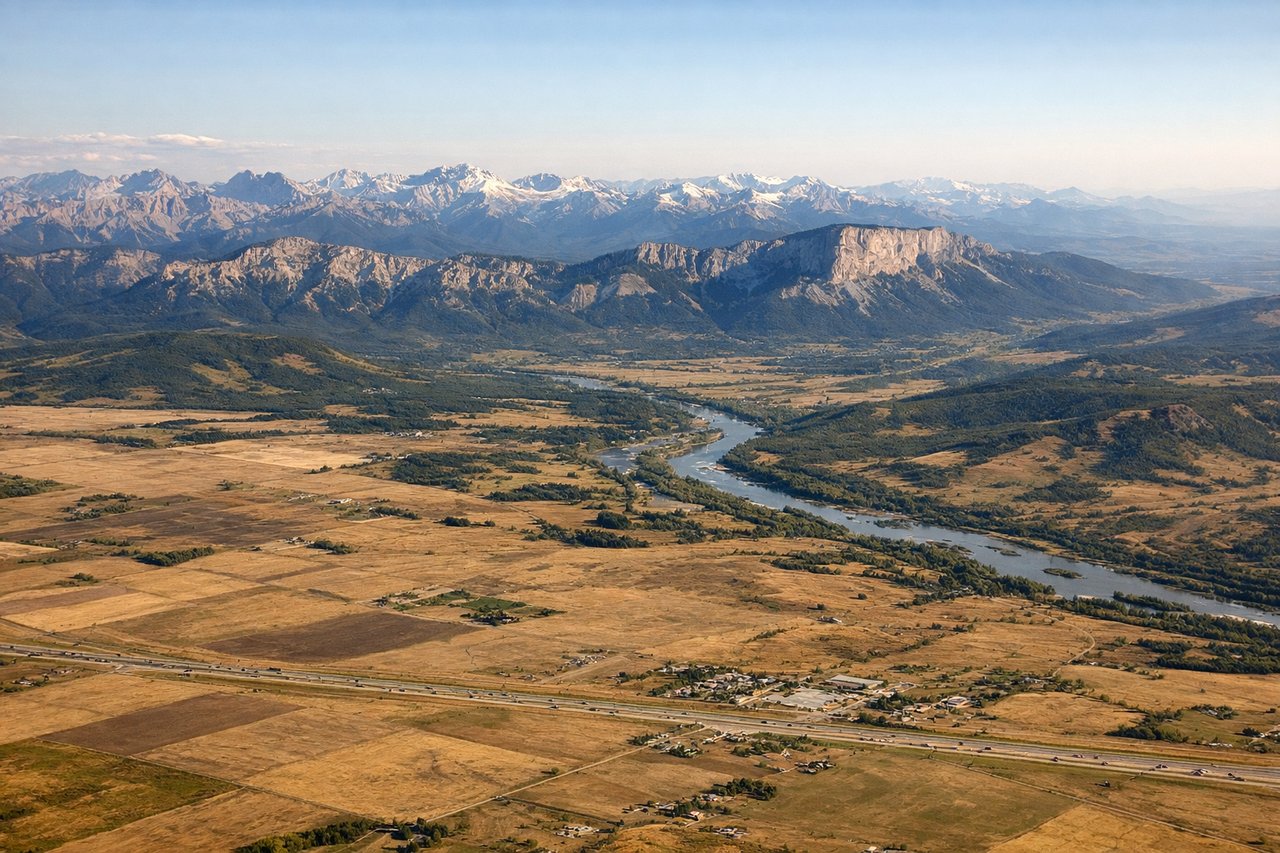
Landing at YYC
LEFTOn approach to YYC from the west, the descent path passes north of the main Rocky Mountain crossing, so left-side passengers get a strong view of the Rocky Mountain front ranges and foothills before the terrain flattens into the plains around Calgary.
Landmarks on this routeAll landmarks →
Will your flight be in sunlight?
Pick a date and time in the Sun Map to watch the sun move across your whole flight.
About This Route
Which side of the plane should I sit on flying from Kelowna (YLW) to Calgary International (YYC)?
Sit on the Left side of the plane for the best views on flights from Kelowna to Calgary. While the Okanagan Lake takeoff is scenic, the left side offers the more dramatic and sustained visual payoff — the Columbia and Rocky Mountain ranges dominate the cruise phase and the approach into Calgary, giving a longer stretch of high-relief terrain.
What can I see during takeoff from Kelowna in Kelowna?
During takeoff from Kelowna (YLW), sit on the Right side for the best views. Departing YLW on runway 34, the aircraft climbs out over the Okanagan Valley, giving right-side passengers a clear view down the length of Okanagan Lake and the surrounding orchard-covered hills before the turn east. Notable sights include: Okanagan Lake, City of Kelowna, Okanagan Valley orchards, Knox Mountain.
What can I see when landing at Calgary International in Calgary?
When landing at Calgary International (YYC), sit on the Left side for the best views. On approach to YYC from the west, the descent path passes north of the main Rocky Mountain crossing, so left-side passengers get a strong view of the Rocky Mountain front ranges and foothills before the terrain flattens into the plains around Calgary. Notable sights include: Rocky Mountain front ranges, Bow River, Calgary foothills, Calgary skyline.
How long is the flight from Kelowna to Calgary?
The flight from Kelowna (YLW) to Calgary International (YYC) takes about 55 minutes. The shortest flight path between them is 249 miles (401 km); winds and air traffic control usually add a few percent.
What does the Kelowna to Calgary flight path pass over?
Monashee Mountains, Columbia River valley, and the western edge of the Rocky Mountains near Golden, BC, are crossed during the cruise phase before the descent into the Alberta foothills.