The takeoff from Toronto offers more visually distinctive features (Lake Ontario, islands, and waterfront) than the landing approach, which, while dramatic, is briefer. Left seats capture the superior scenic value at departure.
Flight Path
The flight path crosses the Atlantic Ocean for approximately 3,000 nautical miles. Notable features include the eastern seaboard of the United States (visible during initial climb if flying south of direct routing), the Atlantic coastline receding northward, and the open Atlantic with no major landmarks for the bulk of the crossing. As the aircraft approaches South America, the Brazilian coast becomes visible, with the mouth of the Amazon River system and the northeastern Brazilian coastline appearing on the horizon before the final descent into Rio de Janeiro.
Great circle distance and headings ›

Phase by phase
Takeoff from YTZ
LEFTLeft seats offer views of Lake Ontario immediately after departure, with the Toronto waterfront and downtown skyline visible during climb-out. Right seats face inland toward the Greater Toronto Area sprawl with less distinctive visual interest.
Landing at GIG
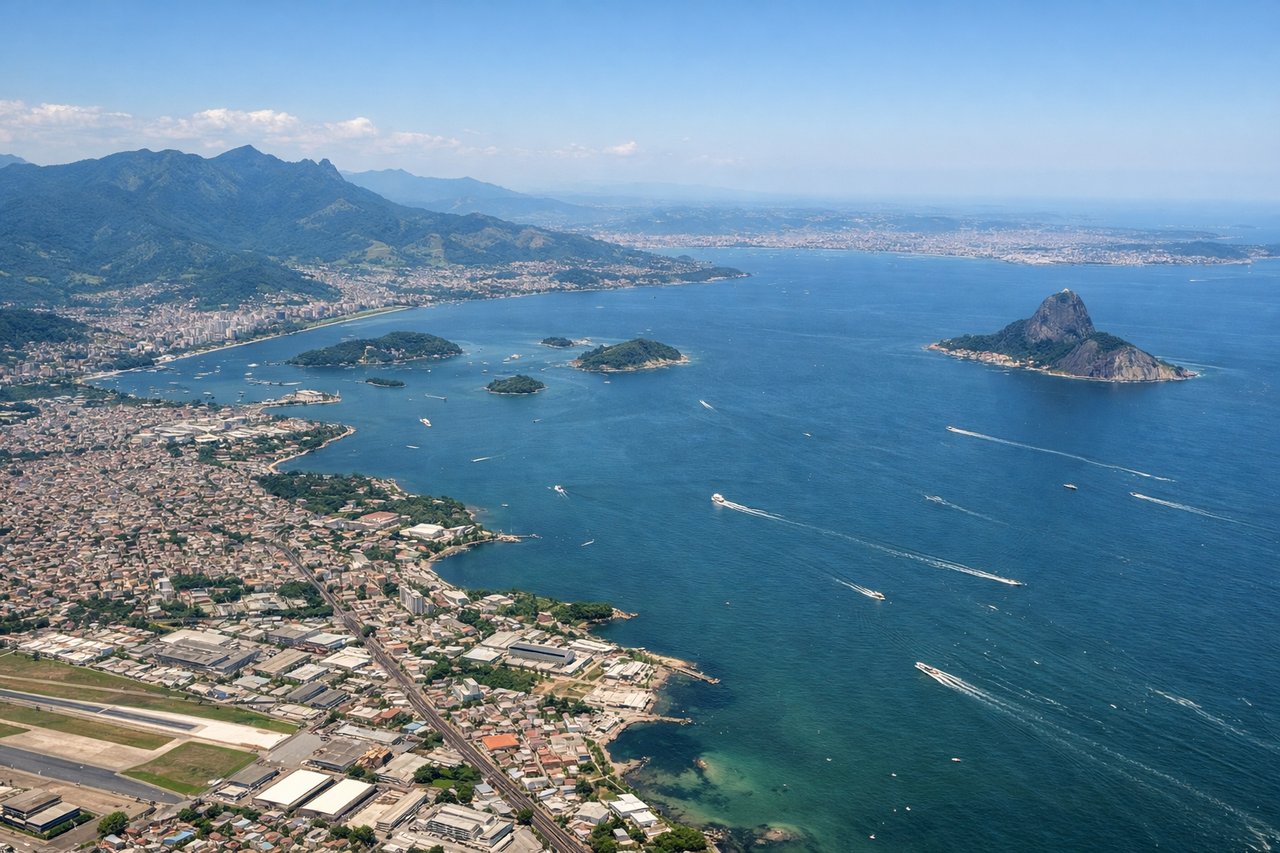
RIGHTRight seats provide views of Guanabara Bay and the dramatic granite peaks of the Serra da Carioca mountains during descent into Rio. Left seats face the Atlantic Ocean and offer less distinctive landmarks on final approach.
Landmarks on this routeAll landmarks →
Will your flight be in sunlight?
See exactly which side of the plane gets sun and shade at your departure time.
About This Route
Which side of the plane should I sit on flying from City Centre (YTZ) to Galeao Antonio Carlos Jobim (GIG)?
Sit on the Left side of the plane for the best views on flights from Toronto to Rio De Janeiro. The takeoff from Toronto offers more visually distinctive features (Lake Ontario, islands, and waterfront) than the landing approach, which, while dramatic, is briefer. Left seats capture the superior scenic value at departure.
What can I see during takeoff from City Centre in Toronto?
During takeoff from City Centre (YTZ), sit on the Left side for the best views. Left seats offer views of Lake Ontario immediately after departure, with the Toronto waterfront and downtown skyline visible during climb-out. Right seats face inland toward the Greater Toronto Area sprawl with less distinctive visual interest. Notable sights include: Lake Ontario, Toronto Islands, Scarborough Bluffs, Downtown Toronto skyline.
What can I see when landing at Galeao Antonio Carlos Jobim in Rio De Janeiro?
When landing at Galeao Antonio Carlos Jobim (GIG), sit on the Right side for the best views. Right seats provide views of Guanabara Bay and the dramatic granite peaks of the Serra da Carioca mountains during descent into Rio. Left seats face the Atlantic Ocean and offer less distinctive landmarks on final approach. Notable sights include: Guanabara Bay, Serra da Carioca mountains, Sugarloaf Mountain, Corcovado peak.
How long is the flight from Toronto to Rio De Janeiro?
The flight from City Centre (YTZ) to Galeao Antonio Carlos Jobim (GIG) takes 5h 15m.
What does the Toronto to Rio De Janeiro flight path pass over?
The flight path crosses the Atlantic Ocean for approximately 3,000 nautical miles. Notable features include the eastern seaboard of the United States (visible during initial climb if flying south of direct routing), the Atlantic coastline receding northward, and the open Atlantic with no major landmarks for the bulk of the crossing. As the aircraft approaches South America, the Brazilian coast becomes visible, with the mouth of the Amazon River system and the northeastern Brazilian coastline appearing on the horizon before the final descent into Rio de Janeiro.