The right side wins both bookends of the flight — a clear skyline view of Toronto at departure and a dramatic mountain backdrop on arrival into Taiwan — while the long cruise over the Canadian Arctic, Siberia, and open ocean offers limited landmarks on either side.
Flight Path
Hudson Bay coastline, Canadian Arctic tundra, Siberian mountain ranges near the Sea of Okhotsk, and the Kuril Islands chain before the route curves south toward Japan and the East China Sea
Great circle distance and headings ›Phase by phase
Takeoff from YTZ
RIGHTDeparting YTZ on runway 26, the climbing turn toward the northwest puts downtown Toronto's skyline and the Toronto Islands directly off the right side, with Lake Ontario stretching south. It's a brief but vivid urban view before the flight settles onto its long overland track.
Landing at TPE
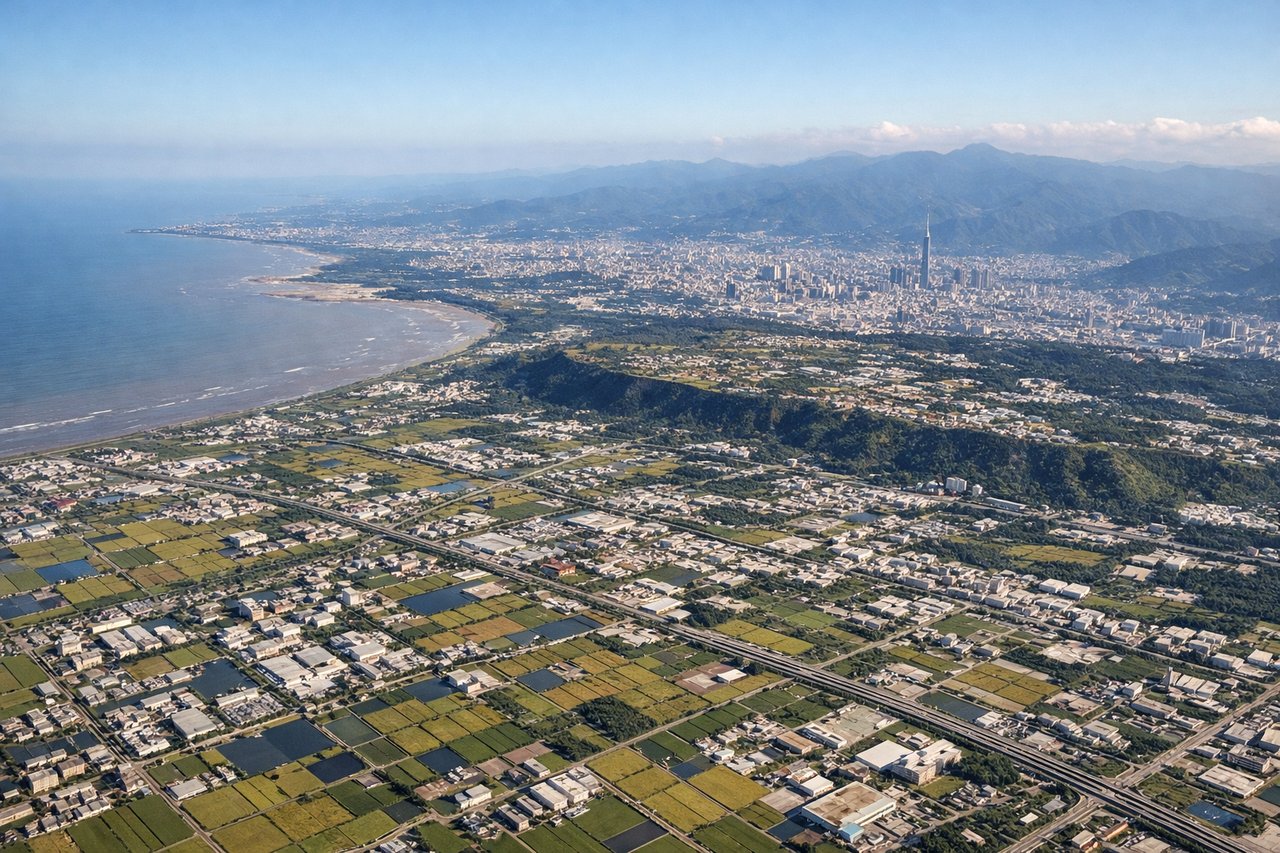
RIGHTOn approach into Taipei's Taoyuan area from the north, the descent path runs along Taiwan's western coastal plain, putting the steep, forested peaks of the Central Mountain Range off the right side of the aircraft. Passengers get a striking contrast between the flat coastal farmland below and the abrupt mountain wall inland.
Will your flight be in sunlight?
See exactly which side of the plane gets sun and shade at your departure time.
About This Route
Which side of the plane should I sit on flying from City Centre (YTZ) to Chiang Kai Shek International (TPE)?
Sit on the Right side of the plane for the best views on flights from Toronto to Taipei. The right side wins both bookends of the flight — a clear skyline view of Toronto at departure and a dramatic mountain backdrop on arrival into Taiwan — while the long cruise over the Canadian Arctic, Siberia, and open ocean offers limited landmarks on either side.
What can I see during takeoff from City Centre in Toronto?
During takeoff from City Centre (YTZ), sit on the Right side for the best views. Departing YTZ on runway 26, the climbing turn toward the northwest puts downtown Toronto's skyline and the Toronto Islands directly off the right side, with Lake Ontario stretching south. It's a brief but vivid urban view before the flight settles onto its long overland track. Notable sights include: CN Tower and downtown Toronto skyline, Toronto Islands, Lake Ontario shoreline, Billy Bishop harbor.
What can I see when landing at Chiang Kai Shek International in Taipei?
When landing at Chiang Kai Shek International (TPE), sit on the Right side for the best views. On approach into Taipei's Taoyuan area from the north, the descent path runs along Taiwan's western coastal plain, putting the steep, forested peaks of the Central Mountain Range off the right side of the aircraft. Passengers get a striking contrast between the flat coastal farmland below and the abrupt mountain wall inland. Notable sights include: Central Mountain Range peaks, Taiwan's western coastal plain, Taipei Basin outskirts, Taiwan Strait coastline.
How long is the flight from Toronto to Taipei?
The flight from City Centre (YTZ) to Chiang Kai Shek International (TPE) takes 14h 40m.
What does the Toronto to Taipei flight path pass over?
Hudson Bay coastline, Canadian Arctic tundra, Siberian mountain ranges near the Sea of Okhotsk, and the Kuril Islands chain before the route curves south toward Japan and the East China Sea