While both sides score equally for the full flight due to the ocean-dominated cruise phase (5+ hours over open water capping both sides at 2.0), the left side wins on the landing experience. The approach to Montego Bay on the left side offers genuine scenic drama—the Caribbean's color gradient, the white sand beaches, and the coastal town create a visually distinctive arrival that outweighs the slightly better Winnipeg departure views on the right. The landing experience carries more weight for passenger satisfaction on this route.
Flown YWG to MBJ? Did we get it right?
Flight Path
Winnipeg to Montego Bay is 2,419 miles (3,893 km), a flight of about 4 hours 15 minutes.
The flight path crosses the Great Lakes region (Lake Michigan and Lake Huron visible during early cruise), then proceeds over the open Atlantic Ocean for approximately 3+ hours. The Appalachian Mountains are not directly on the route but lie to the east. The flight passes over or near the Bahamas archipelago during descent into the Caribbean, where shallow turquoise banks and small islands become visible. No major mountain ranges or dramatic terrain features lie directly on the YWG-MBJ great circle route; the journey is predominantly over water after leaving the North American continent.
Great circle distance and headings ›Phase by phase
Takeoff from YWG
RIGHTRight side captures the initial climb over Winnipeg's urban area and the transition to the flat prairie landscape. While both sides see similar terrain during departure, the right side (east/southeast) offers slightly better views of the city grid and surrounding agricultural patchwork as the aircraft banks and climbs southward.
Landing at MBJ
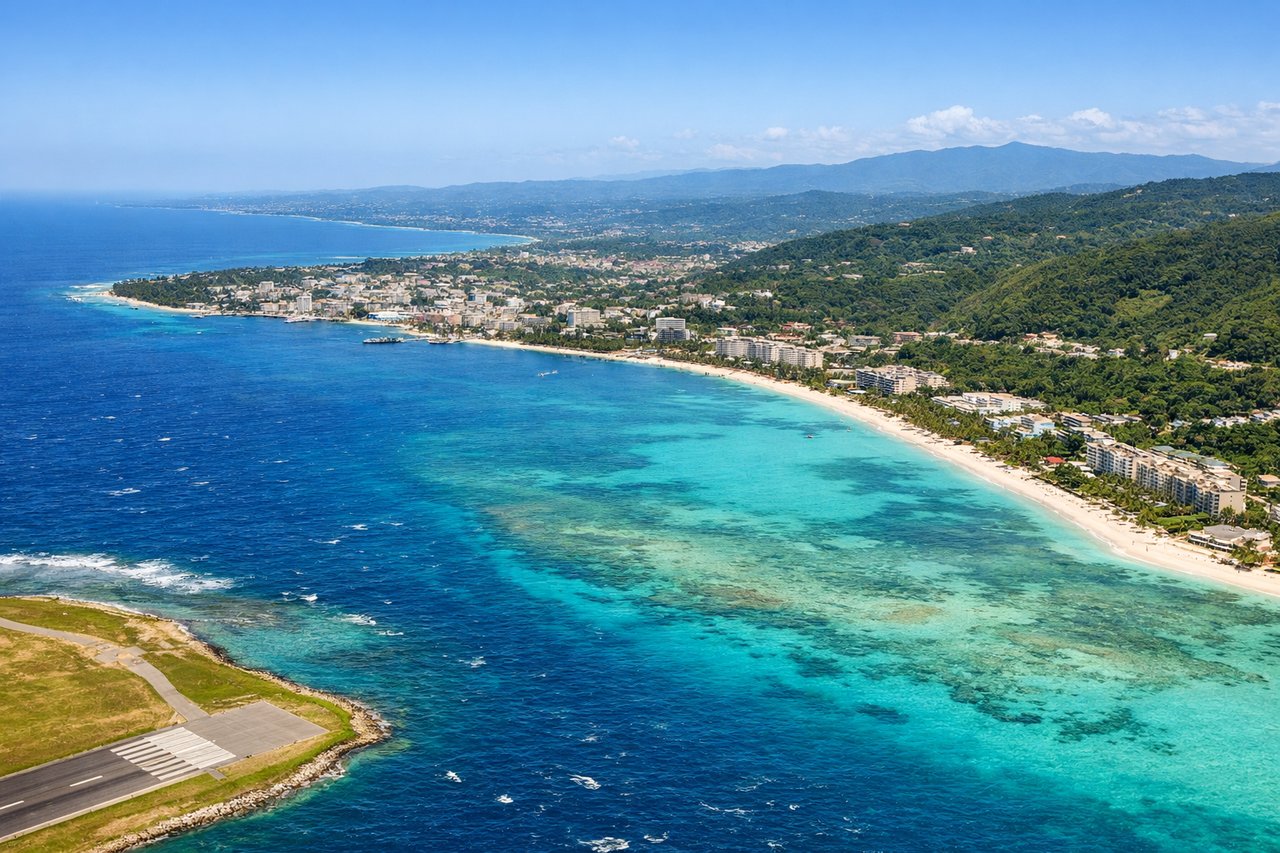
LEFTLeft side (west/northwest) provides superior views during the approach to Montego Bay. Aircraft typically descend over the Caribbean Sea and approach runway 07 from the southwest, meaning the left side faces the Jamaican coastline, the town of Montego Bay, and the dramatic transition from deep blue ocean to shallow turquoise waters and white sand beaches.
Will your flight be in sunlight?
Pick a date and time in the Sun Map to watch the sun move across your whole flight.
About This Route
Which side of the plane should I sit on flying from Winnipeg International (YWG) to Sangster International (MBJ)?
Sit on the Left side of the plane for the best views on flights from Winnipeg to Montego Bay. While both sides score equally for the full flight due to the ocean-dominated cruise phase (5+ hours over open water capping both sides at 2.0), the left side wins on the landing experience. The approach to Montego Bay on the left side offers genuine scenic drama—the Caribbean's color gradient, the white sand beaches, and the coastal town create a visually distinctive arrival that outweighs the slightly better Winnipeg departure views on the right. The landing experience carries more weight for passenger satisfaction on this route.
What can I see during takeoff from Winnipeg International in Winnipeg?
During takeoff from Winnipeg International (YWG), sit on the Right side for the best views. Right side captures the initial climb over Winnipeg's urban area and the transition to the flat prairie landscape. While both sides see similar terrain during departure, the right side (east/southeast) offers slightly better views of the city grid and surrounding agricultural patchwork as the aircraft banks and climbs southward. Notable sights include: Winnipeg city center and the Red River valley, agricultural grid patterns of southern Manitoba, flat prairie extending to the horizon.
What can I see when landing at Sangster International in Montego Bay?
When landing at Sangster International (MBJ), sit on the Left side for the best views. Left side (west/northwest) provides superior views during the approach to Montego Bay. Aircraft typically descend over the Caribbean Sea and approach runway 07 from the southwest, meaning the left side faces the Jamaican coastline, the town of Montego Bay, and the dramatic transition from deep blue ocean to shallow turquoise waters and white sand beaches. Notable sights include: Montego Bay harbor and town, the Jamaican north coast with its white sand beaches, the Caribbean Sea's color gradient from deep blue to turquoise, the limestone hills and vegetation of Jamaica's interior.
How long is the flight from Winnipeg to Montego Bay?
The flight from Winnipeg International (YWG) to Sangster International (MBJ) takes about 4 hours 15 minutes. The shortest flight path between them is 2,419 miles (3,893 km); winds and air traffic control usually add a few percent.
What does the Winnipeg to Montego Bay flight path pass over?
The flight path crosses the Great Lakes region (Lake Michigan and Lake Huron visible during early cruise), then proceeds over the open Atlantic Ocean for approximately 3+ hours. The Appalachian Mountains are not directly on the route but lie to the east. The flight passes over or near the Bahamas archipelago during descent into the Caribbean, where shallow turquoise banks and small islands become visible. No major mountain ranges or dramatic terrain features lie directly on the YWG-MBJ great circle route; the journey is predominantly over water after leaving the North American continent.