While Winnipeg's takeoff offers modest urban interest, the right side dominates the cruise and landing phases. The transatlantic crossing is ocean-dominated (limiting both sides to 2.0 maximum), but the approach to Oslo provides genuine Scandinavian geography—fjord complexity, boreal forest, and topographic relief—that significantly outweighs the flat prairie departure. The landing experience on the right side is substantially more scenic than Winnipeg's flat takeoff.
Flown YWG to OSL? Did we get it right?
Flight Path
Winnipeg to Oslo is 3,851 miles (6,197 km), a flight of about 7 hours 35 minutes.
North Atlantic Ocean (5+ hours of open water with no visible landmarks), Greenland ice sheet and Davis Strait (if visible on northern routing), Norwegian Sea, transition to Scandinavian coastline with fjords and islands approaching Norway
Great circle distance and headings ›

Phase by phase
Takeoff from YWG
LEFTWinnipeg's urban core and the Red River valley are visible during initial climb. The city sprawls across relatively flat terrain, but the river provides linear definition and the downtown skyline offers brief urban interest before transitioning to prairie.
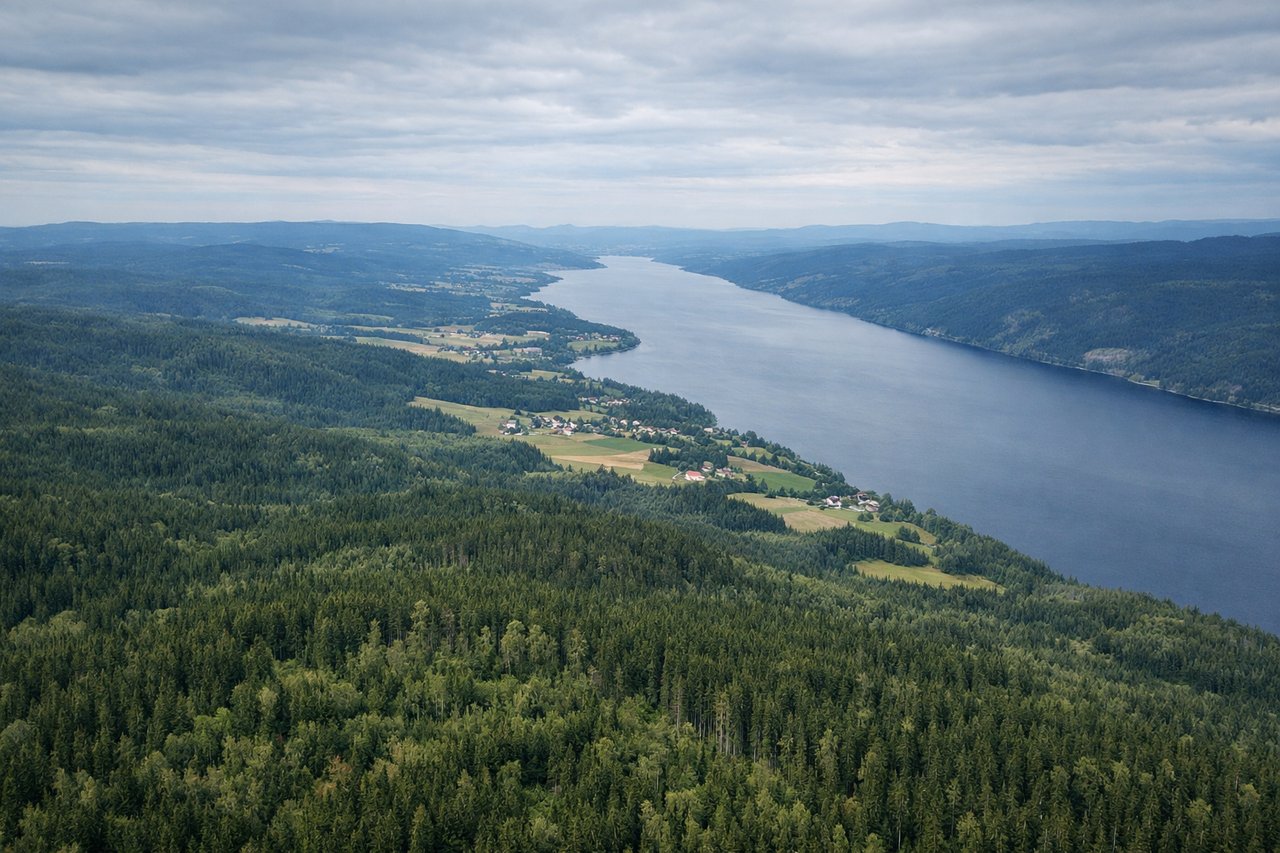
Landing at OSL
RIGHTThe approach to Oslo Gardermoen crosses the Oslofjord and surrounding Scandinavian landscape with genuine topographic relief. Forested hills, the fjord's complex shoreline, and the transition from water to land provide visual variety. The airport sits on elevated terrain with views of the Oslo metropolitan area and surrounding forests.
Will your flight be in sunlight?
Pick a date and time in the Sun Map to watch the sun move across your whole flight.
About This Route
Which side of the plane should I sit on flying from Winnipeg International (YWG) to Oslo Gardermoen (OSL)?
Sit on the Right side of the plane for the best views on flights from Winnipeg to Oslo. While Winnipeg's takeoff offers modest urban interest, the right side dominates the cruise and landing phases. The transatlantic crossing is ocean-dominated (limiting both sides to 2.0 maximum), but the approach to Oslo provides genuine Scandinavian geography—fjord complexity, boreal forest, and topographic relief—that significantly outweighs the flat prairie departure. The landing experience on the right side is substantially more scenic than Winnipeg's flat takeoff.
What can I see during takeoff from Winnipeg International in Winnipeg?
During takeoff from Winnipeg International (YWG), sit on the Left side for the best views. Winnipeg's urban core and the Red River valley are visible during initial climb. The city sprawls across relatively flat terrain, but the river provides linear definition and the downtown skyline offers brief urban interest before transitioning to prairie. Notable sights include: Red River (flowing north-south through city center), Winnipeg downtown core, Assiniboine River confluence, flat prairie extending to horizon.
What can I see when landing at Oslo Gardermoen in Oslo?
When landing at Oslo Gardermoen (OSL), sit on the Right side for the best views. The approach to Oslo Gardermoen crosses the Oslofjord and surrounding Scandinavian landscape with genuine topographic relief. Forested hills, the fjord's complex shoreline, and the transition from water to land provide visual variety. The airport sits on elevated terrain with views of the Oslo metropolitan area and surrounding forests. Notable sights include: Oslofjord (complex inlet with islands and peninsulas), Scandinavian boreal forest (dense coniferous coverage), Oslo city sprawl and harbor, elevated terrain around Gardermoen.
How long is the flight from Winnipeg to Oslo?
The flight from Winnipeg International (YWG) to Oslo Gardermoen (OSL) takes about 7 hours 35 minutes. The shortest flight path between them is 3,851 miles (6,197 km); winds and air traffic control usually add a few percent.
What does the Winnipeg to Oslo flight path pass over?
North Atlantic Ocean (5+ hours of open water with no visible landmarks), Greenland ice sheet and Davis Strait (if visible on northern routing), Norwegian Sea, transition to Scandinavian coastline with fjords and islands approaching Norway