While takeoff favors the right for Lake Ontario views, the landing experience on the left is superior—Barbados's dramatic coastal approach and island topography are far more visually rewarding than the relatively flat Toronto departure. The left side captures the entire descent sequence with the island growing from a small landmass to detailed coastal features.
Flown YYZ to BGI? Did we get it right?
Flight Path
Toronto to Bridgetown is 2,429 miles (3,908 km), a flight of about 5 hours.
The flight path crosses the Atlantic Ocean at roughly 25,000–35,000 feet. Notable features include: the Delmarva Peninsula and U.S. East Coast (visible during initial climb, right side); the Gulf Stream's thermal signature sometimes visible as color variation in the ocean (center, around 2–3 hours into flight); the Bahamas archipelago and shallow turquoise banks (visible on right side around 3.5–4 hours, if flying a slightly northern routing); the transition from temperate Atlantic waters to tropical Caribbean waters marked by deepening blue color; and the Lesser Antilles chain approaching from the north (left side, final 30–45 minutes). Most of the mid-ocean crossing offers only open water and occasional cloud formations.
Great circle distance and headings ›

Phase by phase
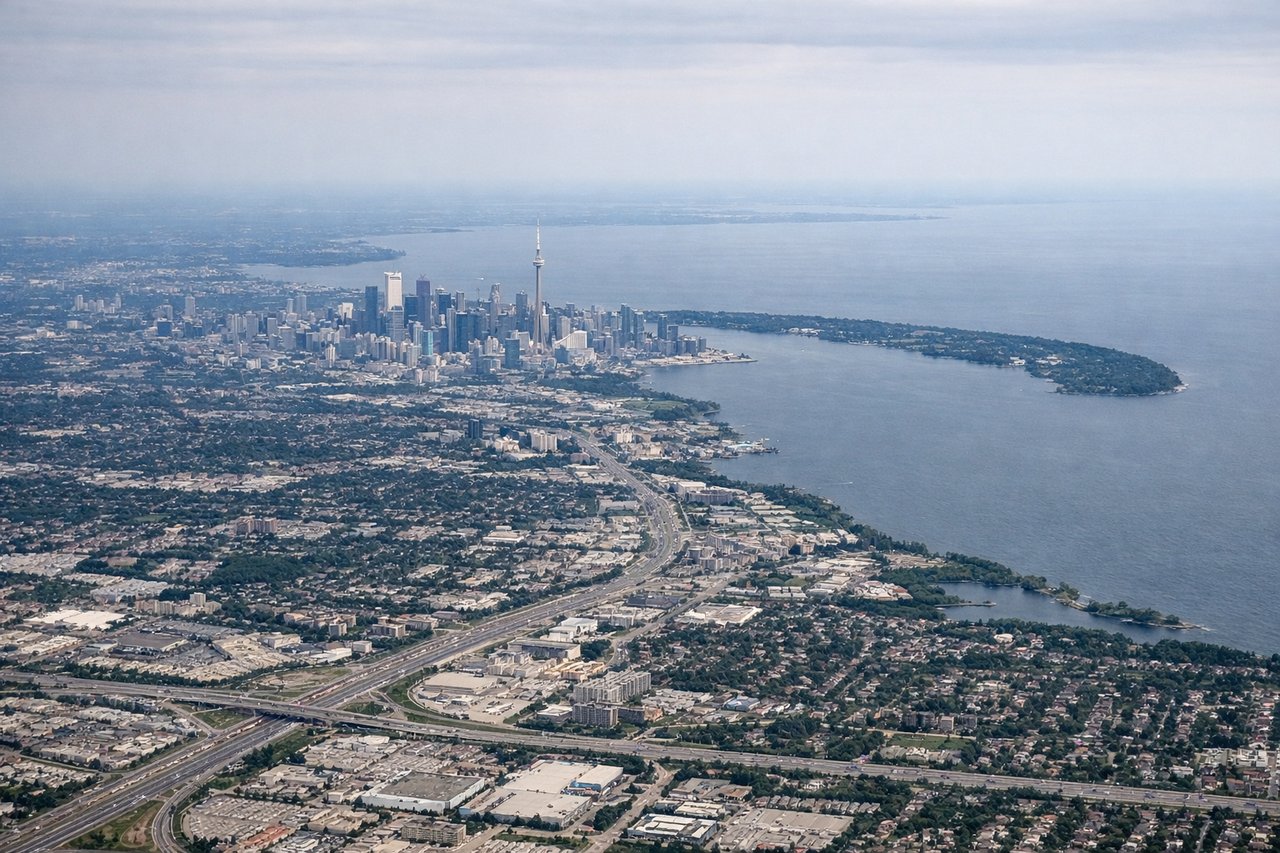
Takeoff from YYZ
RIGHTYYZ typically departs eastbound (Runways 06L/06R or 24L/24R depending on wind). Right-side seats offer views of Lake Ontario's northern shoreline and the Greater Toronto Area sprawl receding southward. Left seats face inland toward the Oak Ridges Moraine, which is forested but less visually distinctive at altitude.
Landing at BGI
LEFTApproach to BGI typically uses Runway 09 (eastbound final). Left-side seats provide unobstructed views of Barbados's southern and western coasts, the Caribbean Sea, and the island's interior terrain during descent. Right seats face away from the island toward open ocean.
Will your flight be in sunlight?
Pick a date and time in the Sun Map to watch the sun move across your whole flight.
About This Route
Which side of the plane should I sit on flying from Lester B Pearson International (YYZ) to Grantley Adams International (BGI)?
Sit on the Left side of the plane for the best views on flights from Toronto to Bridgetown. While takeoff favors the right for Lake Ontario views, the landing experience on the left is superior—Barbados's dramatic coastal approach and island topography are far more visually rewarding than the relatively flat Toronto departure. The left side captures the entire descent sequence with the island growing from a small landmass to detailed coastal features.
What can I see during takeoff from Lester B Pearson International in Toronto?
During takeoff from Lester B Pearson International (YYZ), sit on the Right side for the best views. YYZ typically departs eastbound (Runways 06L/06R or 24L/24R depending on wind). Right-side seats offer views of Lake Ontario's northern shoreline and the Greater Toronto Area sprawl receding southward. Left seats face inland toward the Oak Ridges Moraine, which is forested but less visually distinctive at altitude. Notable sights include: Lake Ontario (southern horizon), Toronto downtown core and CN Tower area (southeast), Scarborough Bluffs erosion formations (east along shoreline), Greater Toronto Area urban grid extending inland.
What can I see when landing at Grantley Adams International in Bridgetown?
When landing at Grantley Adams International (BGI), sit on the Left side for the best views. Approach to BGI typically uses Runway 09 (eastbound final). Left-side seats provide unobstructed views of Barbados's southern and western coasts, the Caribbean Sea, and the island's interior terrain during descent. Right seats face away from the island toward open ocean. Notable sights include: Bridgetown harbor and Carlisle Bay (western coast), the island's central ridge and interior vegetation (green, elevated terrain), southern coastal settlements and beaches, Caribbean Sea with deep blue-to-turquoise color gradient.
How long is the flight from Toronto to Bridgetown?
The flight from Lester B Pearson International (YYZ) to Grantley Adams International (BGI) takes about 5 hours. The shortest flight path between them is 2,429 miles (3,908 km); winds and air traffic control usually add a few percent.
What does the Toronto to Bridgetown flight path pass over?
The flight path crosses the Atlantic Ocean at roughly 25,000–35,000 feet. Notable features include: the Delmarva Peninsula and U.S. East Coast (visible during initial climb, right side); the Gulf Stream's thermal signature sometimes visible as color variation in the ocean (center, around 2–3 hours into flight); the Bahamas archipelago and shallow turquoise banks (visible on right side around 3.5–4 hours, if flying a slightly northern routing); the transition from temperate Atlantic waters to tropical Caribbean waters marked by deepening blue color; and the Lesser Antilles chain approaching from the north (left side, final 30–45 minutes). Most of the mid-ocean crossing offers only open water and occasional cloud formations.