The left side wins overall. The Toronto departure view of the CN Tower, downtown skyline, and Lake Ontario is genuinely spectacular and hard to beat. Across the Pacific on a polar routing, the left side also tends to face south toward the Aleutian Islands chain and eventually the Japanese coastline on descent. The Hiroshima landing views are good on either side, but the Toronto departure experience gives the left seat a decisive edge for the full journey.
Flown YYZ to HIJ? Did we get it right?
Flight Path
Toronto to Hiroshima is 6,664 miles (10,725 km), a flight of about 13 hours 30 minutes.
The flight tracks northwest over Lake Huron and Lake Superior, then across Manitoba and Saskatchewan, before arcing over the Yukon and Alaska Range. The Aleutian Islands chain becomes visible as a string of volcanic peaks in the North Pacific. The flight then crosses the Kamchatka Peninsula with its active stratovolcanoes, descends over the Sea of Japan, and approaches Honshu over the mountainous spine of western Japan before reaching the Seto Inland Sea coast.
Great circle distance and headings ›Phase by phase
Takeoff from YYZ
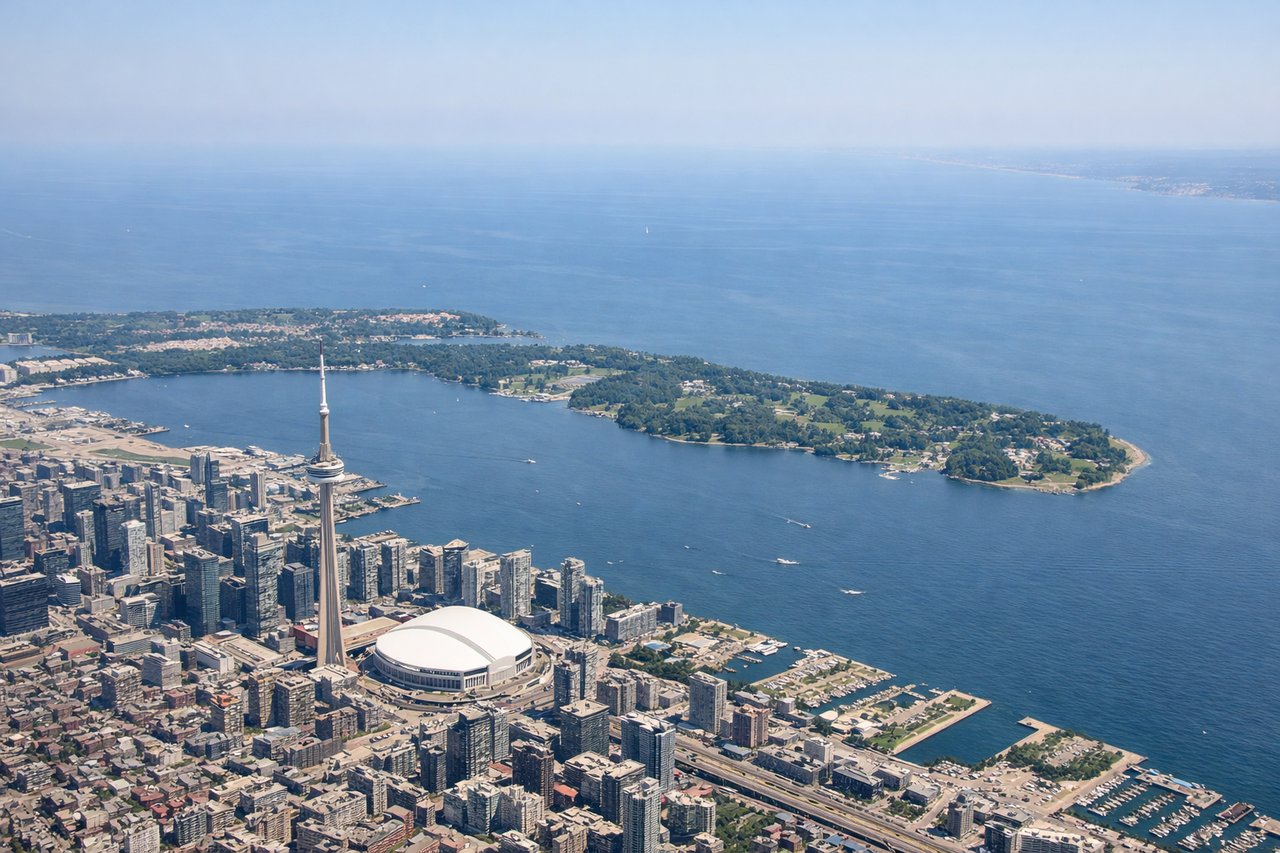
LEFTDeparting YYZ on runways 23 or 24 (the most common westbound departure), a left-side seat faces south and southeast, giving you a clear view over downtown Toronto, the CN Tower, and Lake Ontario stretching to the horizon. The city grid and waterfront are laid out cleanly below before you bank northwest toward the polar route.
Landing at HIJ
RIGHTHiroshima Airport sits northeast of the city, and aircraft typically approach from the east on runway 28, meaning a right-side seat faces north toward the Chugoku Mountains while the left side looks south toward the Seto Inland Sea. However, on approach from the east, the right side actually gives you the Seto Inland Sea and its island-dotted waters as you descend over Mihara, which is the more visually compelling view. On the more common eastward departure or westward arrival on runway 28, right side passengers see the Seto Inland Sea and the islands of Ōshima and Innoshima clearly.
Will your flight be in sunlight?
Pick a date and time in the Sun Map to watch the sun move across your whole flight.
About This Route
Which side of the plane should I sit on flying from Lester B Pearson International (YYZ) to Hiroshima (HIJ)?
Sit on the Left side of the plane for the best views on flights from Toronto to Hiroshima. The left side wins overall. The Toronto departure view of the CN Tower, downtown skyline, and Lake Ontario is genuinely spectacular and hard to beat. Across the Pacific on a polar routing, the left side also tends to face south toward the Aleutian Islands chain and eventually the Japanese coastline on descent. The Hiroshima landing views are good on either side, but the Toronto departure experience gives the left seat a decisive edge for the full journey.
What can I see during takeoff from Lester B Pearson International in Toronto?
During takeoff from Lester B Pearson International (YYZ), sit on the Left side for the best views. Departing YYZ on runways 23 or 24 (the most common westbound departure), a left-side seat faces south and southeast, giving you a clear view over downtown Toronto, the CN Tower, and Lake Ontario stretching to the horizon. The city grid and waterfront are laid out cleanly below before you bank northwest toward the polar route. Notable sights include: CN Tower and downtown Toronto skyline, Lake Ontario shoreline and Toronto Islands, Scarborough Bluffs visible to the east along the lakeshore.
What can I see when landing at Hiroshima in Hiroshima?
When landing at Hiroshima (HIJ), sit on the Right side for the best views. Hiroshima Airport sits northeast of the city, and aircraft typically approach from the east on runway 28, meaning a right-side seat faces north toward the Chugoku Mountains while the left side looks south toward the Seto Inland Sea. However, on approach from the east, the right side actually gives you the Seto Inland Sea and its island-dotted waters as you descend over Mihara, which is the more visually compelling view. On the more common eastward departure or westward arrival on runway 28, right side passengers see the Seto Inland Sea and the islands of Ōshima and Innoshima clearly. Notable sights include: Seto Inland Sea with scattered islands (Ōshima, Innoshima, Ikuchijima), Chugoku Mountains to the north, Hiroshima city delta and river channels visible on final approach.
How long is the flight from Toronto to Hiroshima?
The flight from Lester B Pearson International (YYZ) to Hiroshima (HIJ) takes about 13 hours 30 minutes. The shortest flight path between them is 6,664 miles (10,725 km); winds and air traffic control usually add a few percent.
What does the Toronto to Hiroshima flight path pass over?
The flight tracks northwest over Lake Huron and Lake Superior, then across Manitoba and Saskatchewan, before arcing over the Yukon and Alaska Range. The Aleutian Islands chain becomes visible as a string of volcanic peaks in the North Pacific. The flight then crosses the Kamchatka Peninsula with its active stratovolcanoes, descends over the Sea of Japan, and approaches Honshu over the mountainous spine of western Japan before reaching the Seto Inland Sea coast.