While the landing approach favors the left side, the takeoff from Toronto offers more dramatic and sustained scenery with Lake Ontario and the Toronto waterfront. The right side captures the most visually distinctive moment of the flight, making it the better overall choice for a scenic window seat.
Flown YYZ to STL? Did we get it right?
Flight Path
Toronto to St. Louis is 653 miles (1,051 km), a flight of about 2 hours 25 minutes.
The flight path crosses the northern Ohio landscape, passing over or near Lake Erie's southern shore, then continues over central Ohio farmland and the Ohio River valley. The Appalachian foothills become visible in the distance to the southeast as the aircraft approaches the midpoint. The terrain transitions from the Great Lakes region to the more rolling landscape of the Ohio River valley before flattening again as the aircraft approaches the Mississippi River valley near St. Louis.
Great circle distance and headings ›

Phase by phase
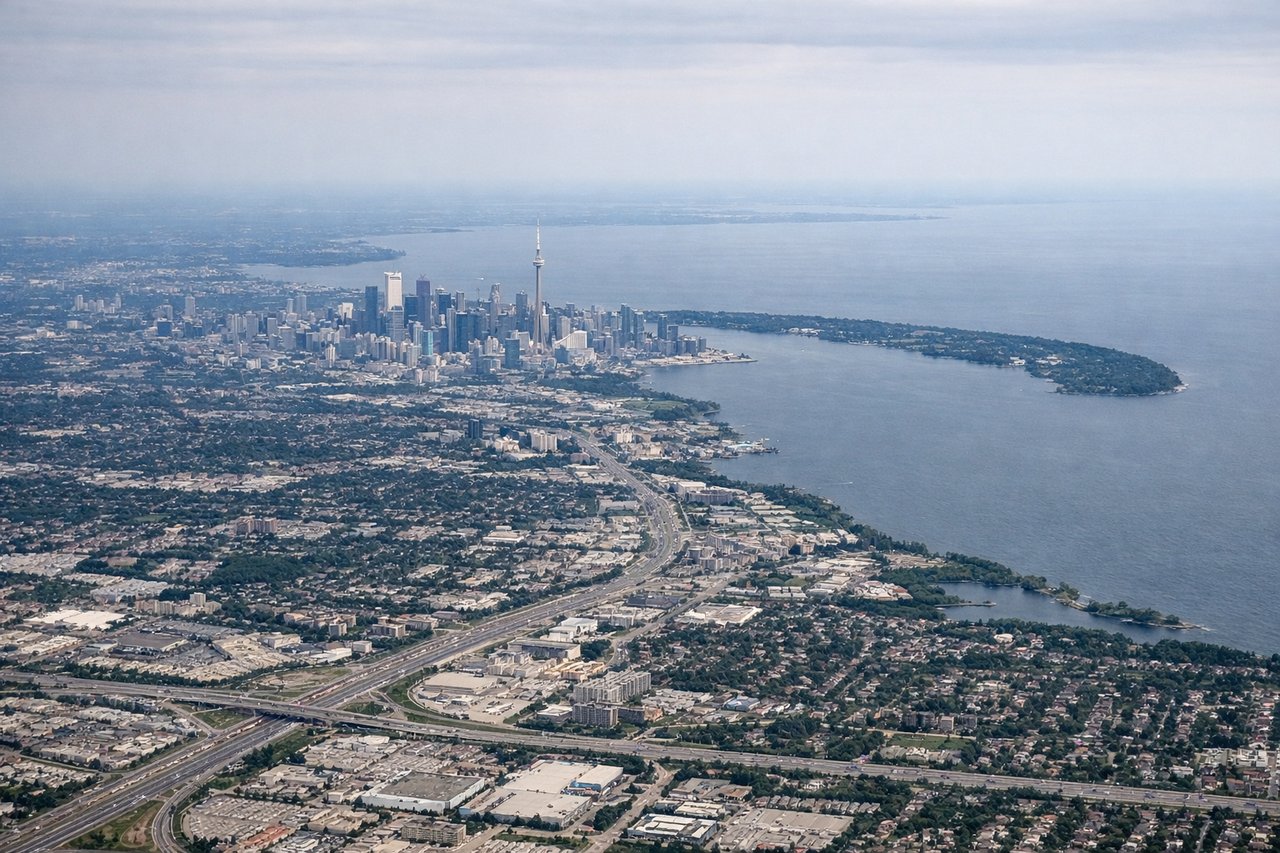
Takeoff from YYZ
RIGHTRight-side seats offer views of Lake Ontario immediately after departure, with the Toronto waterfront and downtown skyline visible during climb-out. The aircraft typically departs eastbound or southeastbound, making the right side the optimal viewing position for the lake and urban landscape.

Landing at STL
LEFTLeft-side seats provide excellent views during the descent approach into St. Louis. The aircraft typically descends from the northeast, and left-side passengers will see the Mississippi River as it curves through the St. Louis area, plus the Gateway Arch and downtown riverfront during final approach.
Will your flight be in sunlight?
Pick a date and time in the Sun Map to watch the sun move across your whole flight.
About This Route
Which side of the plane should I sit on flying from Lester B Pearson International (YYZ) to Lambert St Louis International (STL)?
Sit on the Right side of the plane for the best views on flights from Toronto to St. Louis. While the landing approach favors the left side, the takeoff from Toronto offers more dramatic and sustained scenery with Lake Ontario and the Toronto waterfront. The right side captures the most visually distinctive moment of the flight, making it the better overall choice for a scenic window seat.
What can I see during takeoff from Lester B Pearson International in Toronto?
During takeoff from Lester B Pearson International (YYZ), sit on the Right side for the best views. Right-side seats offer views of Lake Ontario immediately after departure, with the Toronto waterfront and downtown skyline visible during climb-out. The aircraft typically departs eastbound or southeastbound, making the right side the optimal viewing position for the lake and urban landscape. Notable sights include: Lake Ontario, Toronto downtown core and CN Tower, Scarborough Bluffs, Toronto Islands.
What can I see when landing at Lambert St Louis International in St. Louis?
When landing at Lambert St Louis International (STL), sit on the Left side for the best views. Left-side seats provide excellent views during the descent approach into St. Louis. The aircraft typically descends from the northeast, and left-side passengers will see the Mississippi River as it curves through the St. Louis area, plus the Gateway Arch and downtown riverfront during final approach. Notable sights include: Mississippi River, Gateway Arch, St. Louis downtown, Illinois bluffs across the river.
How long is the flight from Toronto to St. Louis?
The flight from Lester B Pearson International (YYZ) to Lambert St Louis International (STL) takes about 2 hours 25 minutes. The shortest flight path between them is 653 miles (1,051 km); winds and air traffic control usually add a few percent.
What does the Toronto to St. Louis flight path pass over?
The flight path crosses the northern Ohio landscape, passing over or near Lake Erie's southern shore, then continues over central Ohio farmland and the Ohio River valley. The Appalachian foothills become visible in the distance to the southeast as the aircraft approaches the midpoint. The terrain transitions from the Great Lakes region to the more rolling landscape of the Ohio River valley before flattening again as the aircraft approaches the Mississippi River valley near St. Louis.