Right side scores higher (3.5 vs 2.5) due to superior scenery on both legs. Eastbound departure from ADD reveals the dramatic Ethiopian highlands escarpment and volcanic terrain. The cruise phase crosses the Red Sea and Arabian Peninsula with moderate interest. The approach to CGK from the northeast showcases the visually distinctive Thousand Islands archipelago and Jakarta Bay—a unique coastal feature. Left side offers flatter terrain on departure and a less scenic industrial approach, making it consistently less rewarding throughout the flight.
Flown ADD to CGK? Did we get it right?
Flight Path
Addis Ababa to Jakarta is 4,788 miles (7,705 km), a flight of about 7 hours 15 minutes.
Red Sea coastline (Saudi Arabia and Eritrea), Arabian Peninsula desert plateau, Gulf of Aden, Indian Ocean open water, Socotra Island (if visible on southern routing), Horn of Africa coast, transition to Southeast Asian maritime zones, Java Sea shallow waters and coral formations
Great circle distance and headings ›Phase by phase
Takeoff from ADD
RIGHTRight-side departures from ADD typically climb eastward over the Ethiopian highlands, revealing the dramatic escarpment and plateau terrain. Left side faces westward toward flatter savanna with minimal relief.
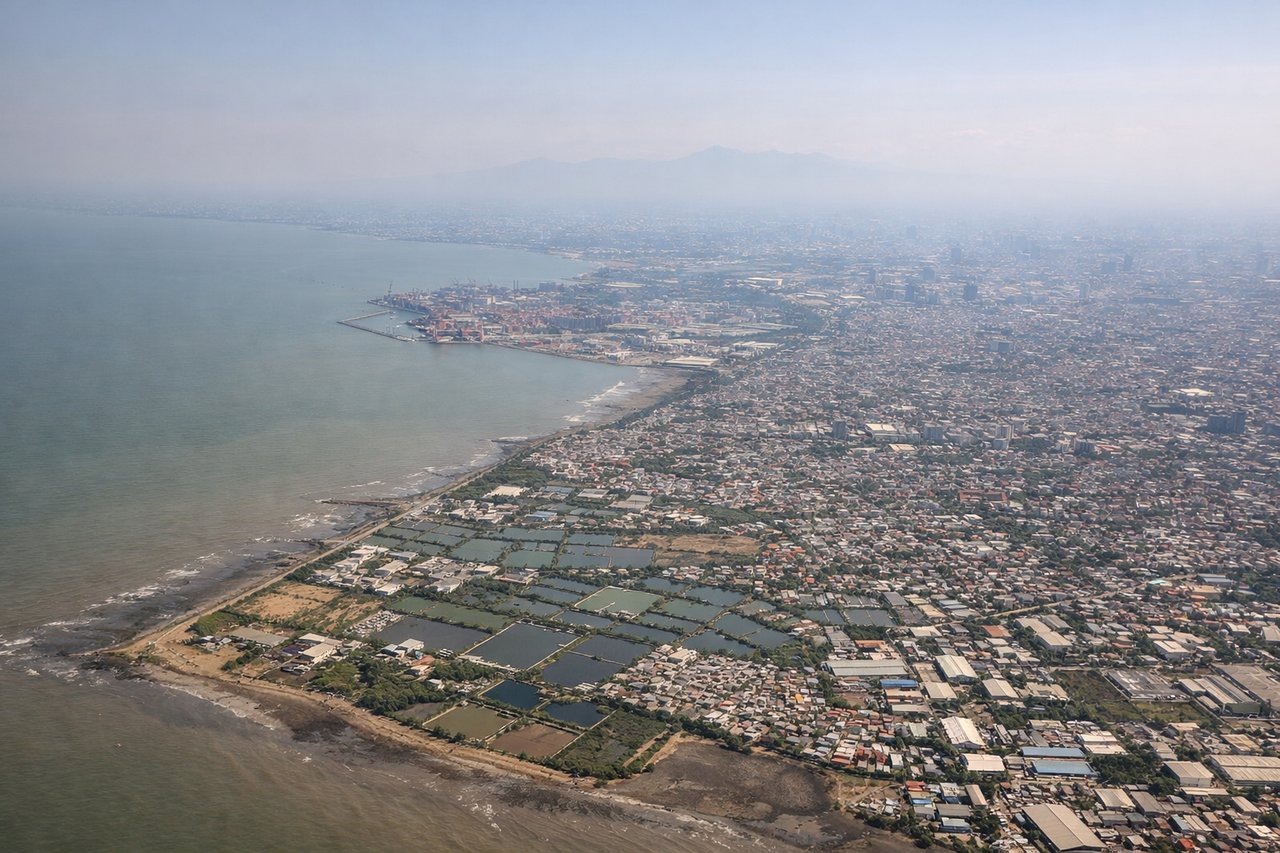
Landing at CGK
RIGHTRight-side approaches to CGK typically descend from the northeast over the Java Sea and Thousand Islands archipelago, offering views of coastal waters, island chains, and Jakarta's harbor. Left side approaches from the northwest over flat industrial zones and open water with less visual interest.
Will your flight be in sunlight?
Pick a date and time in the Sun Map to watch the sun move across your whole flight.
About This Route
Which side of the plane should I sit on flying from Bole International (ADD) to Soekarno Hatta International (CGK)?
Sit on the Right side of the plane for the best views on flights from Addis Ababa to Jakarta. Right side scores higher (3.5 vs 2.5) due to superior scenery on both legs. Eastbound departure from ADD reveals the dramatic Ethiopian highlands escarpment and volcanic terrain. The cruise phase crosses the Red Sea and Arabian Peninsula with moderate interest. The approach to CGK from the northeast showcases the visually distinctive Thousand Islands archipelago and Jakarta Bay—a unique coastal feature. Left side offers flatter terrain on departure and a less scenic industrial approach, making it consistently less rewarding throughout the flight.
What can I see during takeoff from Bole International in Addis Ababa?
During takeoff from Bole International (ADD), sit on the Right side for the best views. Right-side departures from ADD typically climb eastward over the Ethiopian highlands, revealing the dramatic escarpment and plateau terrain. Left side faces westward toward flatter savanna with minimal relief. Notable sights include: Ethiopian highlands plateau edge, Addis Ababa urban sprawl, distant volcanic peaks of the Rift Valley.
What can I see when landing at Soekarno Hatta International in Jakarta?
When landing at Soekarno Hatta International (CGK), sit on the Right side for the best views. Right-side approaches to CGK typically descend from the northeast over the Java Sea and Thousand Islands archipelago, offering views of coastal waters, island chains, and Jakarta's harbor. Left side approaches from the northwest over flat industrial zones and open water with less visual interest. Notable sights include: Thousand Islands (Kepulauan Seribu) archipelago, Jakarta Bay, Soekarno-Hatta airport complex and runways.
How long is the flight from Addis Ababa to Jakarta?
The flight from Bole International (ADD) to Soekarno Hatta International (CGK) takes about 7 hours 15 minutes. The shortest flight path between them is 4,788 miles (7,705 km); winds and air traffic control usually add a few percent.
What does the Addis Ababa to Jakarta flight path pass over?
Red Sea coastline (Saudi Arabia and Eritrea), Arabian Peninsula desert plateau, Gulf of Aden, Indian Ocean open water, Socotra Island (if visible on southern routing), Horn of Africa coast, transition to Southeast Asian maritime zones, Java Sea shallow waters and coral formations