Aracaju to New York is 4,267 miles (6,868 km), a flight of about 10 hours.
Right-side seats capture the most dramatic scenery: the Brazilian Atlantic coastline and estuary systems during departure, and the approach over Jamaica Bay and Manhattan's skyline during arrival. The left side offers less distinctive views over the open Atlantic during the long transatlantic crossing.
Flight Path
The flight path crosses the Atlantic Ocean for roughly 8 hours with no visible landmarks. The aircraft will pass south of the Azores (Portugal) at high altitude but typically too far south for clear visibility. Upon approaching North America, the Canadian Maritime provinces and New England coastline become visible during descent, including Nova Scotia and the New England coast. The flight then follows a standard approach corridor over the Atlantic toward the New York area.
Great circle distance and headings ›Phase by phase
Takeoff from AJU
RIGHTRight-side seats offer views of the Sergipe coastline and the Atlantic Ocean as the aircraft climbs northeastward from Aracaju. The Vaza-Barris River estuary and nearby beaches are visible during the initial climb-out phase.
Landing at JFK
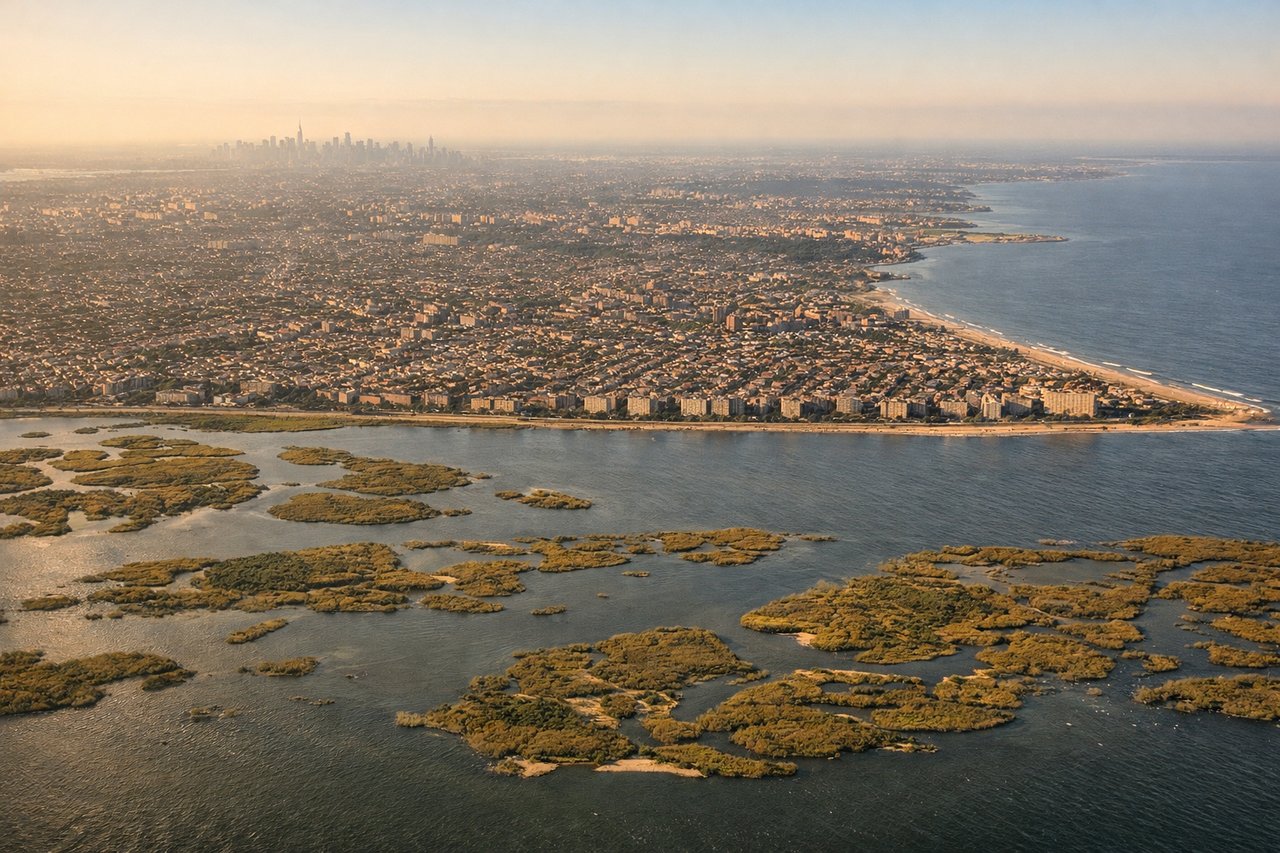
LEFTLeft-side seats provide views of the New York metropolitan area during descent into JFK. The Hudson River, Manhattan's skyline, and the approach over Jamaica Bay and the Rockaways offer distinctive urban landmarks and water features.
Landmarks on this routeAll landmarks →
Will your flight be in sunlight?
Pick a date and time in the Sun Map to watch the sun move across your whole flight.
About This Route
Which side of the plane should I sit on flying from Santa Maria (AJU) to John F Kennedy International (JFK)?
Sit on the Right side of the plane for the best views on flights from Aracaju to New York. Right-side seats capture the most dramatic scenery: the Brazilian Atlantic coastline and estuary systems during departure, and the approach over Jamaica Bay and Manhattan's skyline during arrival. The left side offers less distinctive views over the open Atlantic during the long transatlantic crossing.
What can I see during takeoff from Santa Maria in Aracaju?
During takeoff from Santa Maria (AJU), sit on the Right side for the best views. Right-side seats offer views of the Sergipe coastline and the Atlantic Ocean as the aircraft climbs northeastward from Aracaju. The Vaza-Barris River estuary and nearby beaches are visible during the initial climb-out phase. Notable sights include: Vaza-Barris River estuary, Atlantic coastline south of Aracaju, Aracaju city grid, shallow coastal waters and sandbars.
What can I see when landing at John F Kennedy International in New York?
When landing at John F Kennedy International (JFK), sit on the Left side for the best views. Left-side seats provide views of the New York metropolitan area during descent into JFK. The Hudson River, Manhattan's skyline, and the approach over Jamaica Bay and the Rockaways offer distinctive urban landmarks and water features. Notable sights include: Hudson River, Manhattan skyline, Jamaica Bay, Rockaway Peninsula, Long Island Sound.
How long is the flight from Aracaju to New York?
The flight from Santa Maria (AJU) to John F Kennedy International (JFK) takes about 10 hours. The shortest flight path between them is 4,267 miles (6,868 km); winds and air traffic control usually add a few percent.
What does the Aracaju to New York flight path pass over?
The flight path crosses the Atlantic Ocean for roughly 8 hours with no visible landmarks. The aircraft will pass south of the Azores (Portugal) at high altitude but typically too far south for clear visibility. Upon approaching North America, the Canadian Maritime provinces and New England coastline become visible during descent, including Nova Scotia and the New England coast. The flight then follows a standard approach corridor over the Atlantic toward the New York area.