The right side wins because the great-circle route bows northward, putting Scotland's coast, the edge of Greenland's ice sheet, and the Labrador coastline within view during cruise, while also aligning with better departure and arrival scenery near Amsterdam and Detroit.
Flight Path
Southern tip of Greenland's ice sheet, the Labrador Sea, and the rugged coastline of Newfoundland are visible along the great-circle route between Europe and the Great Lakes region.
Great circle distance and headings ›


Phase by phase
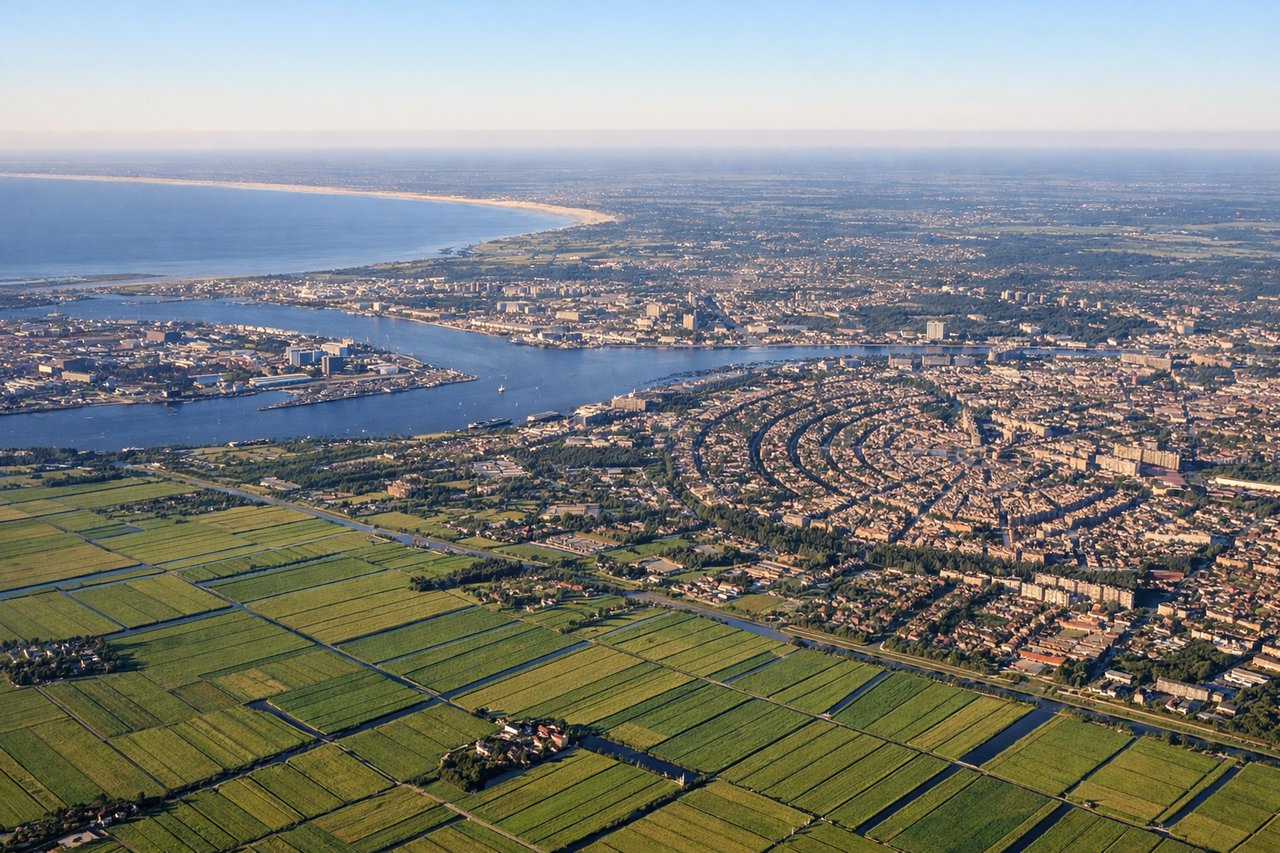
Takeoff from AMS
RIGHTDeparting Schiphol to the south before turning west, the right side gives a good look back over the Dutch polders, the IJsselmeer, and the North Sea coastline as the aircraft banks toward open water. The left side mostly shows flat inland Netherlands with little variation.
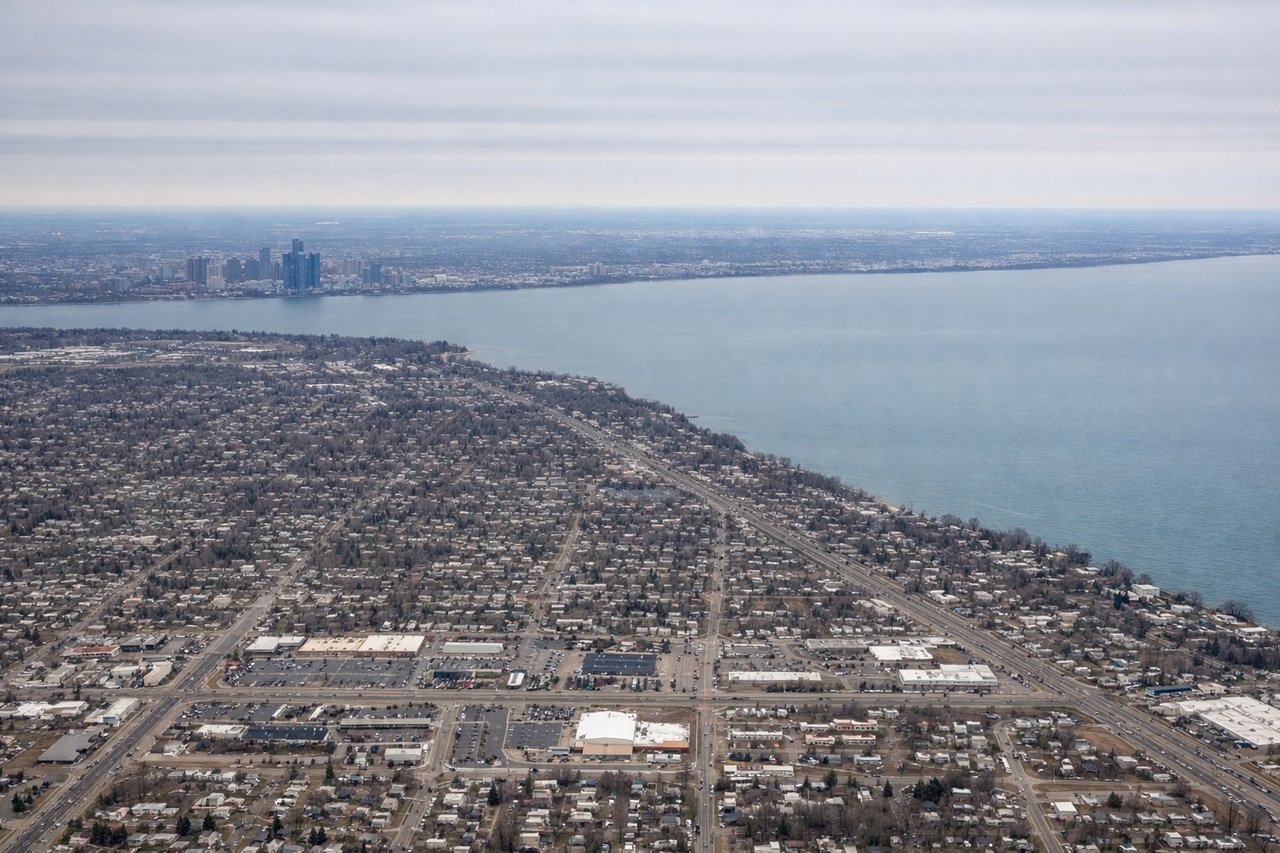
Landing at DTW
RIGHTOn approach to Detroit from the northeast, the right side offers views of the Michigan mainland, Lake St. Clair, and the Detroit River delta before the final turn, while the left side mostly faces open Lake Erie with less defined shoreline detail.
Landmarks on this routeAll landmarks →
Will your flight be in sunlight?
See exactly which side of the plane gets sun and shade at your departure time.
About This Route
Which side of the plane should I sit on flying from Schiphol (AMS) to Detroit Metro Wayne Co (DTW)?
Sit on the Right side of the plane for the best views on flights from Amsterdam to Detroit. The right side wins because the great-circle route bows northward, putting Scotland's coast, the edge of Greenland's ice sheet, and the Labrador coastline within view during cruise, while also aligning with better departure and arrival scenery near Amsterdam and Detroit.
What can I see during takeoff from Schiphol in Amsterdam?
During takeoff from Schiphol (AMS), sit on the Right side for the best views. Departing Schiphol to the south before turning west, the right side gives a good look back over the Dutch polders, the IJsselmeer, and the North Sea coastline as the aircraft banks toward open water. The left side mostly shows flat inland Netherlands with little variation. Notable sights include: IJsselmeer, Amsterdam's Randstad urban sprawl, North Sea coastline, Dutch polder farmland patterns.
What can I see when landing at Detroit Metro Wayne Co in Detroit?
When landing at Detroit Metro Wayne Co (DTW), sit on the Right side for the best views. On approach to Detroit from the northeast, the right side offers views of the Michigan mainland, Lake St. Clair, and the Detroit River delta before the final turn, while the left side mostly faces open Lake Erie with less defined shoreline detail. Notable sights include: Lake St. Clair, Detroit River, Grosse Pointe shoreline, Downtown Detroit skyline in the distance.
How long is the flight from Amsterdam to Detroit?
The flight from Schiphol (AMS) to Detroit Metro Wayne Co (DTW) takes 8h 55m.
What does the Amsterdam to Detroit flight path pass over?
Southern tip of Greenland's ice sheet, the Labrador Sea, and the rugged coastline of Newfoundland are visible along the great-circle route between Europe and the Great Lakes region.