While Amsterdam's departure offers excellent urban and polder scenery, the flight is dominated by 10+ hours of open ocean (Bay of Bengal and South China Sea) on both sides during cruise. Right-side passengers gain a significant advantage during the Hanoi approach, where the Red River Delta's dramatic agricultural patchwork, river meanders, and transition to urban landscape provide concentrated scenic value. The right side captures both the departure's modest Dutch landscape and the landing's distinctive Southeast Asian delta geography, making it the better overall choice for window-seat scenery.
Flown AMS to HAN? Did we get it right?
Flight Path
Amsterdam to Hanoi is 5,513 miles (8,872 km), a flight of about 11 hours 15 minutes.
Bay of Bengal coastline (Myanmar, Bangladesh, India), Andaman Sea, Gulf of Tonkin, Mekong Delta region (visible on southern routes), Thai-Laotian border regions, Vietnamese highlands and Red River valley approach
Great circle distance and headings ›Phase by phase
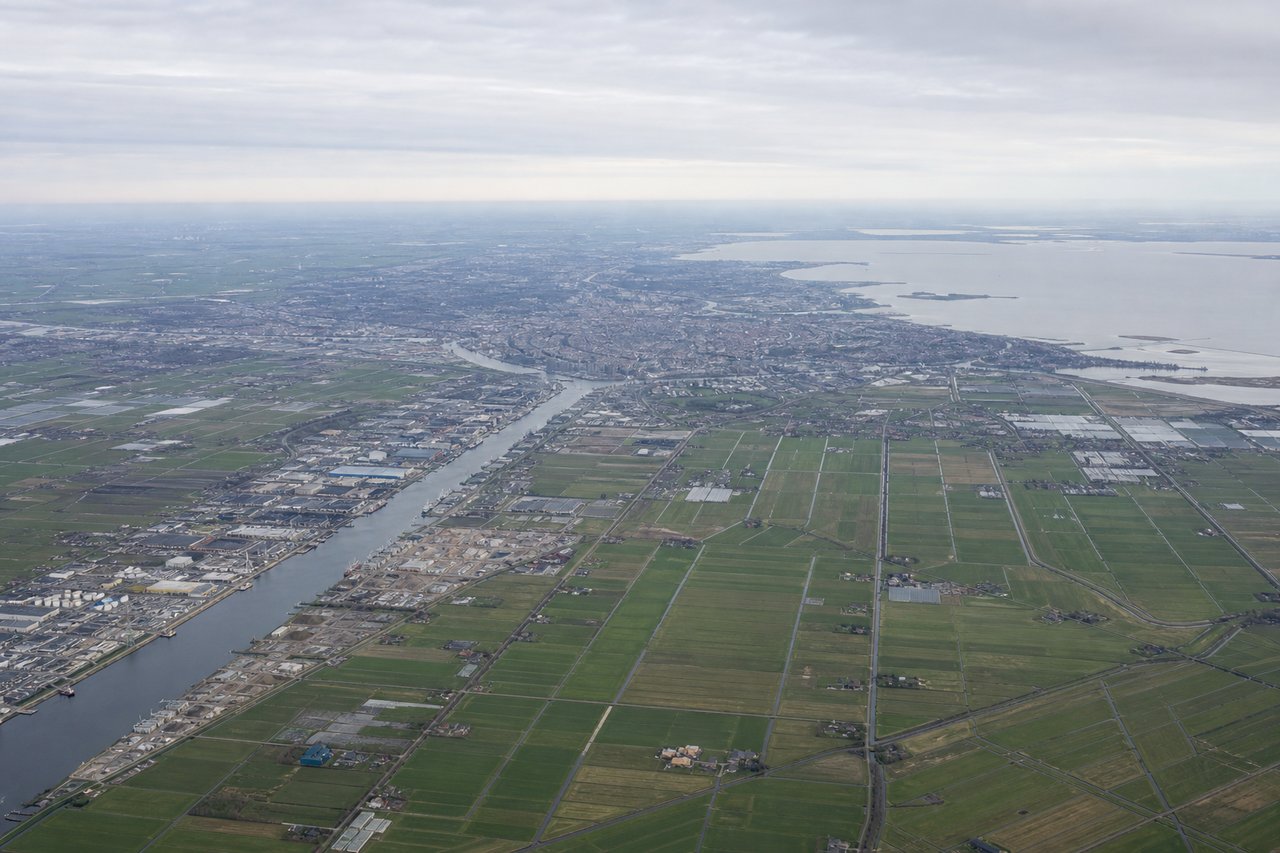
Takeoff from AMS
LEFTAmsterdam's departure typically uses runways oriented 18/36, with southbound departures (runway 18) climbing over the Randstad conurbation and the North Sea coast. Left-side passengers see the sprawling urban landscape of Amsterdam, Rotterdam, and The Hague, plus the distinctive flat polder landscape with its geometric water channels and dikes. Right-side passengers face inland toward the flat agricultural plains of the Netherlands interior.
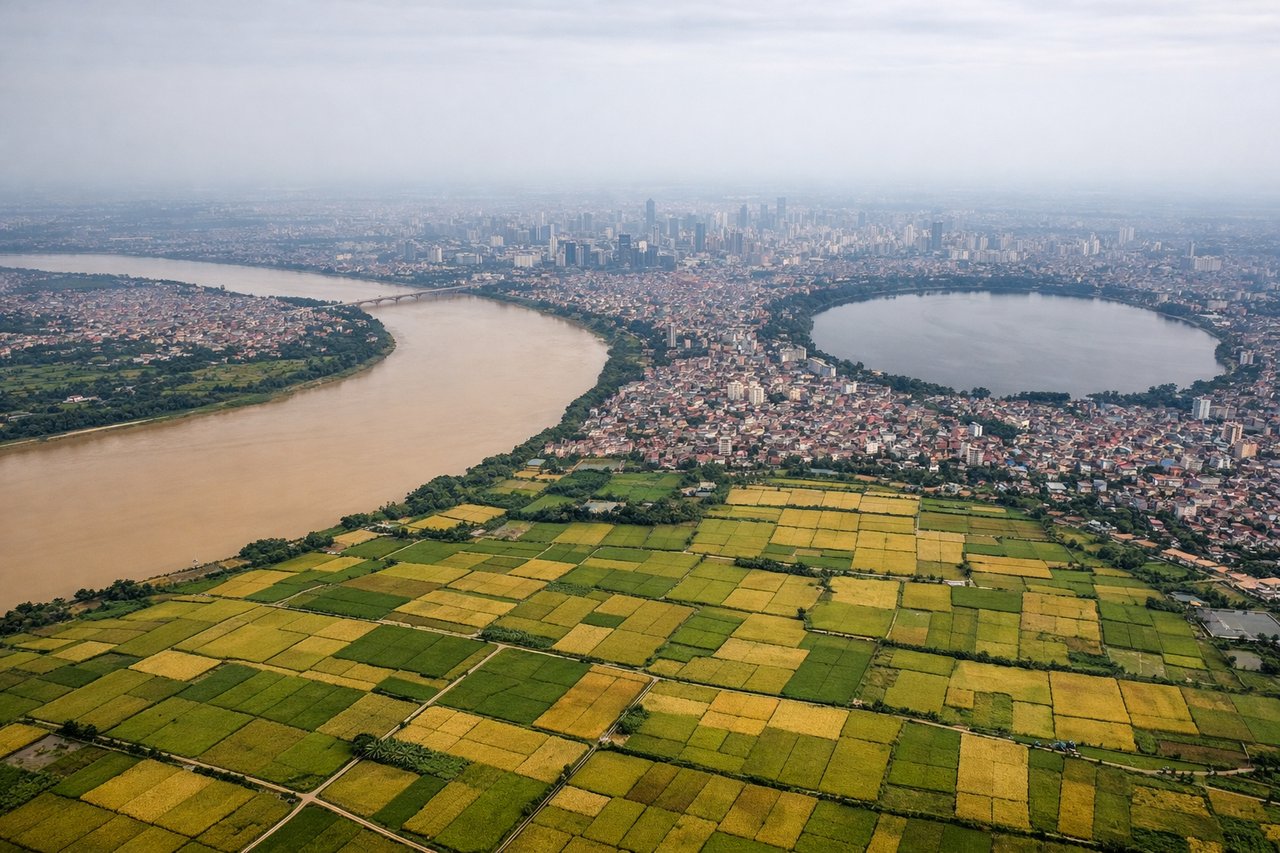
Landing at HAN
RIGHTHanoi's approach typically uses runway 29 during winter (northeast monsoon) or runway 11 during summer (southwest monsoon). Descending from the northeast or east, right-side passengers see the Red River Delta's distinctive landscape: the meandering Red River with its oxbow bends, the dense patchwork of rice paddies, and the transition from rural delta to Hanoi's urban sprawl. Left-side passengers see primarily open water (Gulf of Tonkin) and less dramatic terrain.
Will your flight be in sunlight?
Pick a date and time in the Sun Map to watch the sun move across your whole flight.
About This Route
Which side of the plane should I sit on flying from Schiphol (AMS) to Noibai International (HAN)?
Sit on the Right side of the plane for the best views on flights from Amsterdam to Hanoi. While Amsterdam's departure offers excellent urban and polder scenery, the flight is dominated by 10+ hours of open ocean (Bay of Bengal and South China Sea) on both sides during cruise. Right-side passengers gain a significant advantage during the Hanoi approach, where the Red River Delta's dramatic agricultural patchwork, river meanders, and transition to urban landscape provide concentrated scenic value. The right side captures both the departure's modest Dutch landscape and the landing's distinctive Southeast Asian delta geography, making it the better overall choice for window-seat scenery.
What can I see during takeoff from Schiphol in Amsterdam?
During takeoff from Schiphol (AMS), sit on the Left side for the best views. Amsterdam's departure typically uses runways oriented 18/36, with southbound departures (runway 18) climbing over the Randstad conurbation and the North Sea coast. Left-side passengers see the sprawling urban landscape of Amsterdam, Rotterdam, and The Hague, plus the distinctive flat polder landscape with its geometric water channels and dikes. Right-side passengers face inland toward the flat agricultural plains of the Netherlands interior. Notable sights include: Amsterdam city center and canals, Rotterdam harbor and Maas River estuary, North Sea coastline, geometric polder water systems.
What can I see when landing at Noibai International in Hanoi?
When landing at Noibai International (HAN), sit on the Right side for the best views. Hanoi's approach typically uses runway 29 during winter (northeast monsoon) or runway 11 during summer (southwest monsoon). Descending from the northeast or east, right-side passengers see the Red River Delta's distinctive landscape: the meandering Red River with its oxbow bends, the dense patchwork of rice paddies, and the transition from rural delta to Hanoi's urban sprawl. Left-side passengers see primarily open water (Gulf of Tonkin) and less dramatic terrain. Notable sights include: Red River with characteristic oxbow meanders, rice paddy patchwork of the Red River Delta, Hanoi's urban expansion and lake systems (Hoan Kiem Lake, West Lake), transition from rural delta to city.
How long is the flight from Amsterdam to Hanoi?
The flight from Schiphol (AMS) to Noibai International (HAN) takes about 11 hours 15 minutes. The shortest flight path between them is 5,513 miles (8,872 km); winds and air traffic control usually add a few percent.
What does the Amsterdam to Hanoi flight path pass over?
Bay of Bengal coastline (Myanmar, Bangladesh, India), Andaman Sea, Gulf of Tonkin, Mekong Delta region (visible on southern routes), Thai-Laotian border regions, Vietnamese highlands and Red River valley approach