Left side scores higher due to the superior takeoff experience over Amsterdam's distinctive water systems and Dutch coastline, which provides genuine scenic interest during the first 30 minutes of flight. While the landing approach on the right side offers dramatic volcanic scenery, the majority of the 15+ hour flight consists of open Pacific Ocean on both sides, making the takeoff advantage decisive. Left side captures more recognizable, varied urban and hydrographic features during the departure phase.
Flown AMS to HNL? Did we get it right?
Flight Path
Amsterdam to Honolulu is 7,244 miles (11,657 km), a flight of about 15 hours 20 minutes.
The flight path crosses the North Atlantic, passing north of Greenland and the Canadian Arctic Archipelago at cruise altitude. Visible landmarks during daylight hours (depending on season and exact routing) include: the Greenland ice sheet (if passing over southern Greenland), the Canadian Arctic islands and ice fields, and the northern reaches of the North American continent. The majority of the route—approximately 10+ hours—crosses open ocean with no visible landmarks. As the aircraft approaches Hawaii, the Pacific basin remains featureless until the final 2-3 hours, when the Big Island of Hawaii may become visible on the horizon before descent into Honolulu.
Great circle distance and headings ›Phase by phase
Takeoff from AMS
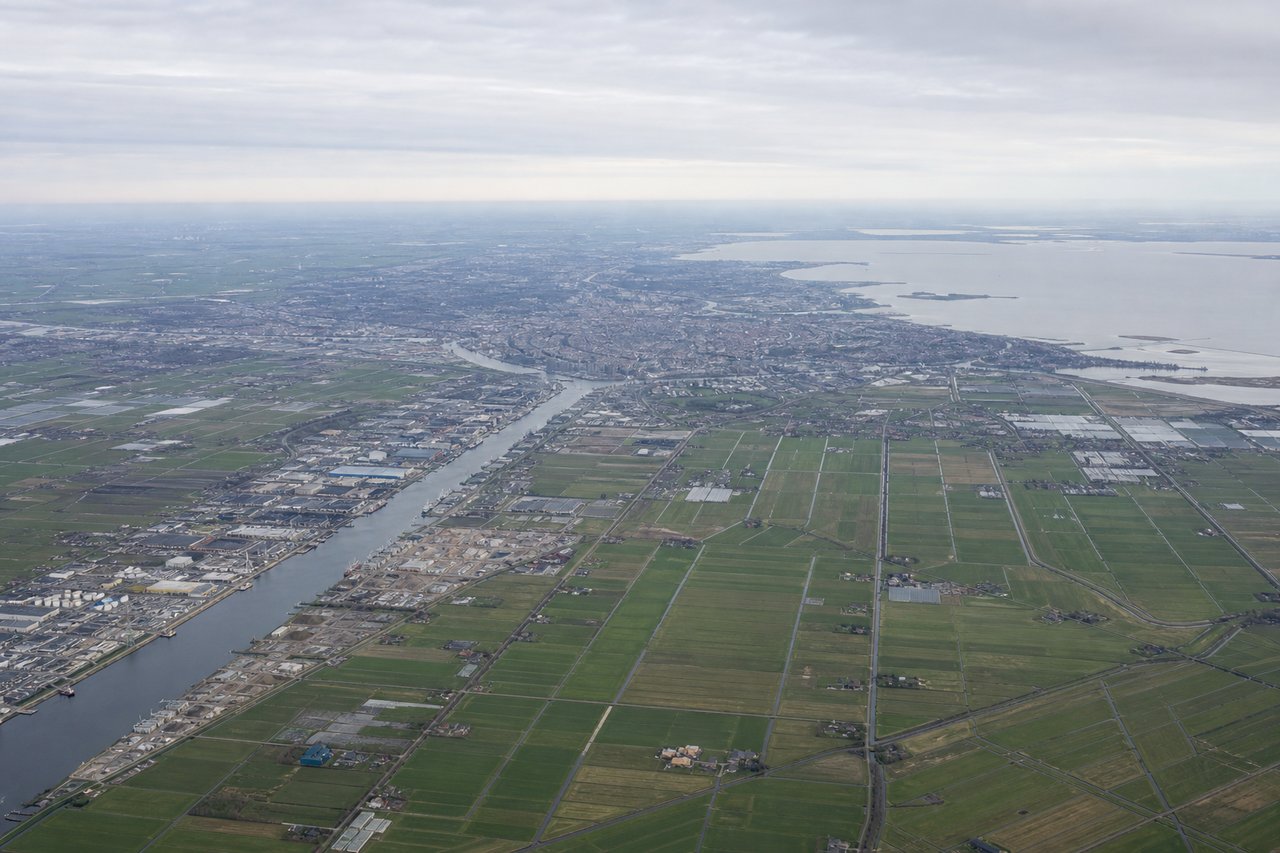
LEFTLeft side captures Amsterdam's urban waterways and the North Sea coastline during initial climb. The Polderbaan departure (runway 18R) heads southbound, allowing left-side views of the IJsselmeer lake system and the Dutch coast before turning westward over open water.

Landing at HNL
RIGHTRight side offers superior approach scenery into HNL. Typical arrivals use the 08L/26R runway with an eastbound approach, positioning right-side passengers to view the Ko'olau mountain range, windward Oahu's dramatic cliffs, and the transition from open Pacific to the island's lush valleys and coastal features.
Will your flight be in sunlight?
Pick a date and time in the Sun Map to watch the sun move across your whole flight.
About This Route
Which side of the plane should I sit on flying from Schiphol (AMS) to Honolulu International (HNL)?
Sit on the Left side of the plane for the best views on flights from Amsterdam to Honolulu. Left side scores higher due to the superior takeoff experience over Amsterdam's distinctive water systems and Dutch coastline, which provides genuine scenic interest during the first 30 minutes of flight. While the landing approach on the right side offers dramatic volcanic scenery, the majority of the 15+ hour flight consists of open Pacific Ocean on both sides, making the takeoff advantage decisive. Left side captures more recognizable, varied urban and hydrographic features during the departure phase.
What can I see during takeoff from Schiphol in Amsterdam?
During takeoff from Schiphol (AMS), sit on the Left side for the best views. Left side captures Amsterdam's urban waterways and the North Sea coastline during initial climb. The Polderbaan departure (runway 18R) heads southbound, allowing left-side views of the IJsselmeer lake system and the Dutch coast before turning westward over open water. Notable sights include: IJsselmeer (large freshwater lake immediately south of Schiphol), North Sea coastline, Amsterdam harbor and canal network, Afsluitdijk (major dike visible as a linear feature).
What can I see when landing at Honolulu International in Honolulu?
When landing at Honolulu International (HNL), sit on the Right side for the best views. Right side offers superior approach scenery into HNL. Typical arrivals use the 08L/26R runway with an eastbound approach, positioning right-side passengers to view the Ko'olau mountain range, windward Oahu's dramatic cliffs, and the transition from open Pacific to the island's lush valleys and coastal features. Notable sights include: Ko'olau mountain range (jagged volcanic ridgeline on windward side), Kailua Bay and Lanikai Beach area, Pali Notches (distinctive saddle formations in the ridge), Honolulu harbor and downtown skyline.
How long is the flight from Amsterdam to Honolulu?
The flight from Schiphol (AMS) to Honolulu International (HNL) takes about 15 hours 20 minutes. The shortest flight path between them is 7,244 miles (11,657 km); winds and air traffic control usually add a few percent.
What does the Amsterdam to Honolulu flight path pass over?
The flight path crosses the North Atlantic, passing north of Greenland and the Canadian Arctic Archipelago at cruise altitude. Visible landmarks during daylight hours (depending on season and exact routing) include: the Greenland ice sheet (if passing over southern Greenland), the Canadian Arctic islands and ice fields, and the northern reaches of the North American continent. The majority of the route—approximately 10+ hours—crosses open ocean with no visible landmarks. As the aircraft approaches Hawaii, the Pacific basin remains featureless until the final 2-3 hours, when the Big Island of Hawaii may become visible on the horizon before descent into Honolulu.