Amsterdam to Sofia is 1,090 miles (1,754 km), a flight of about 2 hours 55 minutes.
The left side wins overall because the Vitosha arrival view is one of the most dramatic mountain-meets-city approaches in central Europe. During the cruise, the left side also picks up better views of the Rhine valley crossing, the Alps on the southern horizon over Bavaria, and the Danube plain over Hungary and Romania.
Flight Path
The route crosses the Rhine near Cologne, then tracks over Bavaria and the northern edge of the Alps visible to the south, crosses Austria and Hungary over the flat Pannonian Plain, passes over the Danube near Budapest visible to the left, then crosses northern Serbia and the Balkan ranges before descending into the Sofia Basin
Great circle distance and headings ›Phase by phase
Takeoff from AMS
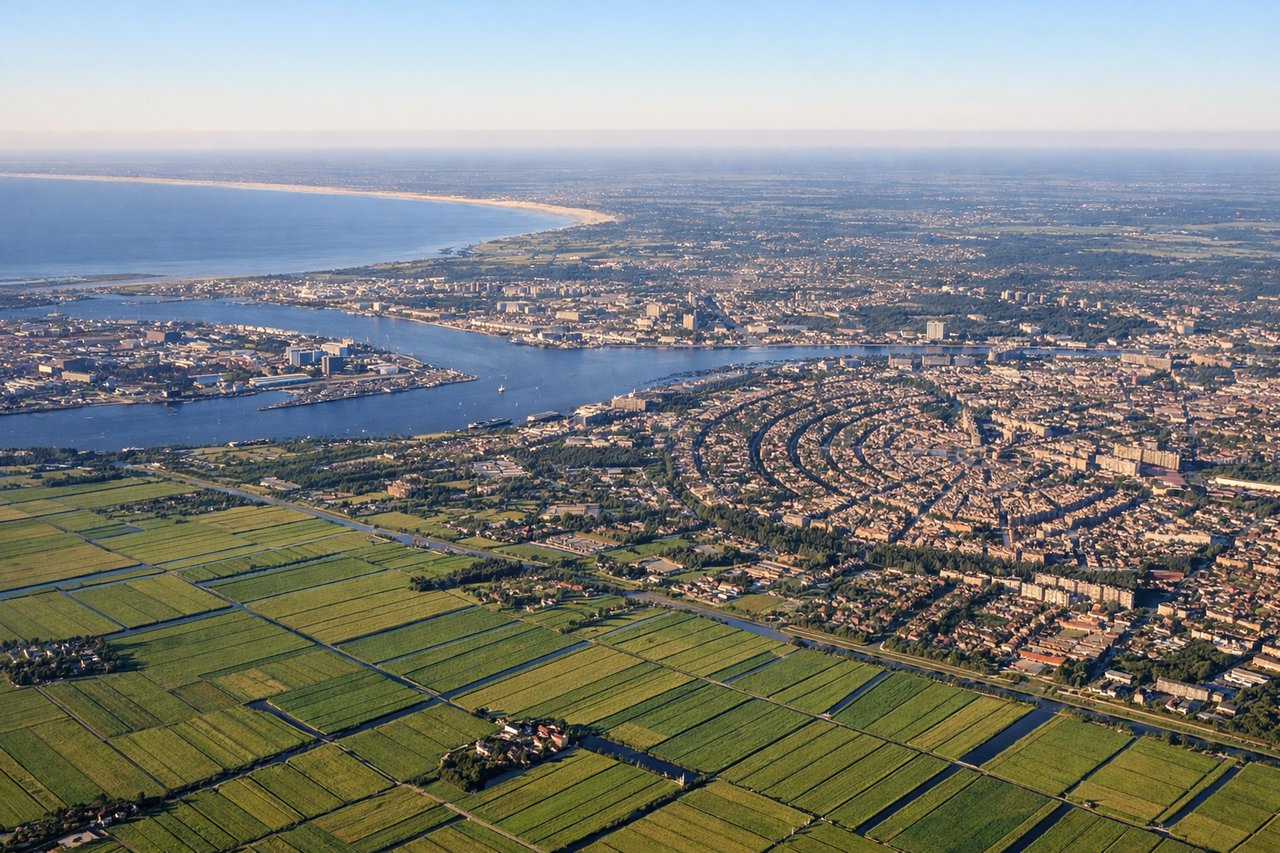
RIGHTSchiphol typically departs eastward on runway 36C/18C or uses the Polderbaan (36L), and climbing out to the southeast puts Amsterdam city center, the IJ waterway, and the patchwork of Dutch polders on the right side. You get a clear view of the flat reclaimed landscape and the city's canal ring before turning southeast.
Landing at SOF
LEFTSofia Airport sits at the foot of Vitosha Mountain to the south, and aircraft typically approach from the northwest on runway 09 heading east. On the left side you get a direct view of Vitosha's broad flat-topped massif rising dramatically above the city, with Sofia's urban grid spread out below it.
Landmarks on this routeAll landmarks →
Will your flight be in sunlight?
Pick a date and time in the Sun Map to watch the sun move across your whole flight.
About This Route
Which side of the plane should I sit on flying from Schiphol (AMS) to Sofia (SOF)?
Sit on the Left side of the plane for the best views on flights from Amsterdam to Sofia. The left side wins overall because the Vitosha arrival view is one of the most dramatic mountain-meets-city approaches in central Europe. During the cruise, the left side also picks up better views of the Rhine valley crossing, the Alps on the southern horizon over Bavaria, and the Danube plain over Hungary and Romania.
What can I see during takeoff from Schiphol in Amsterdam?
During takeoff from Schiphol (AMS), sit on the Right side for the best views. Schiphol typically departs eastward on runway 36C/18C or uses the Polderbaan (36L), and climbing out to the southeast puts Amsterdam city center, the IJ waterway, and the patchwork of Dutch polders on the right side. You get a clear view of the flat reclaimed landscape and the city's canal ring before turning southeast. Notable sights include: Amsterdam canal ring district, IJ waterway and harbor, Dutch polder grid patterns, Almere new town across the IJmeer.
What can I see when landing at Sofia in Sofia?
When landing at Sofia (SOF), sit on the Left side for the best views. Sofia Airport sits at the foot of Vitosha Mountain to the south, and aircraft typically approach from the northwest on runway 09 heading east. On the left side you get a direct view of Vitosha's broad flat-topped massif rising dramatically above the city, with Sofia's urban grid spread out below it. Notable sights include: Vitosha Mountain massif, Sofia city center grid, Iskar River valley to the north, Lyulin Hills to the west.
How long is the flight from Amsterdam to Sofia?
The flight from Schiphol (AMS) to Sofia (SOF) takes about 2 hours 55 minutes. The shortest flight path between them is 1,090 miles (1,754 km); winds and air traffic control usually add a few percent.
What does the Amsterdam to Sofia flight path pass over?
The route crosses the Rhine near Cologne, then tracks over Bavaria and the northern edge of the Alps visible to the south, crosses Austria and Hungary over the flat Pannonian Plain, passes over the Danube near Budapest visible to the left, then crosses northern Serbia and the Balkan ranges before descending into the Sofia Basin