Left seats capture the most dramatic geography: Cook Inlet and Chugach Mountains on departure, then the flight path northward provides views of the Alaska Range foothills and interior valleys. Right seats see mostly forested terrain with less visual distinction.
Flown ANC to EIL? Did we get it right?
Flight Path
Anchorage to Fairbanks is 257 miles (414 km), a flight of about 1 hour.
The flight path heads north-northeast across the Matanuska-Susitna Valley, passing east of the Alaska Range. The Susitna River valley is visible as a major drainage corridor. As you progress north, the terrain transitions from coastal mountains to interior boreal forest and tundra. The Tanana River valley becomes prominent in the final 30 minutes of flight. Visibility of the Alaska Range depends on weather and exact routing, but the range's northern foothills are typically visible on the left (west) side during cruise.
Great circle distance and headings ›

Phase by phase
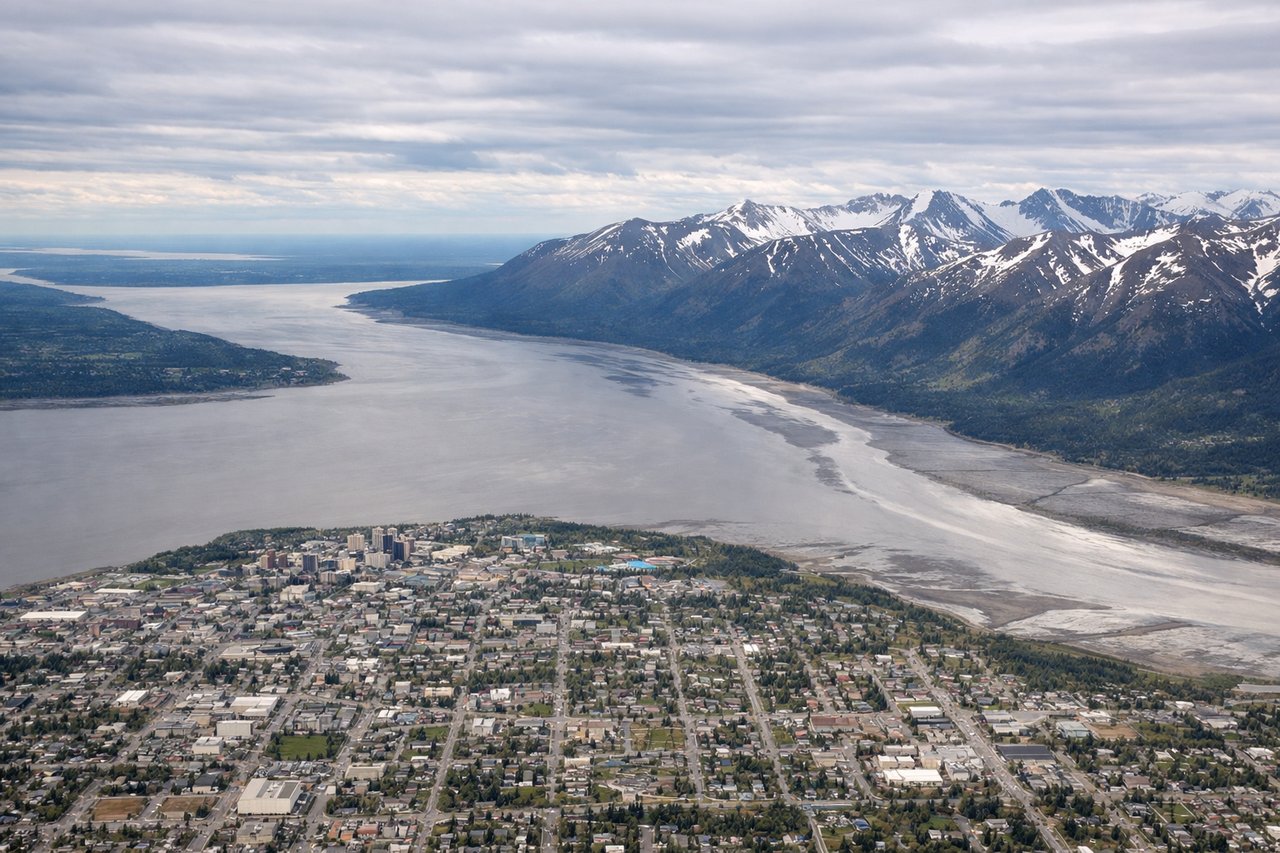
Takeoff from ANC
LEFTANC typically departs northbound on Runway 1L or 1R. Left-side seats face west during initial climb, offering views of Cook Inlet and the Chugach Mountains as you gain altitude. Right seats see the Anchorage bowl and inland terrain.
Landing at EIL
RIGHTEielson AFB is located northeast of Fairbanks. Approach vectors typically bring aircraft in from the south or southwest. Right-side seats during descent offer views of the Tanana River valley, Fairbanks city, and the approach corridor over interior Alaska terrain.
Will your flight be in sunlight?
Pick a date and time in the Sun Map to watch the sun move across your whole flight.
About This Route
Which side of the plane should I sit on flying from Ted Stevens Anchorage International (ANC) to Eielson Afb (EIL)?
Sit on the Left side of the plane for the best views on flights from Anchorage to Fairbanks. Left seats capture the most dramatic geography: Cook Inlet and Chugach Mountains on departure, then the flight path northward provides views of the Alaska Range foothills and interior valleys. Right seats see mostly forested terrain with less visual distinction.
What can I see during takeoff from Ted Stevens Anchorage International in Anchorage?
During takeoff from Ted Stevens Anchorage International (ANC), sit on the Left side for the best views. ANC typically departs northbound on Runway 1L or 1R. Left-side seats face west during initial climb, offering views of Cook Inlet and the Chugach Mountains as you gain altitude. Right seats see the Anchorage bowl and inland terrain. Notable sights include: Cook Inlet (water body to the west), Chugach Mountains (snow-capped range west/northwest), Turnagain Arm (inlet extending southeast), Anchorage city grid (below).
What can I see when landing at Eielson Afb in Fairbanks?
When landing at Eielson Afb (EIL), sit on the Right side for the best views. Eielson AFB is located northeast of Fairbanks. Approach vectors typically bring aircraft in from the south or southwest. Right-side seats during descent offer views of the Tanana River valley, Fairbanks city, and the approach corridor over interior Alaska terrain. Notable sights include: Tanana River (meandering river valley below), Fairbanks city area (visible as developed grid), Interior Alaska boreal forest (extensive spruce/taiga), Eielson AFB runway (visible during final approach).
How long is the flight from Anchorage to Fairbanks?
The flight from Ted Stevens Anchorage International (ANC) to Eielson Afb (EIL) takes about 1 hour. The shortest flight path between them is 257 miles (414 km); winds and air traffic control usually add a few percent.
What does the Anchorage to Fairbanks flight path pass over?
The flight path heads north-northeast across the Matanuska-Susitna Valley, passing east of the Alaska Range. The Susitna River valley is visible as a major drainage corridor. As you progress north, the terrain transitions from coastal mountains to interior boreal forest and tundra. The Tanana River valley becomes prominent in the final 30 minutes of flight. Visibility of the Alaska Range depends on weather and exact routing, but the range's northern foothills are typically visible on the left (west) side during cruise.