While takeoff favors the left for the MacDonnell Ranges, the landing view of Port Phillip Bay and the approach to Melbourne's urban landscape from the right side is more visually rewarding and geographically significant for the majority of the flight's final phase.
Flight Path
The flight path crosses the Flinders Ranges (visible as a north-south trending ridge system in South Australia), then transitions over the Murray River valley and into Victoria. The landscape gradually transitions from arid red earth and sparse vegetation to greener, more densely vegetated terrain. Lake Alexandrina and the Murray River mouth are visible on the approach to Victoria's coast. The Great Dividing Range becomes increasingly prominent as the aircraft descends toward Melbourne.
Great circle distance and headings ›
.jpg?width=600)
Phase by phase
Takeoff from ASP
LEFTAlice Springs typically departs to the north or northeast. Left-side seats offer views of the MacDonnell Ranges immediately west and north of the airport, which are visually striking red ridges that dominate the landscape around Alice Springs.
Landing at MEL
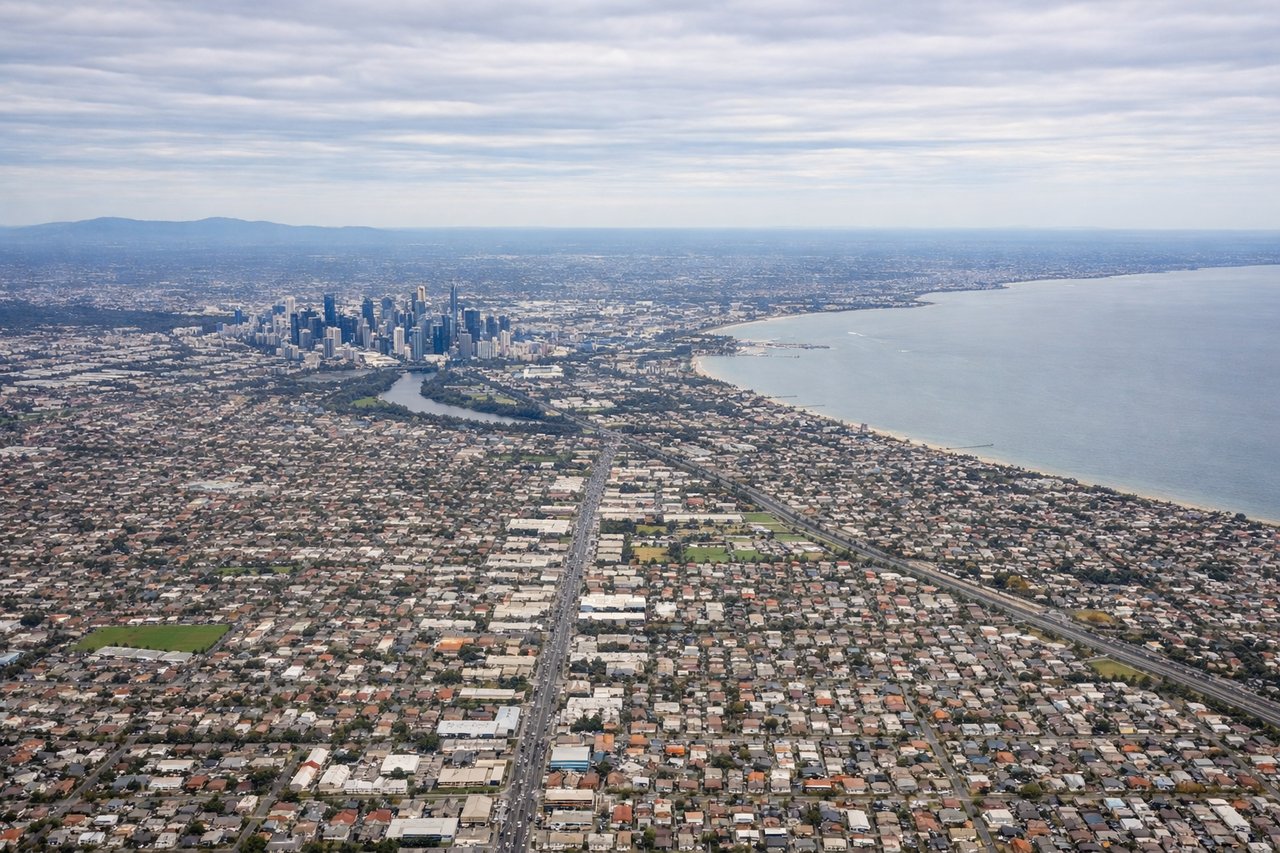
RIGHTApproaching Melbourne typically uses runways 27 or 09 depending on wind. Right-side seats during descent offer views of Port Phillip Bay, the Dandenong Ranges to the east, and the urban sprawl of greater Melbourne. The bay is particularly striking as a large body of blue water contrasting with the surrounding landscape.
Landmarks on this routeAll landmarks →
Will your flight be in sunlight?
See exactly which side of the plane gets sun and shade at your departure time.
About This Route
Which side of the plane should I sit on flying from Alice Springs (ASP) to Melbourne International (MEL)?
Sit on the Right side of the plane for the best views on flights from Alice Springs to Melbourne. While takeoff favors the left for the MacDonnell Ranges, the landing view of Port Phillip Bay and the approach to Melbourne's urban landscape from the right side is more visually rewarding and geographically significant for the majority of the flight's final phase.
What can I see during takeoff from Alice Springs in Alice Springs?
During takeoff from Alice Springs (ASP), sit on the Left side for the best views. Alice Springs typically departs to the north or northeast. Left-side seats offer views of the MacDonnell Ranges immediately west and north of the airport, which are visually striking red ridges that dominate the landscape around Alice Springs. Notable sights include: West MacDonnell Ranges (rust-red quartzite ridges), Alice Springs township (small urban cluster), Heavitree Gap (prominent valley cut through ranges), Finke River (dry riverbed visible as pale linear feature).
What can I see when landing at Melbourne International in Melbourne?
When landing at Melbourne International (MEL), sit on the Right side for the best views. Approaching Melbourne typically uses runways 27 or 09 depending on wind. Right-side seats during descent offer views of Port Phillip Bay, the Dandenong Ranges to the east, and the urban sprawl of greater Melbourne. The bay is particularly striking as a large body of blue water contrasting with the surrounding landscape. Notable sights include: Port Phillip Bay (large enclosed bay), Dandenong Ranges (forested ridges east of city), Melbourne CBD (high-rise cluster), Yarra River (visible as dark linear feature through city).
How long is the flight from Alice Springs to Melbourne?
The flight from Alice Springs (ASP) to Melbourne International (MEL) takes Approximately 2 hours 45 minutes to 3 hours.
What does the Alice Springs to Melbourne flight path pass over?
The flight path crosses the Flinders Ranges (visible as a north-south trending ridge system in South Australia), then transitions over the Murray River valley and into Victoria. The landscape gradually transitions from arid red earth and sparse vegetation to greener, more densely vegetated terrain. Lake Alexandrina and the Murray River mouth are visible on the approach to Victoria's coast. The Great Dividing Range becomes increasingly prominent as the aircraft descends toward Melbourne.