While takeoff is fairly flat on both sides, the left side dominates the cruise phase with views of Lake Eyre's vast white salt pans and the Flinders Ranges, then finishes strong with the dramatic MacDonnell Ranges approach into Alice Springs.
Flight Path
Murray River near Mildura, Flinders Ranges, and the salt flats of Lake Eyre basin lie along the route's western side as the flight crosses into South Australia and the Northern Territory.
Great circle distance and headings ›.jpg?width=600)

Phase by phase
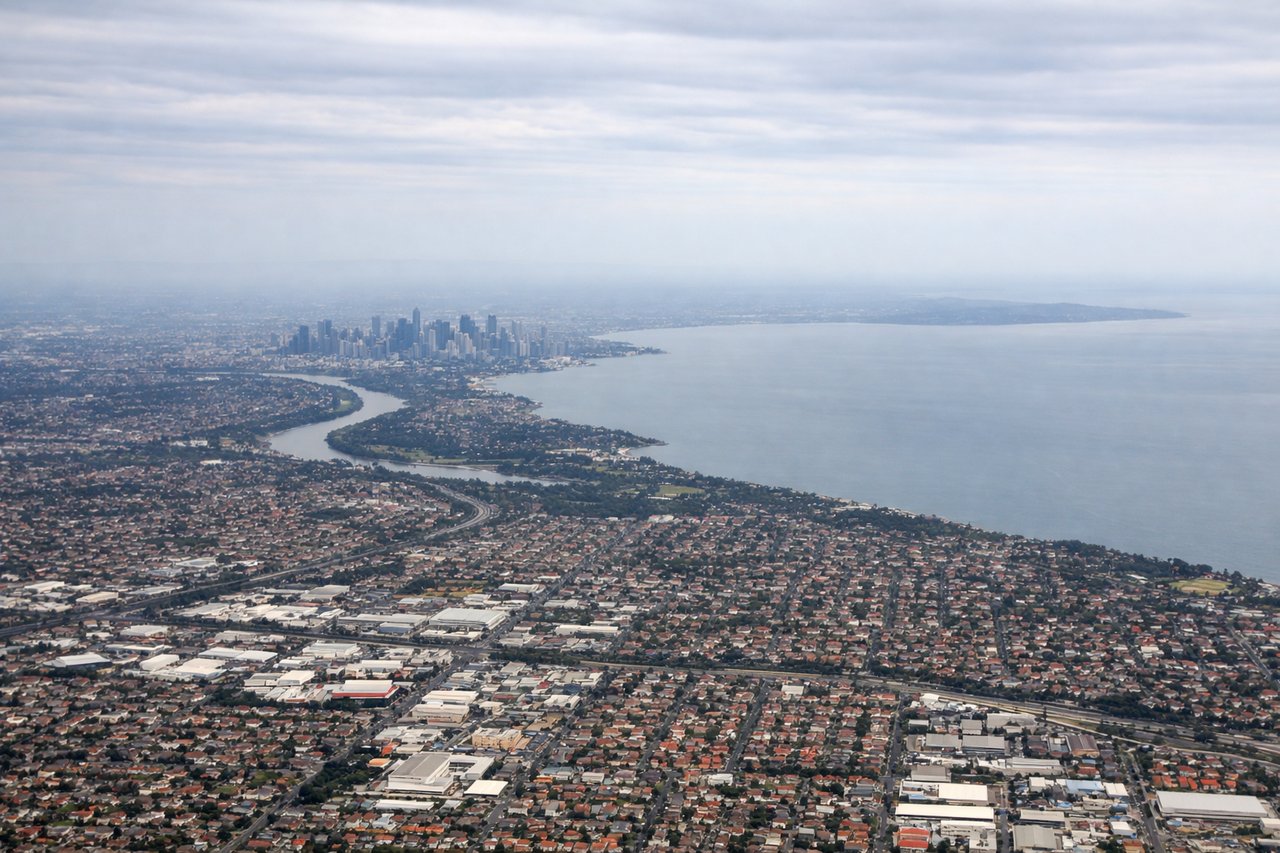
Takeoff from MEL
RIGHTClimbing out on runway 34, passengers on the right can catch a brief glimpse of the Dandenong Ranges' forested hills to the east before the aircraft turns onto its northbound track. The left side mostly shows flat western suburbs and paddocks with little relief.
Landing at ASP
LEFTOn approach into Alice Springs from the south, the aircraft descends toward the MacDonnell Ranges, and the left side offers the clearest view of the rugged red-rock ridgelines and the gap where the town sits nestled between them. The right side mostly faces open desert plain with less definition.
Landmarks on this routeAll landmarks →
Will your flight be in sunlight?
See exactly which side of the plane gets sun and shade at your departure time.
About This Route
Which side of the plane should I sit on flying from Melbourne International (MEL) to Alice Springs (ASP)?
Sit on the Left side of the plane for the best views on flights from Melbourne to Alice Springs. While takeoff is fairly flat on both sides, the left side dominates the cruise phase with views of Lake Eyre's vast white salt pans and the Flinders Ranges, then finishes strong with the dramatic MacDonnell Ranges approach into Alice Springs.
What can I see during takeoff from Melbourne International in Melbourne?
During takeoff from Melbourne International (MEL), sit on the Right side for the best views. Climbing out on runway 34, passengers on the right can catch a brief glimpse of the Dandenong Ranges' forested hills to the east before the aircraft turns onto its northbound track. The left side mostly shows flat western suburbs and paddocks with little relief. Notable sights include: Dandenong Ranges foothills, outer Melbourne suburbs, Yarra Valley farmland.
What can I see when landing at Alice Springs in Alice Springs?
When landing at Alice Springs (ASP), sit on the Left side for the best views. On approach into Alice Springs from the south, the aircraft descends toward the MacDonnell Ranges, and the left side offers the clearest view of the rugged red-rock ridgelines and the gap where the town sits nestled between them. The right side mostly faces open desert plain with less definition. Notable sights include: West MacDonnell Ranges, Heavitree Gap, Alice Springs township, dry Todd River bed.
How long is the flight from Melbourne to Alice Springs?
The flight from Melbourne International (MEL) to Alice Springs (ASP) takes 2h 55m.
What does the Melbourne to Alice Springs flight path pass over?
Murray River near Mildura, Flinders Ranges, and the salt flats of Lake Eyre basin lie along the route's western side as the flight crosses into South Australia and the Northern Territory.