While the takeoff offers compelling Mediterranean and mountain scenery on the left, the landing approach on the right provides more dramatic and concentrated visual interest—the Spring Mountains, Red Rock Canyon, and the stark desert-to-city transition are more visually distinctive than the gradual Catalonian landscape. Right side captures the most memorable moment of the flight.
Flown BCN to LAS? Did we get it right?
Flight Path
Barcelona to Las Vegas is 5,779 miles (9,300 km), a flight of about 11 hours 30 minutes.
The flight crosses the Atlantic Ocean (6-7 hours of open water with no significant landmarks), passes over Newfoundland and the Canadian Maritime provinces, then crosses the North American interior over the Great Lakes region and the Great Plains. The most notable midpoint feature is the transition from the Atlantic seaboard to the continental interior—the curvature of the North American coastline becomes visible around the 6-hour mark. Over the Great Plains (8-10 hours into flight), you may see the Mississippi River valley and scattered cloud formations. The Rocky Mountains begin appearing on the horizon approximately 1.5-2 hours before landing, with the Colorado Plateau and Utah's high desert terrain becoming increasingly visible as the aircraft descends toward Nevada.
Great circle distance and headings ›


Phase by phase
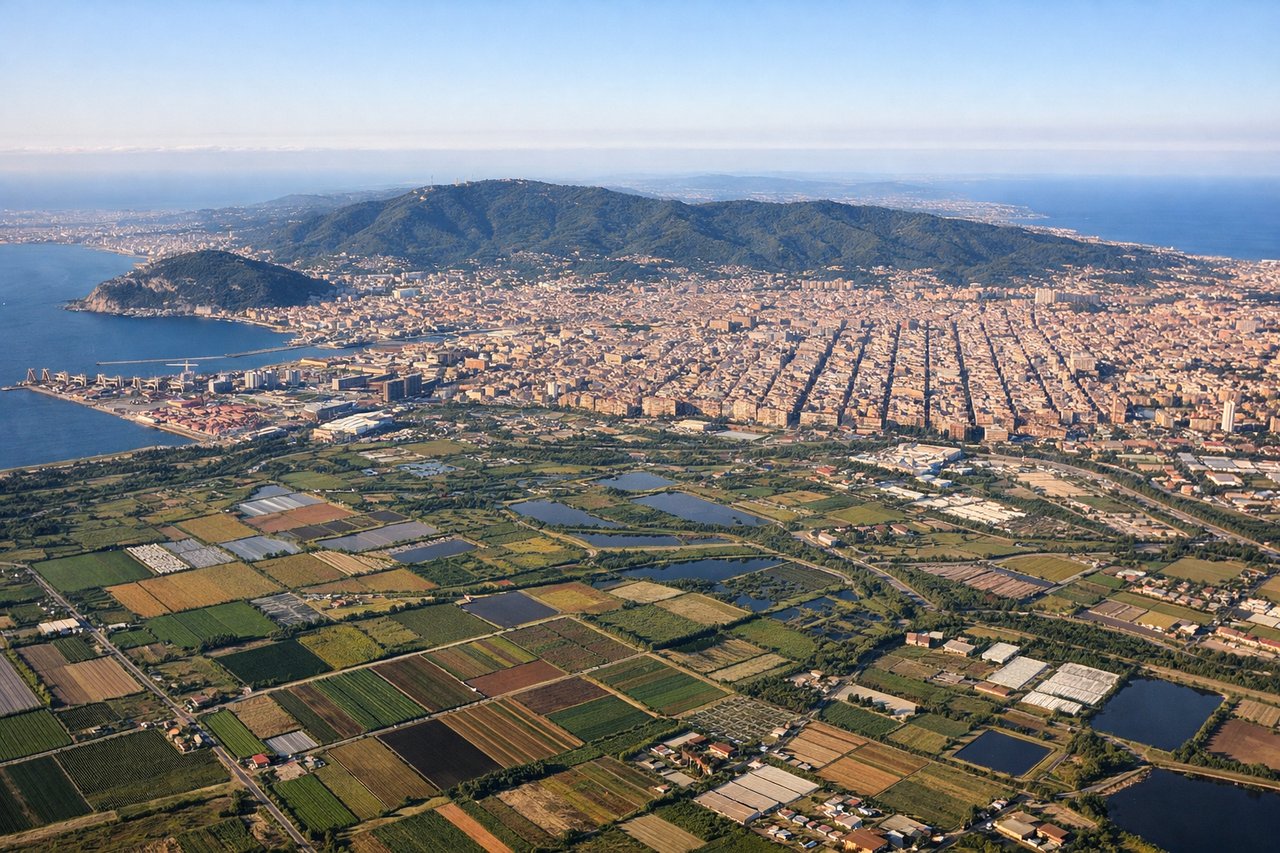
Takeoff from BCN
LEFTLeft side offers immediate views of the Mediterranean coastline and the Montserrat mountain range northwest of Barcelona. The aircraft climbs northwestward over Catalonia, making the left side the optimal viewing position for these dramatic geological features.

Landing at LAS
RIGHTRight side provides excellent views during the descent into Las Vegas. The aircraft approaches from the east-southeast, and the right side faces toward the Spring Mountains and the Las Vegas Valley. You'll see the distinctive urban sprawl of the Strip and surrounding development against the desert backdrop.
Will your flight be in sunlight?
Pick a date and time in the Sun Map to watch the sun move across your whole flight.
About This Route
Which side of the plane should I sit on flying from Barcelona (BCN) to Mc Carran International (LAS)?
Sit on the Right side of the plane for the best views on flights from Barcelona to Las Vegas. While the takeoff offers compelling Mediterranean and mountain scenery on the left, the landing approach on the right provides more dramatic and concentrated visual interest—the Spring Mountains, Red Rock Canyon, and the stark desert-to-city transition are more visually distinctive than the gradual Catalonian landscape. Right side captures the most memorable moment of the flight.
What can I see during takeoff from Barcelona in Barcelona?
During takeoff from Barcelona (BCN), sit on the Left side for the best views. Left side offers immediate views of the Mediterranean coastline and the Montserrat mountain range northwest of Barcelona. The aircraft climbs northwestward over Catalonia, making the left side the optimal viewing position for these dramatic geological features. Notable sights include: Mediterranean Sea (immediate coastline), Montserrat mountain range (distinctive jagged peaks 30 miles northwest), Pyrenees foothills (distant northern horizon), Barcelona urban sprawl (receding southeastward).
What can I see when landing at Mc Carran International in Las Vegas?
When landing at Mc Carran International (LAS), sit on the Right side for the best views. Right side provides excellent views during the descent into Las Vegas. The aircraft approaches from the east-southeast, and the right side faces toward the Spring Mountains and the Las Vegas Valley. You'll see the distinctive urban sprawl of the Strip and surrounding development against the desert backdrop. Notable sights include: Spring Mountains (western edge of valley, snow-capped peaks visible in winter), Las Vegas Valley urban development (dense grid of lights and buildings), Red Rock Canyon escarpment (western horizon, rust-colored cliffs), Mojave Desert (tan and brown terrain surrounding the valley).
How long is the flight from Barcelona to Las Vegas?
The flight from Barcelona (BCN) to Mc Carran International (LAS) takes about 11 hours 30 minutes. The shortest flight path between them is 5,779 miles (9,300 km); winds and air traffic control usually add a few percent.
What does the Barcelona to Las Vegas flight path pass over?
The flight crosses the Atlantic Ocean (6-7 hours of open water with no significant landmarks), passes over Newfoundland and the Canadian Maritime provinces, then crosses the North American interior over the Great Lakes region and the Great Plains. The most notable midpoint feature is the transition from the Atlantic seaboard to the continental interior—the curvature of the North American coastline becomes visible around the 6-hour mark. Over the Great Plains (8-10 hours into flight), you may see the Mississippi River valley and scattered cloud formations. The Rocky Mountains begin appearing on the horizon approximately 1.5-2 hours before landing, with the Colorado Plateau and Utah's high desert terrain becoming increasingly visible as the aircraft descends toward Nevada.