The right side delivers the more dramatic and memorable takeoff experience — the Lebanese coast, Beirut city, and the Mount Lebanon escarpment are genuinely spectacular. The Paris landing view on the left is excellent but more familiar to frequent European travelers. For a once-in-a-while route, the Beirut departure scenery tips the balance to the right.
Flight Path
The route tracks northwest over the eastern Mediterranean, crossing Cyprus (visible as a large island below), then over southern Turkey's Taurus Mountains, across the Aegean Sea and Greek islands, over northern Greece and Macedonia, across the Alps (visible as a broad white mountain mass), then descending over the Rhône valley and Burgundy toward Paris. The Alps crossing is the most visually dramatic midpoint feature, visible from both sides.
Great circle distance and headings ›


.jpg?width=600)
Phase by phase
Takeoff from BEY
RIGHTBeirut's primary departure to the northwest (runway 17 departing south then turning north, or runway 03 heading north) means a right-side seat gives you the Lebanese coast curving northward and the city of Beirut itself spread along the waterfront. The Mount Lebanon range rises sharply just inland and is clearly visible on the right as you climb out over the Mediterranean.
Landing at CDG
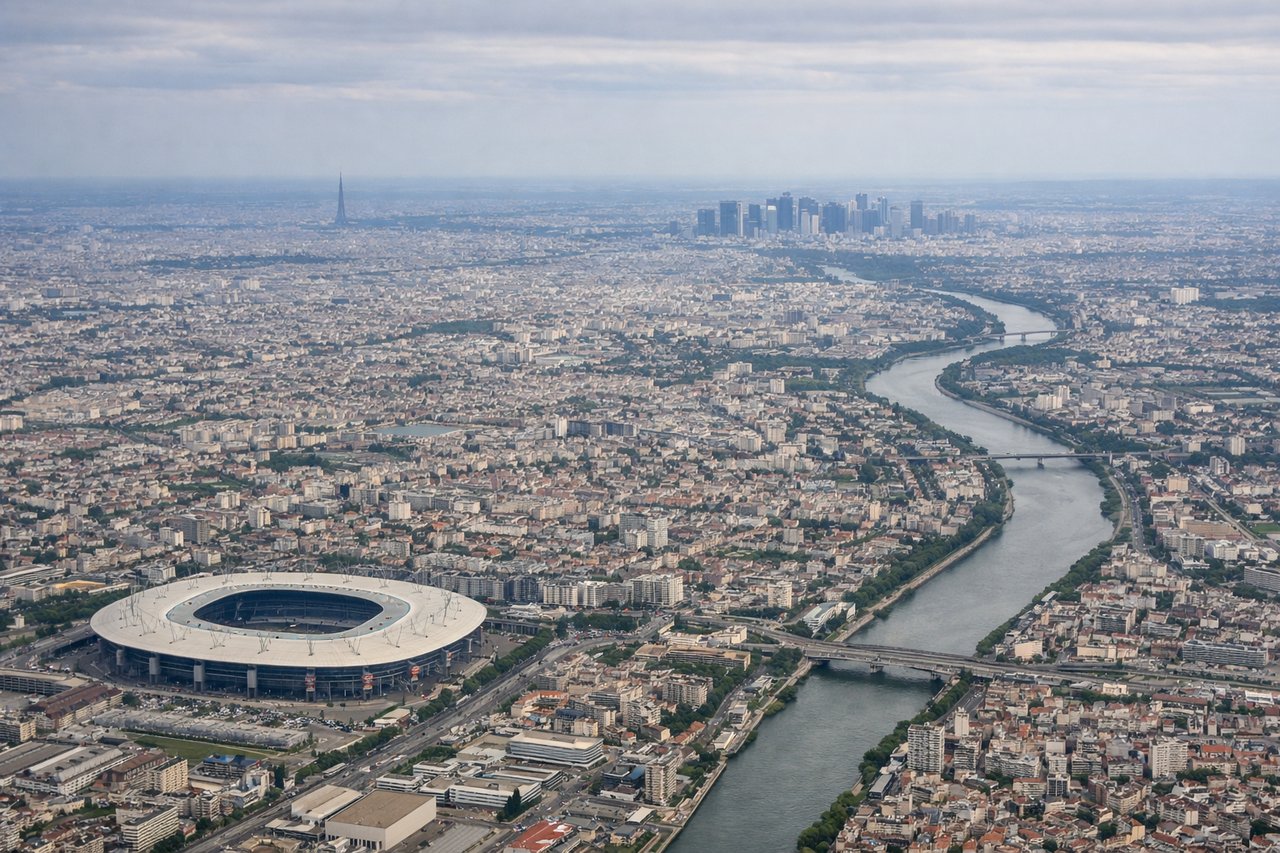
LEFTCDG's most common landing approaches are from the west or southwest on runways oriented roughly east-west. On a flight arriving from the southeast, aircraft typically approach from the south or southeast, giving left-side passengers a view over central Paris — the Seine river bends, the Eiffel Tower district, and the dense Haussmann urban grid are all clearly visible on the left during descent.
Landmarks on this routeAll landmarks →
Will your flight be in sunlight?
See exactly which side of the plane gets sun and shade at your departure time.
About This Route
Which side of the plane should I sit on flying from Beirut International (BEY) to Charles De Gaulle (CDG)?
Sit on the Right side of the plane for the best views on flights from Beirut to Paris. The right side delivers the more dramatic and memorable takeoff experience — the Lebanese coast, Beirut city, and the Mount Lebanon escarpment are genuinely spectacular. The Paris landing view on the left is excellent but more familiar to frequent European travelers. For a once-in-a-while route, the Beirut departure scenery tips the balance to the right.
What can I see during takeoff from Beirut International in Beirut?
During takeoff from Beirut International (BEY), sit on the Right side for the best views. Beirut's primary departure to the northwest (runway 17 departing south then turning north, or runway 03 heading north) means a right-side seat gives you the Lebanese coast curving northward and the city of Beirut itself spread along the waterfront. The Mount Lebanon range rises sharply just inland and is clearly visible on the right as you climb out over the Mediterranean. Notable sights include: Beirut city waterfront and Corniche, Mount Lebanon range (peaks reaching 3,000m), Jounieh Bay to the north, Mediterranean coastline stretching toward Tripoli.
What can I see when landing at Charles De Gaulle in Paris?
When landing at Charles De Gaulle (CDG), sit on the Left side for the best views. CDG's most common landing approaches are from the west or southwest on runways oriented roughly east-west. On a flight arriving from the southeast, aircraft typically approach from the south or southeast, giving left-side passengers a view over central Paris — the Seine river bends, the Eiffel Tower district, and the dense Haussmann urban grid are all clearly visible on the left during descent. Notable sights include: Seine River and its distinctive bends through Paris, Eiffel Tower and Champ de Mars district, La Défense business district tower cluster to the west, dense Haussmann boulevard grid of central Paris.
How long is the flight from Beirut to Paris?
The flight from Beirut International (BEY) to Charles De Gaulle (CDG) takes Approximately 4 hours 15 minutes to 4 hours 45 minutes.
What does the Beirut to Paris flight path pass over?
The route tracks northwest over the eastern Mediterranean, crossing Cyprus (visible as a large island below), then over southern Turkey's Taurus Mountains, across the Aegean Sea and Greek islands, over northern Greece and Macedonia, across the Alps (visible as a broad white mountain mass), then descending over the Rhône valley and Burgundy toward Paris. The Alps crossing is the most visually dramatic midpoint feature, visible from both sides.