While left wins on departure, right provides superior views during the longer descent phase and captures the dramatic transition from Mediterranean coast to Spanish interior. The Iberian plateau's distinctive geography and Madrid's approach are more visually rewarding than Beirut's departure.
Flight Path
The flight crosses the western Mediterranean, passing south of Sardinia and Corsica (visible as distant islands if flying at optimal altitude around 35,000 feet), then over the Balearic Islands (Mallorca and Menorca visible as small landmasses), before reaching the Spanish coast near Valencia. The transition from sea to the eastern Spanish coastal plains is gradual; inland, the terrain rises toward the central meseta. The Pyrenees remain north of the typical routing and are not visible on this southerly approach corridor.
Great circle distance and headings ›.jpg?width=600)

Phase by phase
Takeoff from BEY
LEFTBeirut typically departs northwestbound (Runway 03/21 preference for westbound traffic). Left seats face the Mediterranean immediately after climb-out, with the snow-capped Anti-Lebanon Mountains receding inland to your right. The coastal geometry favors left-side views of the sea and Beirut's waterfront during the critical first 10 minutes of climb.
Landing at MAD
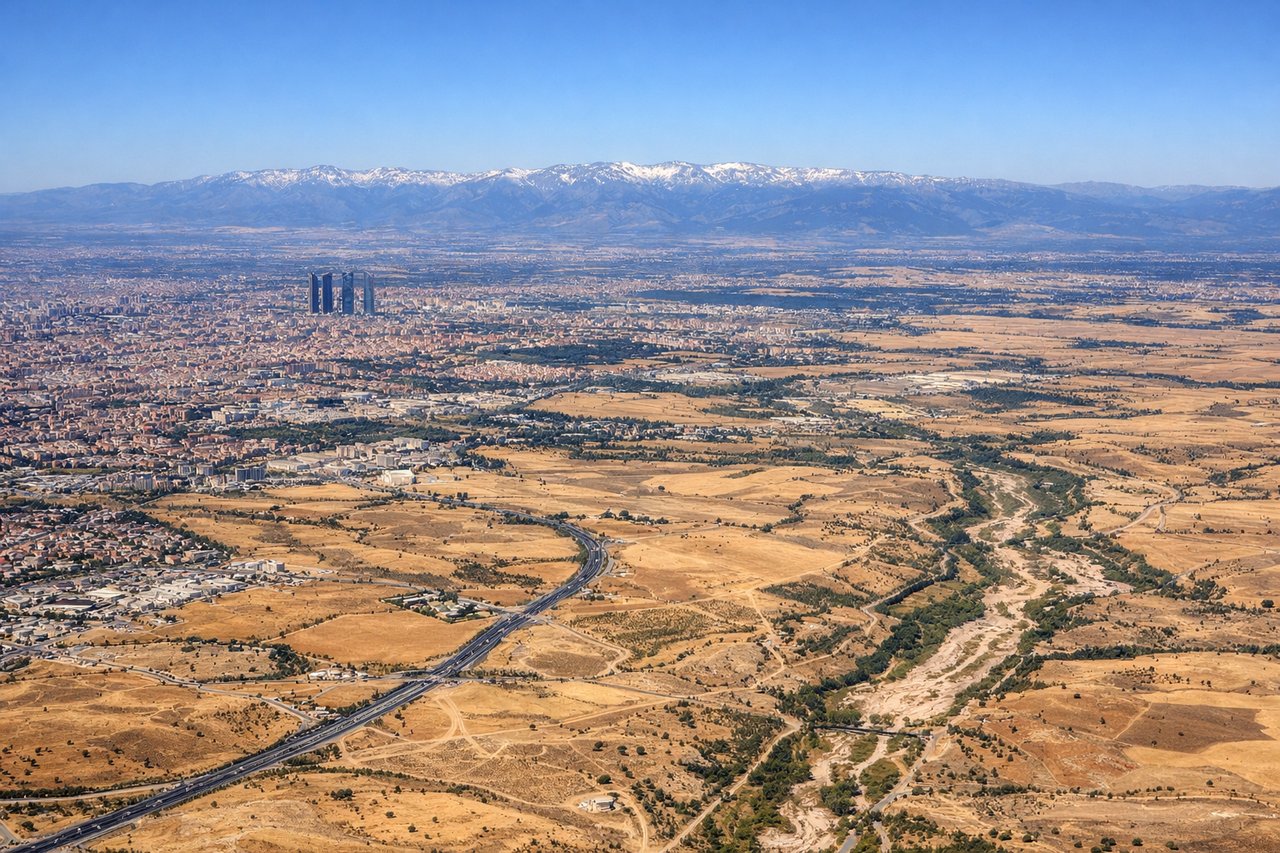
RIGHTMadrid approaches from the southwest (typically Runway 32L/32R). Right seats capture the Iberian plateau's distinctive terrain during descent—the flat, arid meseta with scattered towns and the Guadarrama Mountains appearing as a low ridge on the horizon. The approach path crosses central Spain's open landscape, which displays better from the right side during final descent.
Landmarks on this routeAll landmarks →
Will your flight be in sunlight?
See exactly which side of the plane gets sun and shade at your departure time.
About This Route
Which side of the plane should I sit on flying from Beirut International (BEY) to Barajas (MAD)?
Sit on the Right side of the plane for the best views on flights from Beirut to Madrid. While left wins on departure, right provides superior views during the longer descent phase and captures the dramatic transition from Mediterranean coast to Spanish interior. The Iberian plateau's distinctive geography and Madrid's approach are more visually rewarding than Beirut's departure.
What can I see during takeoff from Beirut International in Beirut?
During takeoff from Beirut International (BEY), sit on the Left side for the best views. Beirut typically departs northwestbound (Runway 03/21 preference for westbound traffic). Left seats face the Mediterranean immediately after climb-out, with the snow-capped Anti-Lebanon Mountains receding inland to your right. The coastal geometry favors left-side views of the sea and Beirut's waterfront during the critical first 10 minutes of climb. Notable sights include: Mediterranean Sea (immediate left), Anti-Lebanon Mountains (inland right, snow-capped in winter), Beirut city grid (directly below transitioning left), Mount Sannine (northeast, visible as distant peak).
What can I see when landing at Barajas in Madrid?
When landing at Barajas (MAD), sit on the Right side for the best views. Madrid approaches from the southwest (typically Runway 32L/32R). Right seats capture the Iberian plateau's distinctive terrain during descent—the flat, arid meseta with scattered towns and the Guadarrama Mountains appearing as a low ridge on the horizon. The approach path crosses central Spain's open landscape, which displays better from the right side during final descent. Notable sights include: Guadarrama Mountains (northern horizon), Madrid city sprawl (center-right, visible as urban grid), Tagus River valley (winding feature below), Iberian plateau (surrounding tan-brown terrain).
How long is the flight from Beirut to Madrid?
The flight from Beirut International (BEY) to Barajas (MAD) takes Approximately 5 hours 15 minutes.
What does the Beirut to Madrid flight path pass over?
The flight crosses the western Mediterranean, passing south of Sardinia and Corsica (visible as distant islands if flying at optimal altitude around 35,000 feet), then over the Balearic Islands (Mallorca and Menorca visible as small landmasses), before reaching the Spanish coast near Valencia. The transition from sea to the eastern Spanish coastal plains is gradual; inland, the terrain rises toward the central meseta. The Pyrenees remain north of the typical routing and are not visible on this southerly approach corridor.