The right side wins overall due to the dramatic Beirut departure view combining the city, coastline, and Mount Lebanon range simultaneously. The landing view on the left is good but Doha's flat terrain limits drama. For the full flight, the right side also tracks closer to the Saudi Arabian coastline and the Hasa region over the Gulf.
Flight Path
The route crosses southern Syria briefly, then over Jordan's northern desert, across northwestern Saudi Arabia's An Nafud desert fringe, then descends over the shallow Persian Gulf. The Euphrates valley may be visible in the distance to the north. The Gulf's distinctive turquoise shallow-water color becomes visible in the final 30 minutes of flight.
Great circle distance and headings ›Phase by phase
Takeoff from BEY
RIGHTBeirut's primary departure runway 17 sends aircraft southward over the city and coast. The right side gives you the Lebanese coastline curving south toward Sidon, with the city of Beirut and its distinctive peninsula clearly visible. The left side faces the Mediterranean open water.
Landing at DOH
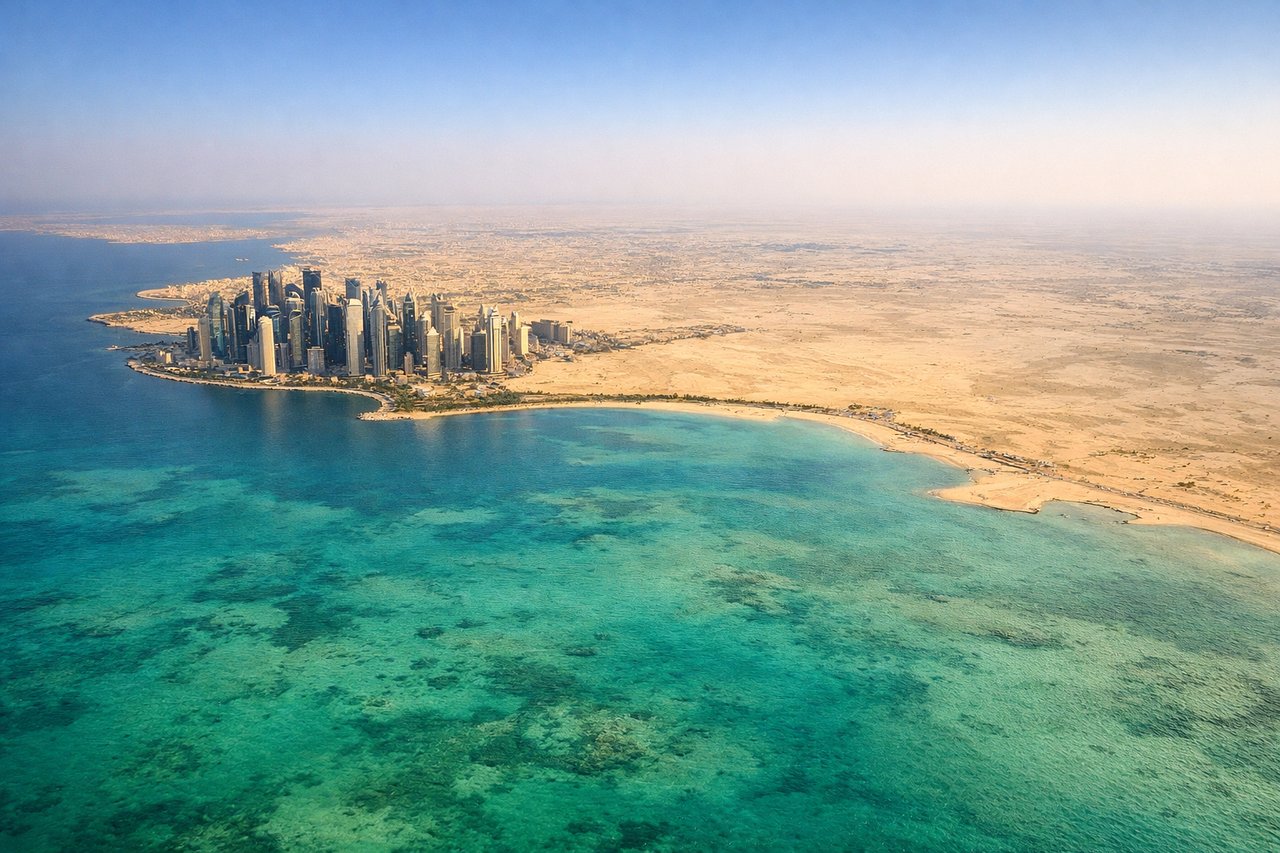
LEFTDoha's main arrival runway 34L brings aircraft in from the south over the Gulf. The left side faces west toward Doha's skyline and the distinctive West Bay skyscraper cluster, while the right side looks east over open Gulf water. Landing on 16R from the north, the left side still captures the city.
Landmarks on this routeAll landmarks →
Will your flight be in sunlight?
See exactly which side of the plane gets sun and shade at your departure time.
About This Route
Which side of the plane should I sit on flying from Beirut International (BEY) to Hamad International Airport (DOH)?
Sit on the Right side of the plane for the best views on flights from Beirut to Doha. The right side wins overall due to the dramatic Beirut departure view combining the city, coastline, and Mount Lebanon range simultaneously. The landing view on the left is good but Doha's flat terrain limits drama. For the full flight, the right side also tracks closer to the Saudi Arabian coastline and the Hasa region over the Gulf.
What can I see during takeoff from Beirut International in Beirut?
During takeoff from Beirut International (BEY), sit on the Right side for the best views. Beirut's primary departure runway 17 sends aircraft southward over the city and coast. The right side gives you the Lebanese coastline curving south toward Sidon, with the city of Beirut and its distinctive peninsula clearly visible. The left side faces the Mediterranean open water. Notable sights include: Beirut city center and port district, Lebanese coastline south toward Sidon, Mount Lebanon range visible inland to the east, Beirut's Corniche waterfront.
What can I see when landing at Hamad International Airport in Doha?
When landing at Hamad International Airport (DOH), sit on the Left side for the best views. Doha's main arrival runway 34L brings aircraft in from the south over the Gulf. The left side faces west toward Doha's skyline and the distinctive West Bay skyscraper cluster, while the right side looks east over open Gulf water. Landing on 16R from the north, the left side still captures the city. Notable sights include: Doha West Bay skyline cluster, Doha Corniche waterfront arc, Qatar's flat desert interior, Persian Gulf shallow turquoise waters.
How long is the flight from Beirut to Doha?
The flight from Beirut International (BEY) to Hamad International Airport (DOH) takes Approximately 2 hours 30 minutes.
What does the Beirut to Doha flight path pass over?
The route crosses southern Syria briefly, then over Jordan's northern desert, across northwestern Saudi Arabia's An Nafud desert fringe, then descends over the shallow Persian Gulf. The Euphrates valley may be visible in the distance to the north. The Gulf's distinctive turquoise shallow-water color becomes visible in the final 30 minutes of flight.