Left side wins both ends of the flight. During the cruise over Turkey and the Balkans, the left side also gets better views of the Anatolian plateau and the Danube basin as the route curves northwest. It is the clear choice for the full journey.
Flight Path
The route typically tracks northwest over central Turkey (Anatolian plateau, visible as vast brown semi-arid tableland), crosses the Bosphorus or Sea of Marmara near Istanbul, continues over Bulgaria and Romania crossing the Danube, then over Hungary and Austria before descending into Germany. The Alps may be visible on the distant southern horizon during the Austrian segment depending on exact routing.
Great circle distance and headings ›Phase by phase
Takeoff from BEY
LEFTBeirut's primary departure runway 17 sends aircraft southward before turning northwest toward Europe. The left side captures the full sweep of the Lebanese coast, the city of Beirut spread across its peninsula, and the dramatic rise of Mount Lebanon directly inland. Right side gets mostly open Mediterranean.
Landing at FRA
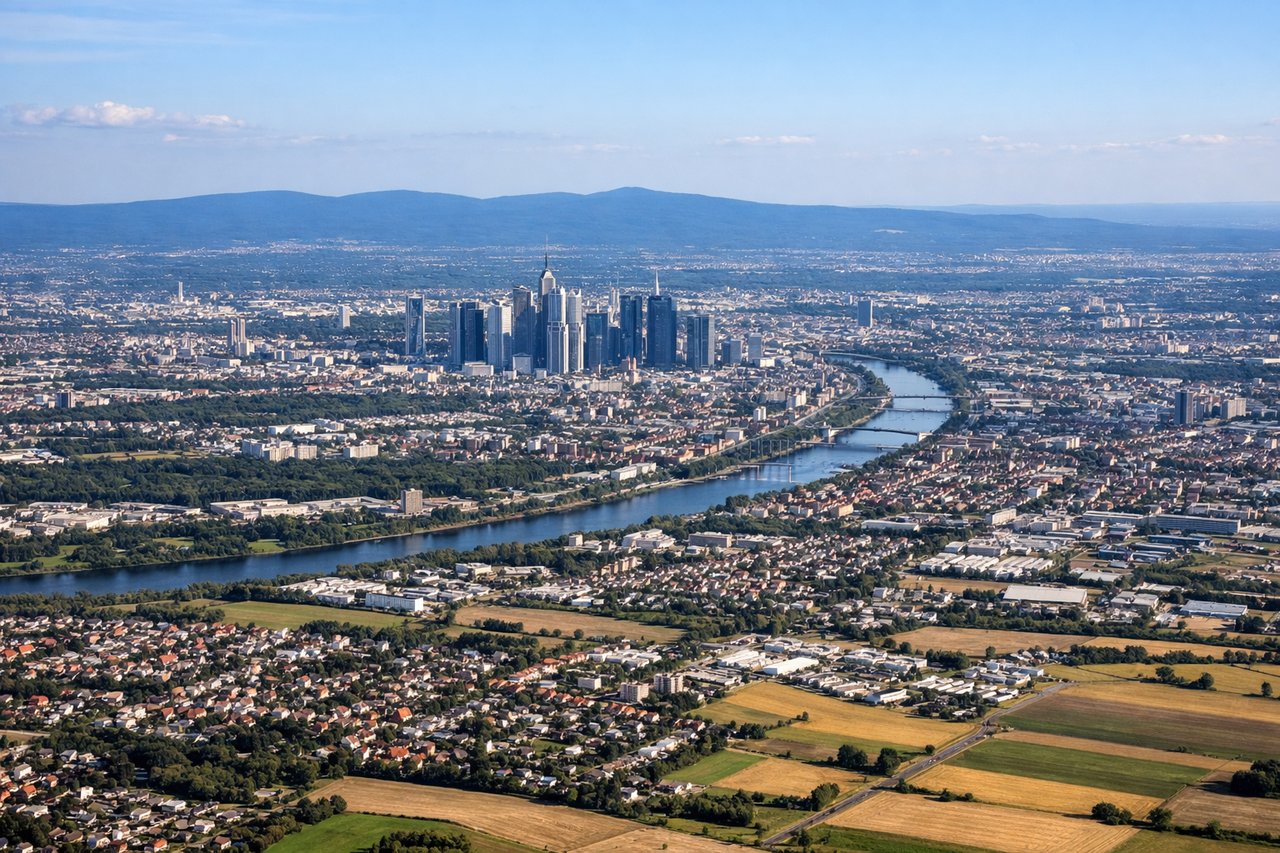
LEFTFrankfurt typically uses runways 25L/25C for westerly landings, approaching from the east over the Rhine-Main region. The left side looks south toward the Taunus hills, the Main River valley, and Frankfurt's skyline as you descend. Right side faces north toward flatter terrain with fewer distinctive features.
Landmarks on this routeAll landmarks →
Will your flight be in sunlight?
See exactly which side of the plane gets sun and shade at your departure time.
About This Route
Which side of the plane should I sit on flying from Beirut International (BEY) to Frankfurt Main (FRA)?
Sit on the Left side of the plane for the best views on flights from Beirut to Frankfurt. Left side wins both ends of the flight. During the cruise over Turkey and the Balkans, the left side also gets better views of the Anatolian plateau and the Danube basin as the route curves northwest. It is the clear choice for the full journey.
What can I see during takeoff from Beirut International in Beirut?
During takeoff from Beirut International (BEY), sit on the Left side for the best views. Beirut's primary departure runway 17 sends aircraft southward before turning northwest toward Europe. The left side captures the full sweep of the Lebanese coast, the city of Beirut spread across its peninsula, and the dramatic rise of Mount Lebanon directly inland. Right side gets mostly open Mediterranean. Notable sights include: Beirut city peninsula and port, Mount Lebanon range (peaks above 3,000m), Jounieh Bay to the north, Beirut River valley cutting inland.
What can I see when landing at Frankfurt Main in Frankfurt?
When landing at Frankfurt Main (FRA), sit on the Left side for the best views. Frankfurt typically uses runways 25L/25C for westerly landings, approaching from the east over the Rhine-Main region. The left side looks south toward the Taunus hills, the Main River valley, and Frankfurt's skyline as you descend. Right side faces north toward flatter terrain with fewer distinctive features. Notable sights include: Frankfurt city skyline (Bankenviertel high-rises), Main River bending through the city, Taunus hill range to the northwest, Rhine River confluence near Mainz visible to the southwest.
How long is the flight from Beirut to Frankfurt?
The flight from Beirut International (BEY) to Frankfurt Main (FRA) takes Approximately 4 hours 15 minutes to 4 hours 45 minutes.
What does the Beirut to Frankfurt flight path pass over?
The route typically tracks northwest over central Turkey (Anatolian plateau, visible as vast brown semi-arid tableland), crosses the Bosphorus or Sea of Marmara near Istanbul, continues over Bulgaria and Romania crossing the Danube, then over Hungary and Austria before descending into Germany. The Alps may be visible on the distant southern horizon during the Austrian segment depending on exact routing.