Seattle to Honolulu is 2,680 miles (4,313 km), a flight of about 5 hours 50 minutes.
The right side pairs a scenic Seattle departure over Puget Sound and the Olympic Mountains with a classic Hawaiian arrival featuring Waikiki, Diamond Head, and turquoise reef waters, giving it more consistent visual payoff than the left side's Rainier glimpse and Pearl Harbor approach.
Flight Path
Open North Pacific Ocean with no islands or landmasses along the route; the flight path crosses roughly 2,500 miles of featureless deep-sea water between the Washington coast and the Hawaiian Islands.
Great circle distance and headings ›

Phase by phase
Takeoff from BFI
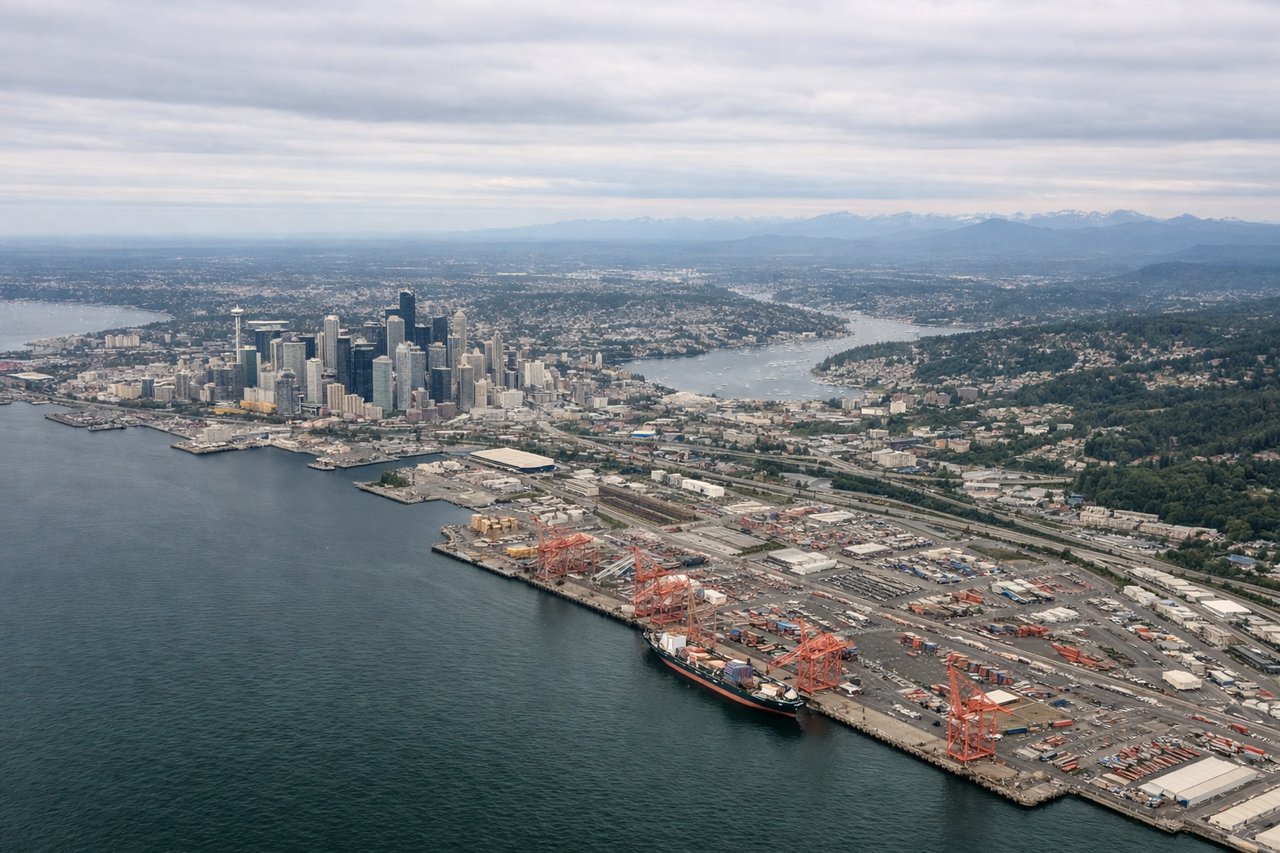
RIGHTAs the jet lifts off Boeing Field's runway 14 and banks right toward the open Pacific, the right side sweeps across Elliott Bay, downtown Seattle's skyline, and Puget Sound, with the Olympic Mountains rising on the horizon. The left side does catch Mount Rainier during the turn, but the right offers more continuous, varied scenery.
Landing at HNL
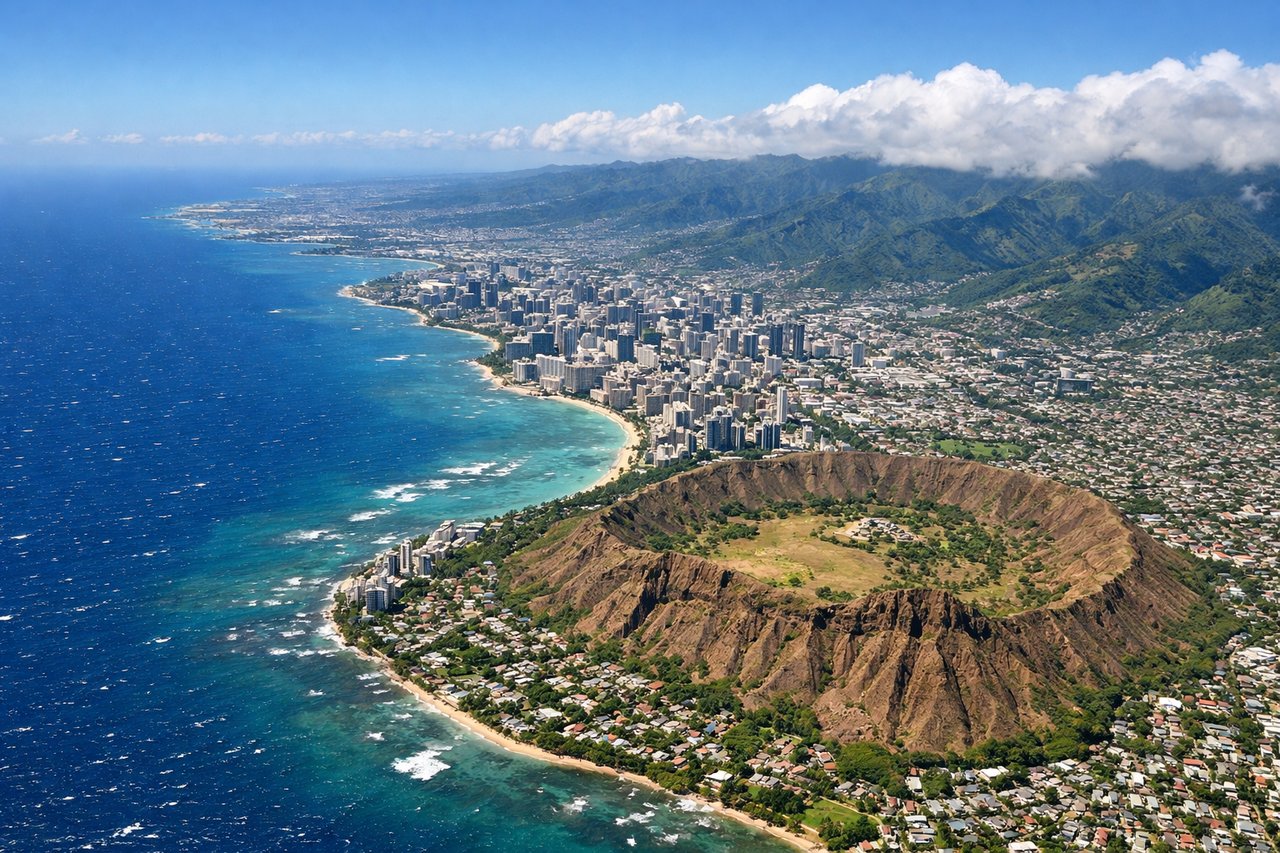
RIGHTOn final approach to HNL's runway 08, the aircraft tracks east over the turquoise reef waters south of the airport, putting Waikiki's beach towers and the volcanic cone of Diamond Head on the right side as the island's south shore comes into view. The left side instead faces Pearl Harbor and industrial Honolulu, which is less visually striking.
Landmarks on this routeAll landmarks →
Will your flight be in sunlight?
Pick a date and time in the Sun Map to watch the sun move across your whole flight.
About This Route
Which side of the plane should I sit on flying from Boeing Fld King Co International (BFI) to Honolulu International (HNL)?
Sit on the Right side of the plane for the best views on flights from Seattle to Honolulu. The right side pairs a scenic Seattle departure over Puget Sound and the Olympic Mountains with a classic Hawaiian arrival featuring Waikiki, Diamond Head, and turquoise reef waters, giving it more consistent visual payoff than the left side's Rainier glimpse and Pearl Harbor approach.
What can I see during takeoff from Boeing Fld King Co International in Seattle?
During takeoff from Boeing Fld King Co International (BFI), sit on the Right side for the best views. As the jet lifts off Boeing Field's runway 14 and banks right toward the open Pacific, the right side sweeps across Elliott Bay, downtown Seattle's skyline, and Puget Sound, with the Olympic Mountains rising on the horizon. The left side does catch Mount Rainier during the turn, but the right offers more continuous, varied scenery. Notable sights include: Elliott Bay, Downtown Seattle skyline, Puget Sound, Olympic Mountains.
What can I see when landing at Honolulu International in Honolulu?
When landing at Honolulu International (HNL), sit on the Right side for the best views. On final approach to HNL's runway 08, the aircraft tracks east over the turquoise reef waters south of the airport, putting Waikiki's beach towers and the volcanic cone of Diamond Head on the right side as the island's south shore comes into view. The left side instead faces Pearl Harbor and industrial Honolulu, which is less visually striking. Notable sights include: Waikiki Beach, Diamond Head crater, Pacific reef waters, Honolulu south shore.
How long is the flight from Seattle to Honolulu?
The flight from Boeing Fld King Co International (BFI) to Honolulu International (HNL) takes about 5 hours 50 minutes. The shortest flight path between them is 2,680 miles (4,313 km); winds and air traffic control usually add a few percent.
What does the Seattle to Honolulu flight path pass over?
Open North Pacific Ocean with no islands or landmasses along the route; the flight path crosses roughly 2,500 miles of featureless deep-sea water between the Washington coast and the Hawaiian Islands.