The right side wins overall because the long cruise segment tracks along the southern edge of the Himalayan foothills, the Hindu Kush, and the Zagros Mountains of Iran before crossing into eastern Turkey's Anatolian plateau, culminating in the dramatic Taurus Mountains view on final approach — a far more varied and mountainous panorama than the mostly open-water and desert views on the left.
Flight Path
Southern foothills of the Himalayas and northern India, the Hindu Kush range in Afghanistan/Pakistan, the Iranian Zagros Mountains, and the Mesopotamian plains of Iraq before crossing into the Anatolian highlands of Turkey
Great circle distance and headings ›.jpg?width=600)

.jpeg?width=600)

Phase by phase
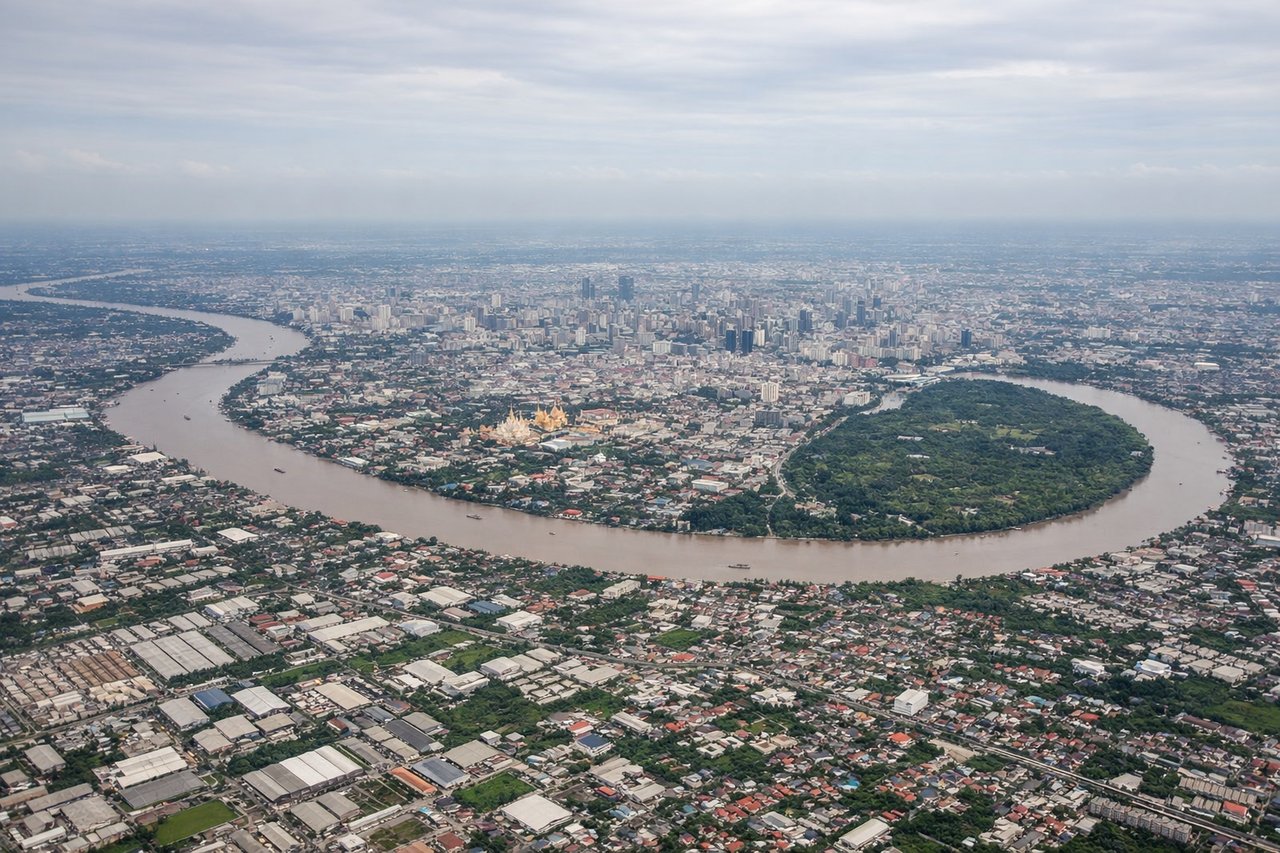
Takeoff from BKK
LEFTDeparting Suvarnabhumi to the south (typical dry-season departure pattern) gives the left side a view over the Chao Phraya delta and Bangkok's sprawling skyline before the aircraft banks west, while the right side mostly faces flat rice-paddy plains.
Landing at AYT
RIGHTOn approach into Antalya from the east, the right side of the aircraft faces north toward the dramatic limestone wall of the Taurus Mountains rising directly behind the city, a much more striking view than the flatter coastal haze visible on the left.
Landmarks on this routeAll landmarks →
Will your flight be in sunlight?
See exactly which side of the plane gets sun and shade at your departure time.
About This Route
Which side of the plane should I sit on flying from Suvarnabhumi Airport (BKK) to Antalya (AYT)?
Sit on the Right side of the plane for the best views on flights from Bangkok to Antalya. The right side wins overall because the long cruise segment tracks along the southern edge of the Himalayan foothills, the Hindu Kush, and the Zagros Mountains of Iran before crossing into eastern Turkey's Anatolian plateau, culminating in the dramatic Taurus Mountains view on final approach — a far more varied and mountainous panorama than the mostly open-water and desert views on the left.
What can I see during takeoff from Suvarnabhumi Airport in Bangkok?
During takeoff from Suvarnabhumi Airport (BKK), sit on the Left side for the best views. Departing Suvarnabhumi to the south (typical dry-season departure pattern) gives the left side a view over the Chao Phraya delta and Bangkok's sprawling skyline before the aircraft banks west, while the right side mostly faces flat rice-paddy plains. Notable sights include: Chao Phraya River delta, Bangkok skyline (Sathorn/Silom towers), Gulf of Thailand shoreline in the distance.
What can I see when landing at Antalya in Antalya?
When landing at Antalya (AYT), sit on the Right side for the best views. On approach into Antalya from the east, the right side of the aircraft faces north toward the dramatic limestone wall of the Taurus Mountains rising directly behind the city, a much more striking view than the flatter coastal haze visible on the left. Notable sights include: Taurus Mountains (Beydaglari range), Antalya old town and harbor, Duden waterfalls area, turquoise Mediterranean coastline.
How long is the flight from Bangkok to Antalya?
The flight from Suvarnabhumi Airport (BKK) to Antalya (AYT) takes 9h 45m.
What does the Bangkok to Antalya flight path pass over?
Southern foothills of the Himalayas and northern India, the Hindu Kush range in Afghanistan/Pakistan, the Iranian Zagros Mountains, and the Mesopotamian plains of Iraq before crossing into the Anatolian highlands of Turkey