While takeoff favors the right, the landing view on the left is significantly more dramatic and geographically distinctive. The Shivalik Range and Sutlej River valley provide clear visual anchors, and Chandigarh's planned geometry is striking from altitude. Left side captures the approach better.
Flight Path
The flight path crosses the Deccan Plateau's northern edge, then transitions into the Indo-Gangetic Plain. Notable midpoint features include the Narmada River valley (if visible through haze around 1 hour into flight), the transition zone between the Western Ghats and central Indian plateau, and eventually the Yamuna River valley as you approach Haryana. The landscape shifts from coastal-influenced terrain to dry plateau to fertile northern plains. Visibility of specific rivers depends on haze and season, but the general terrain transition from elevated western regions to flat northern plains is always apparent.
Great circle distance and headings ›Phase by phase
Takeoff from BOM
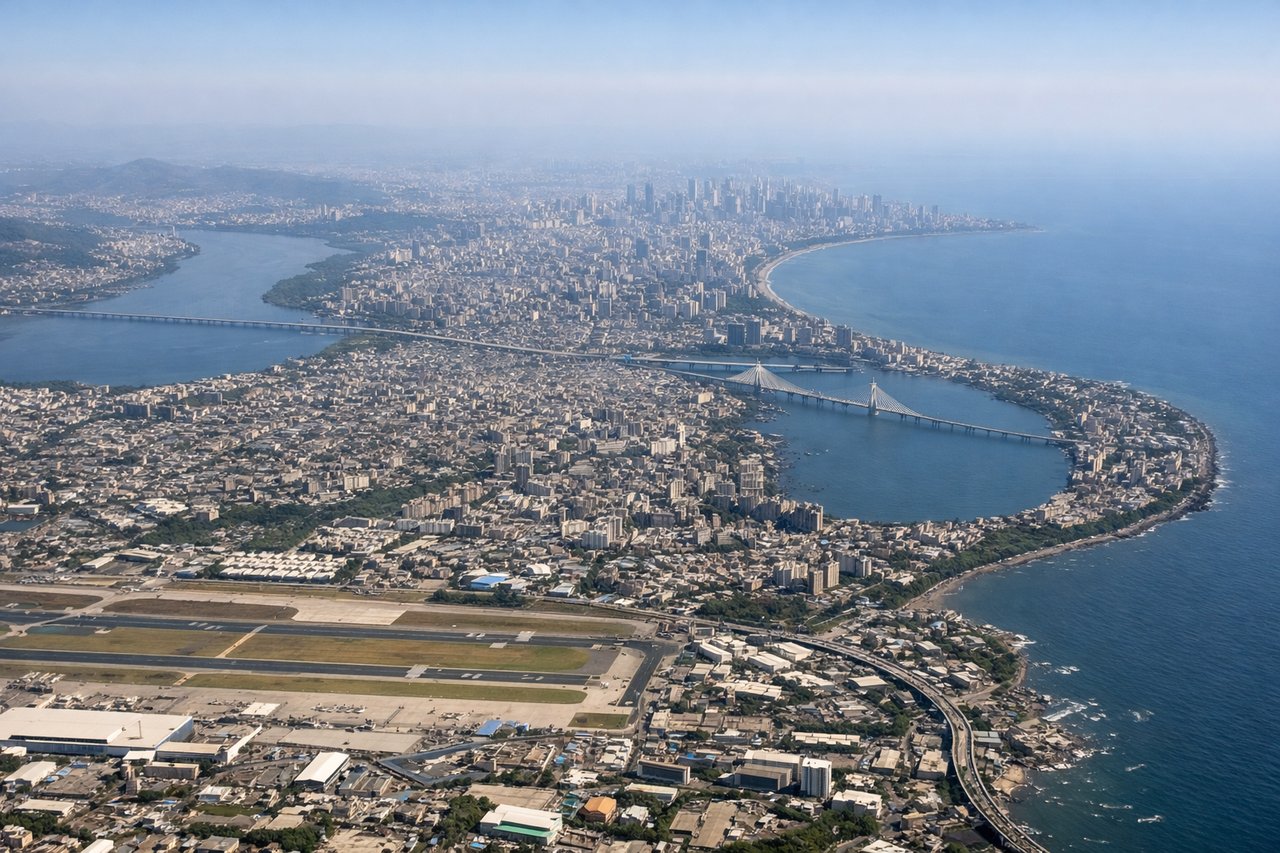
RIGHTBOM typically departs runway 09L/27R or 09R/27L depending on wind. Northbound departures use 09L/09R, which means climbing out on a northerly heading. Right-side seats face west initially, then northwest, giving views of the Arabian Sea coast, Mumbai's western suburbs, and the Sahyadri Range foothills as you climb.
Landing at IXC
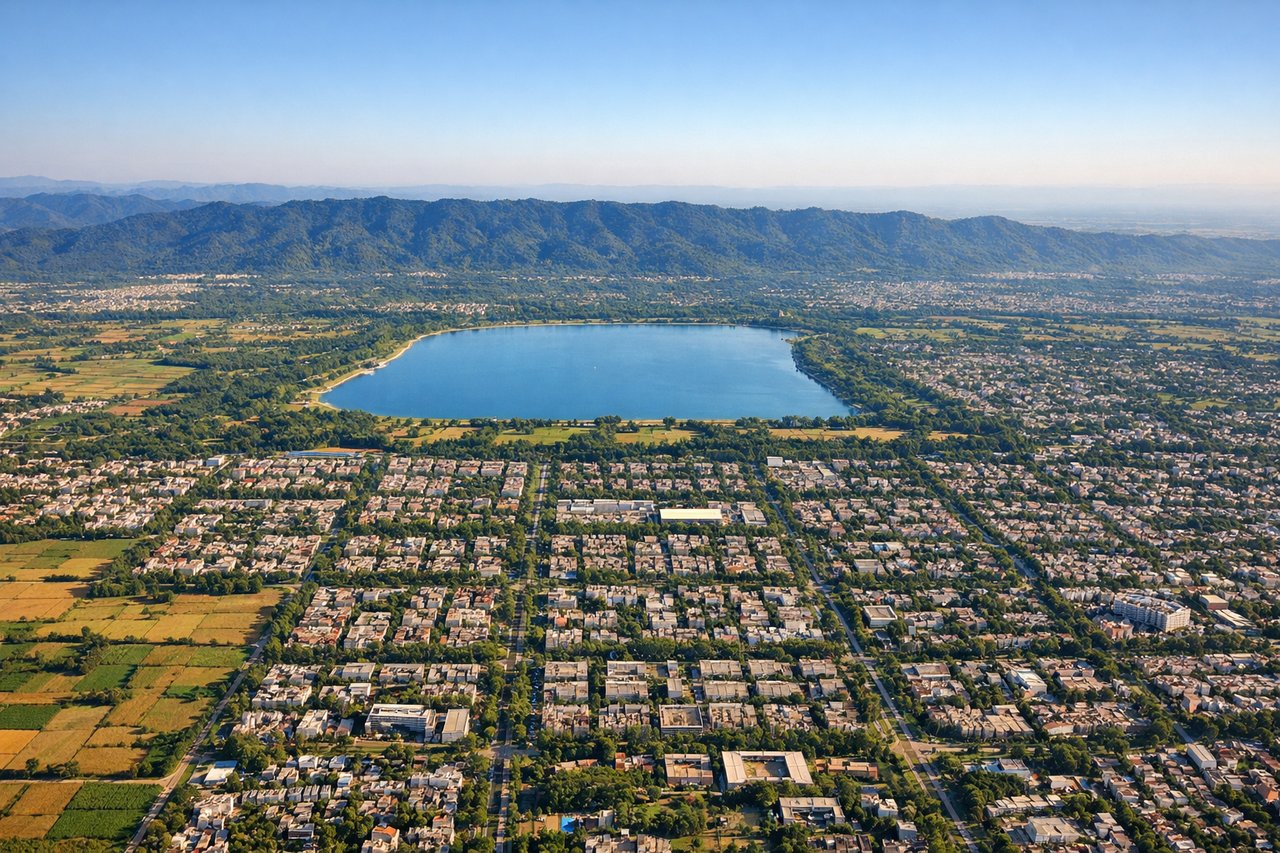
LEFTIXC approaches from the south on runway 24 (southwest heading). Left-side seats face southeast during descent, providing views of the Shivalik Range foothills, the Sutlej River valley, and the Chandigarh city layout before touchdown.
Landmarks on this routeAll landmarks →
Will your flight be in sunlight?
See exactly which side of the plane gets sun and shade at your departure time.
About This Route
Which side of the plane should I sit on flying from Chhatrapati Shivaji International (BOM) to Chandigarh (IXC)?
Sit on the Left side of the plane for the best views on flights from Bombay to Chandigarh. While takeoff favors the right, the landing view on the left is significantly more dramatic and geographically distinctive. The Shivalik Range and Sutlej River valley provide clear visual anchors, and Chandigarh's planned geometry is striking from altitude. Left side captures the approach better.
What can I see during takeoff from Chhatrapati Shivaji International in Bombay?
During takeoff from Chhatrapati Shivaji International (BOM), sit on the Right side for the best views. BOM typically departs runway 09L/27R or 09R/27L depending on wind. Northbound departures use 09L/09R, which means climbing out on a northerly heading. Right-side seats face west initially, then northwest, giving views of the Arabian Sea coast, Mumbai's western suburbs, and the Sahyadri Range foothills as you climb. Notable sights include: Arabian Sea (immediate coastline below), Mumbai's western sprawl (Bandra, Andheri districts), Sahyadri Range (distant eastern horizon), Thane Creek estuary.
What can I see when landing at Chandigarh in Chandigarh?
When landing at Chandigarh (IXC), sit on the Left side for the best views. IXC approaches from the south on runway 24 (southwest heading). Left-side seats face southeast during descent, providing views of the Shivalik Range foothills, the Sutlej River valley, and the Chandigarh city layout before touchdown. Notable sights include: Shivalik Range (eastern horizon), Sutlej River valley (winding through plains), Chandigarh city grid (geometric planned layout), Pinjore Gardens area.
How long is the flight from Bombay to Chandigarh?
The flight from Chhatrapati Shivaji International (BOM) to Chandigarh (IXC) takes Approximately 2 hours 15 minutes.
What does the Bombay to Chandigarh flight path pass over?
The flight path crosses the Deccan Plateau's northern edge, then transitions into the Indo-Gangetic Plain. Notable midpoint features include the Narmada River valley (if visible through haze around 1 hour into flight), the transition zone between the Western Ghats and central Indian plateau, and eventually the Yamuna River valley as you approach Haryana. The landscape shifts from coastal-influenced terrain to dry plateau to fertile northern plains. Visibility of specific rivers depends on haze and season, but the general terrain transition from elevated western regions to flat northern plains is always apparent.