Both sides score equally at 2.0 due to the short flight duration (1h 15m) over predominantly flat terrain with no mountains, coastlines, or dramatic geographic features. However, the right side edges ahead for landing scenery: the DFW metroplex approach provides recognizable urban landmarks and airport infrastructure that create visual interest during descent, whereas the left side's Baton Rouge departure offers only brief riverfront views before transitioning to monotonous Louisiana forest. For a short regional flight, the landing experience slightly outweighs the takeoff.
Flown BTR to DFW? Did we get it right?
Flight Path
Baton Rouge to Dallas-Fort Worth is 383 miles (616 km), a flight of about 1 hour 15 minutes.
East Texas pine forest, scattered small towns and agricultural clearings, flat terrain throughout with no elevation changes, occasional small lakes and creek systems, minimal urban development between Baton Rouge and Dallas-Fort Worth corridor
Great circle distance and headings ›Phase by phase
Takeoff from BTR
LEFTLeft side captures the Mississippi River and Baton Rouge's riverfront during climb-out, providing brief urban and water scenery. Right side faces inland toward flat Louisiana terrain with minimal landmarks.
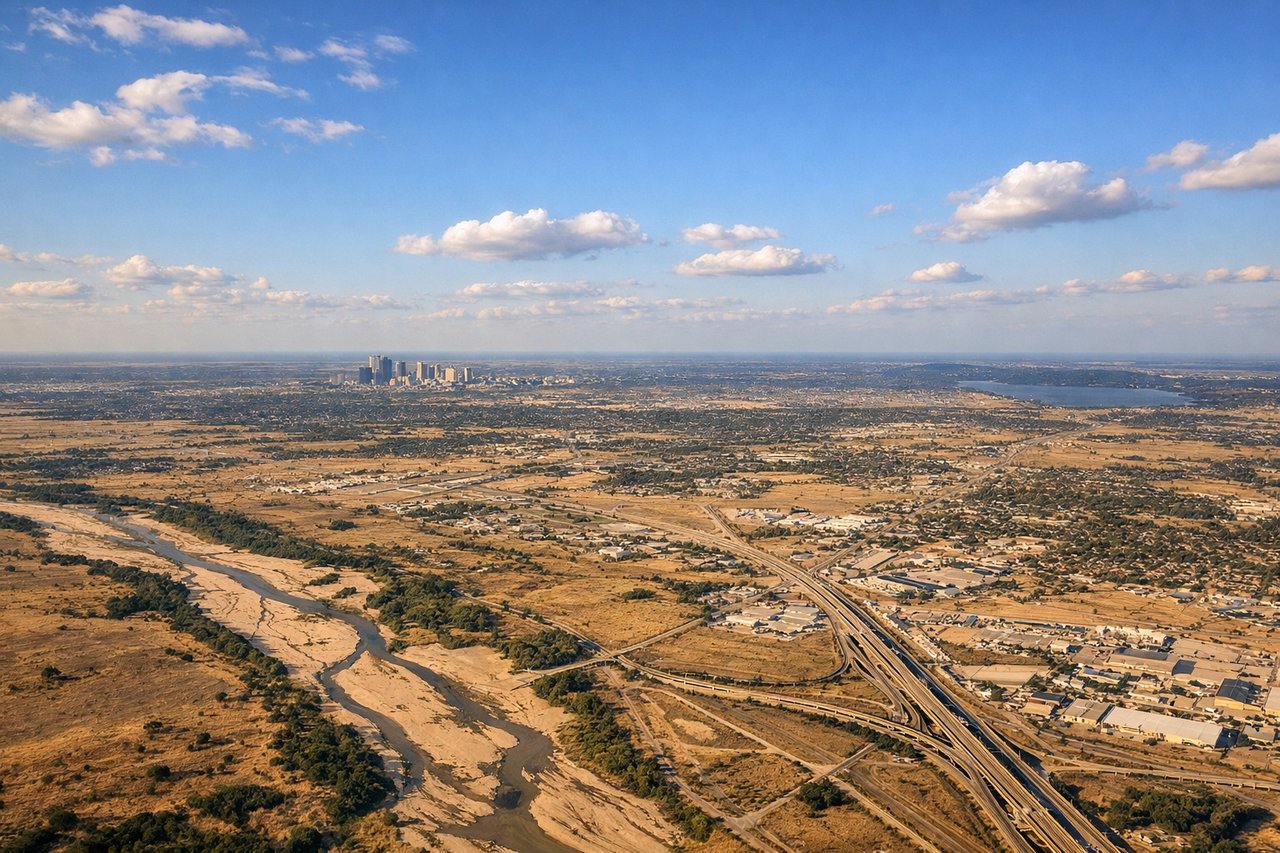
Landing at DFW
RIGHTRight side offers views of the Dallas-Fort Worth metroplex sprawl, urban development, and the approach into DFW's runways. Left side shows flat Texas prairie with minimal distinguishing features during descent.
Will your flight be in sunlight?
Pick a date and time in the Sun Map to watch the sun move across your whole flight.
About This Route
Which side of the plane should I sit on flying from Baton Rouge Metro Ryan Fld (BTR) to Dallas Fort Worth International (DFW)?
Sit on the Right side of the plane for the best views on flights from Baton Rouge to Dallas-Fort Worth. Both sides score equally at 2.0 due to the short flight duration (1h 15m) over predominantly flat terrain with no mountains, coastlines, or dramatic geographic features. However, the right side edges ahead for landing scenery: the DFW metroplex approach provides recognizable urban landmarks and airport infrastructure that create visual interest during descent, whereas the left side's Baton Rouge departure offers only brief riverfront views before transitioning to monotonous Louisiana forest. For a short regional flight, the landing experience slightly outweighs the takeoff.
What can I see during takeoff from Baton Rouge Metro Ryan Fld in Baton Rouge?
During takeoff from Baton Rouge Metro Ryan Fld (BTR), sit on the Left side for the best views. Left side captures the Mississippi River and Baton Rouge's riverfront during climb-out, providing brief urban and water scenery. Right side faces inland toward flat Louisiana terrain with minimal landmarks. Notable sights include: Mississippi River (wide, meandering), Baton Rouge urban core and port facilities, Louisiana swampland transitioning to pine forest.
What can I see when landing at Dallas Fort Worth International in Dallas-Fort Worth?
When landing at Dallas Fort Worth International (DFW), sit on the Right side for the best views. Right side offers views of the Dallas-Fort Worth metroplex sprawl, urban development, and the approach into DFW's runways. Left side shows flat Texas prairie with minimal distinguishing features during descent. Notable sights include: Dallas-Fort Worth urban sprawl and highway network, Trinity River valley, DFW airport runways and taxiways, suburban development patterns.
How long is the flight from Baton Rouge to Dallas-Fort Worth?
The flight from Baton Rouge Metro Ryan Fld (BTR) to Dallas Fort Worth International (DFW) takes about 1 hour 15 minutes. The shortest flight path between them is 383 miles (616 km); winds and air traffic control usually add a few percent.
What does the Baton Rouge to Dallas-Fort Worth flight path pass over?
East Texas pine forest, scattered small towns and agricultural clearings, flat terrain throughout with no elevation changes, occasional small lakes and creek systems, minimal urban development between Baton Rouge and Dallas-Fort Worth corridor