Guangzhou to Melbourne is 4,695 miles (7,556 km), a flight of about 9 hours 15 minutes.
While the right side wins the takeoff sequence with the Pearl River Delta cityscape, the left side delivers the more memorable arrival with Port Phillip Bay and Melbourne's skyline, plus glimpses of Australia's red interior and coastal terrain during descent, giving it a slight overall edge across the full flight.
Flight Path
South China Sea, Philippine archipelago (Palawan/Sulu Sea), Indonesian islands including Sulawesi and Timor, Timor Sea, Northern Territory outback and Simpson Desert fringes, central Victorian farmland approaching Melbourne
Great circle distance and headings ›


Phase by phase
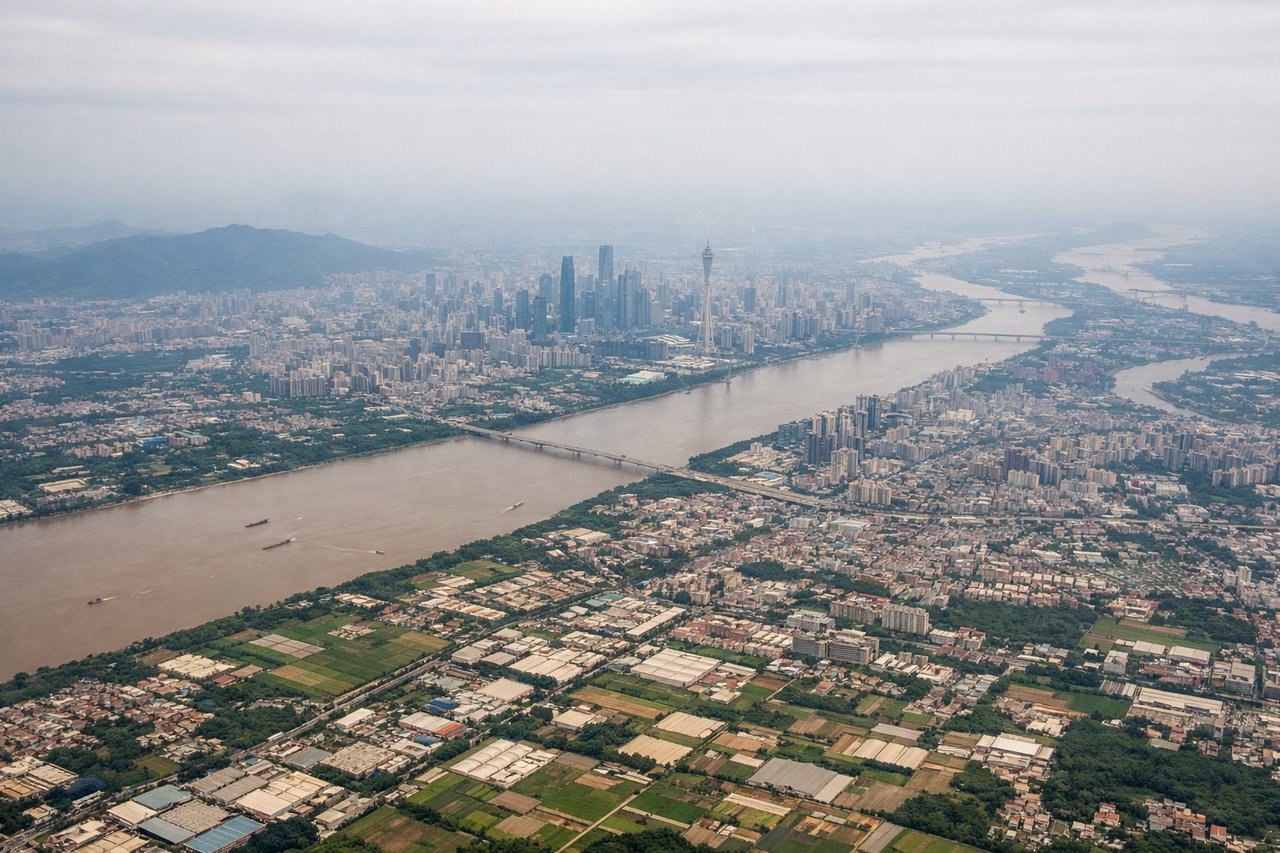
Takeoff from CAN
RIGHTDeparting CAN toward the south, the right side offers a sweeping view of the Pearl River Delta megalopolis—Guangzhou's dense urban core, the Zhujiang river winding through Foshan, and the sprawling industrial belt toward Shenzhen. The left side mostly shows flatter agricultural land east of the city with less visual interest.
Landing at MEB
LEFTOn approach to MEB's runway 26 from the north, the aircraft typically curves south before turning onto final, putting Port Phillip Bay and the Melbourne CBD skyline on the left side of the cabin. The right side during this turn mostly shows the flat northern suburbs and rural Sunbury countryside.
Landmarks on this routeAll landmarks →
Will your flight be in sunlight?
Pick a date and time in the Sun Map to watch the sun move across your whole flight.
About This Route
Which side of the plane should I sit on flying from Guangzhou Baiyun International Airport (CAN) to Melbourne Essendon (MEB)?
Sit on the Left side of the plane for the best views on flights from Guangzhou to Melbourne. While the right side wins the takeoff sequence with the Pearl River Delta cityscape, the left side delivers the more memorable arrival with Port Phillip Bay and Melbourne's skyline, plus glimpses of Australia's red interior and coastal terrain during descent, giving it a slight overall edge across the full flight.
What can I see during takeoff from Guangzhou Baiyun International Airport in Guangzhou?
During takeoff from Guangzhou Baiyun International Airport (CAN), sit on the Right side for the best views. Departing CAN toward the south, the right side offers a sweeping view of the Pearl River Delta megalopolis—Guangzhou's dense urban core, the Zhujiang river winding through Foshan, and the sprawling industrial belt toward Shenzhen. The left side mostly shows flatter agricultural land east of the city with less visual interest. Notable sights include: Pearl River (Zhujiang), Guangzhou city skyline, Foshan urban sprawl, Baiyun Mountain.
What can I see when landing at Melbourne Essendon in Melbourne?
When landing at Melbourne Essendon (MEB), sit on the Left side for the best views. On approach to MEB's runway 26 from the north, the aircraft typically curves south before turning onto final, putting Port Phillip Bay and the Melbourne CBD skyline on the left side of the cabin. The right side during this turn mostly shows the flat northern suburbs and rural Sunbury countryside. Notable sights include: Port Phillip Bay, Melbourne CBD skyline, Yarra River mouth, Westgate Bridge.
How long is the flight from Guangzhou to Melbourne?
The flight from Guangzhou Baiyun International Airport (CAN) to Melbourne Essendon (MEB) takes about 9 hours 15 minutes. The shortest flight path between them is 4,695 miles (7,556 km); winds and air traffic control usually add a few percent.
What does the Guangzhou to Melbourne flight path pass over?
South China Sea, Philippine archipelago (Palawan/Sulu Sea), Indonesian islands including Sulawesi and Timor, Timor Sea, Northern Territory outback and Simpson Desert fringes, central Victorian farmland approaching Melbourne