Melbourne to Guangzhou is 4,695 miles (7,556 km), a flight of about 9 hours 55 minutes.
The right side wins both takeoff and landing with genuine skyline and river views, while the cruise phase over outback Australia and the South China Sea is largely featureless on either side, making the departure and arrival scenery the deciding factor.
Flight Path
Flat interior of the Northern Territory outback, the Arafura Sea, scattered islands of eastern Indonesia including Timor, and the open waters of the South China Sea before reaching the Chinese coast near Guangzhou.
Great circle distance and headings ›


Phase by phase
Takeoff from MEB
RIGHTDeparting MEB on runway 26 and turning north, the right side offers a brief but clear view back over Port Phillip Bay and the Melbourne CBD skyline before the aircraft settles onto its northbound track over the Yarra Valley farmland. The left side mostly shows Melbourne's western suburbs and flat plains with little contrast.
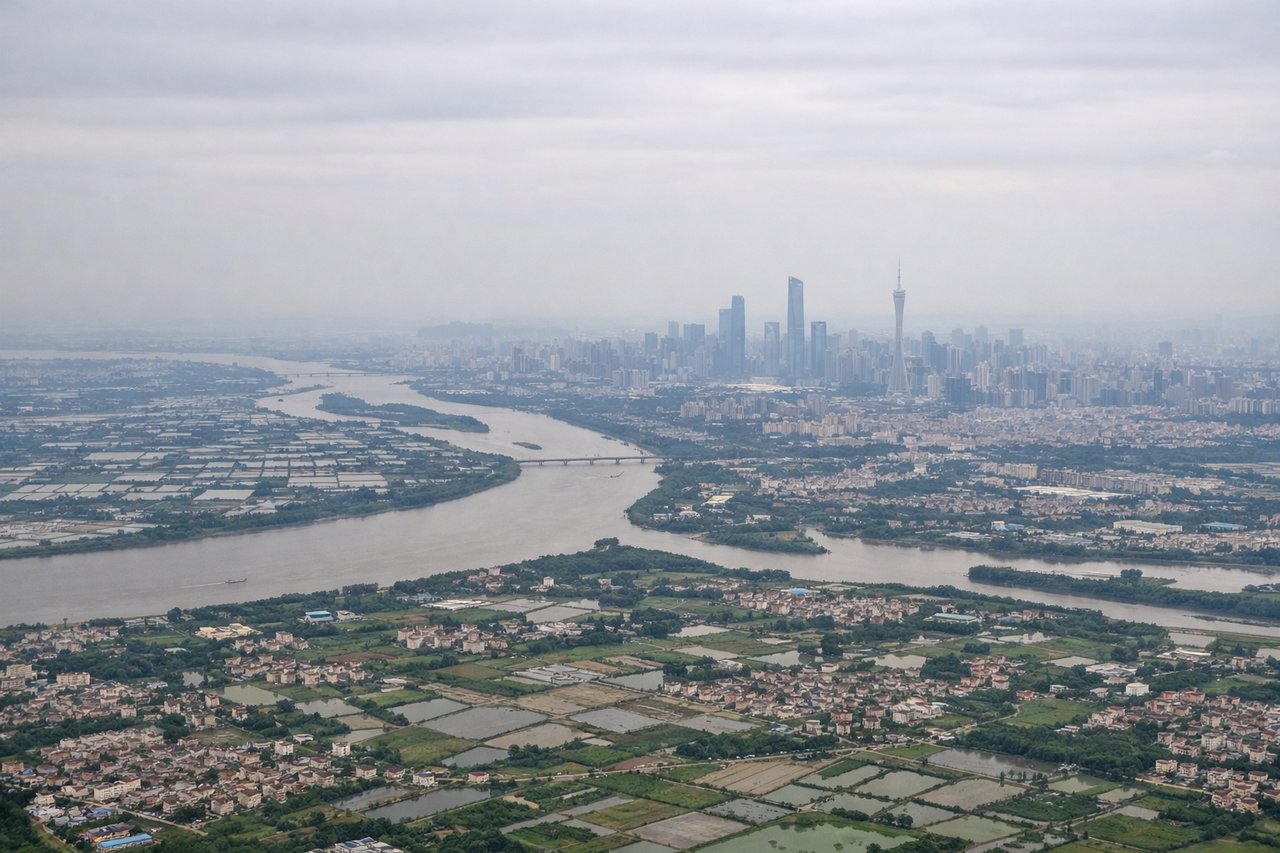
Landing at CAN
RIGHTOn approach to CAN from the north, the right side typically faces east toward Baiyun Mountain and the dense high-rise sprawl of Guangzhou city, with the Pearl River winding through the delta. The left side shows mostly flat agricultural and industrial delta land with fewer distinct features.
Landmarks on this routeAll landmarks →
Will your flight be in sunlight?
Pick a date and time in the Sun Map to watch the sun move across your whole flight.
About This Route
Which side of the plane should I sit on flying from Melbourne Essendon (MEB) to Guangzhou Baiyun International Airport (CAN)?
Sit on the Right side of the plane for the best views on flights from Melbourne to Guangzhou. The right side wins both takeoff and landing with genuine skyline and river views, while the cruise phase over outback Australia and the South China Sea is largely featureless on either side, making the departure and arrival scenery the deciding factor.
What can I see during takeoff from Melbourne Essendon in Melbourne?
During takeoff from Melbourne Essendon (MEB), sit on the Right side for the best views. Departing MEB on runway 26 and turning north, the right side offers a brief but clear view back over Port Phillip Bay and the Melbourne CBD skyline before the aircraft settles onto its northbound track over the Yarra Valley farmland. The left side mostly shows Melbourne's western suburbs and flat plains with little contrast. Notable sights include: Port Phillip Bay, Melbourne CBD skyline, Yarra River valley, Dandenong Ranges foothills.
What can I see when landing at Guangzhou Baiyun International Airport in Guangzhou?
When landing at Guangzhou Baiyun International Airport (CAN), sit on the Right side for the best views. On approach to CAN from the north, the right side typically faces east toward Baiyun Mountain and the dense high-rise sprawl of Guangzhou city, with the Pearl River winding through the delta. The left side shows mostly flat agricultural and industrial delta land with fewer distinct features. Notable sights include: Baiyun Mountain, Pearl River, Guangzhou high-rise skyline, Pearl River Delta waterways.
How long is the flight from Melbourne to Guangzhou?
The flight from Melbourne Essendon (MEB) to Guangzhou Baiyun International Airport (CAN) takes about 9 hours 55 minutes. The shortest flight path between them is 4,695 miles (7,556 km); winds and air traffic control usually add a few percent.
What does the Melbourne to Guangzhou flight path pass over?
Flat interior of the Northern Territory outback, the Arafura Sea, scattered islands of eastern Indonesia including Timor, and the open waters of the South China Sea before reaching the Chinese coast near Guangzhou.