The left side delivers the trip's two most dramatic moments—Paris landmarks during the departure turn and Mount Fuji paired with the Tokyo skyline on final approach—while the right side's main advantage is a mid-flight glimpse of the Alps and Central Asian ranges, which doesn't offset the weaker takeoff and landing views.
Flight Path
Roughly midway the current Russia-avoidance routing crosses the Caspian Sea region and the arid steppe of Kazakhstan, with the Tian Shan mountain range visible along the Central Asian border before the route continues east toward western China.
Great circle distance and headings ›.jpg?width=600)

Phase by phase
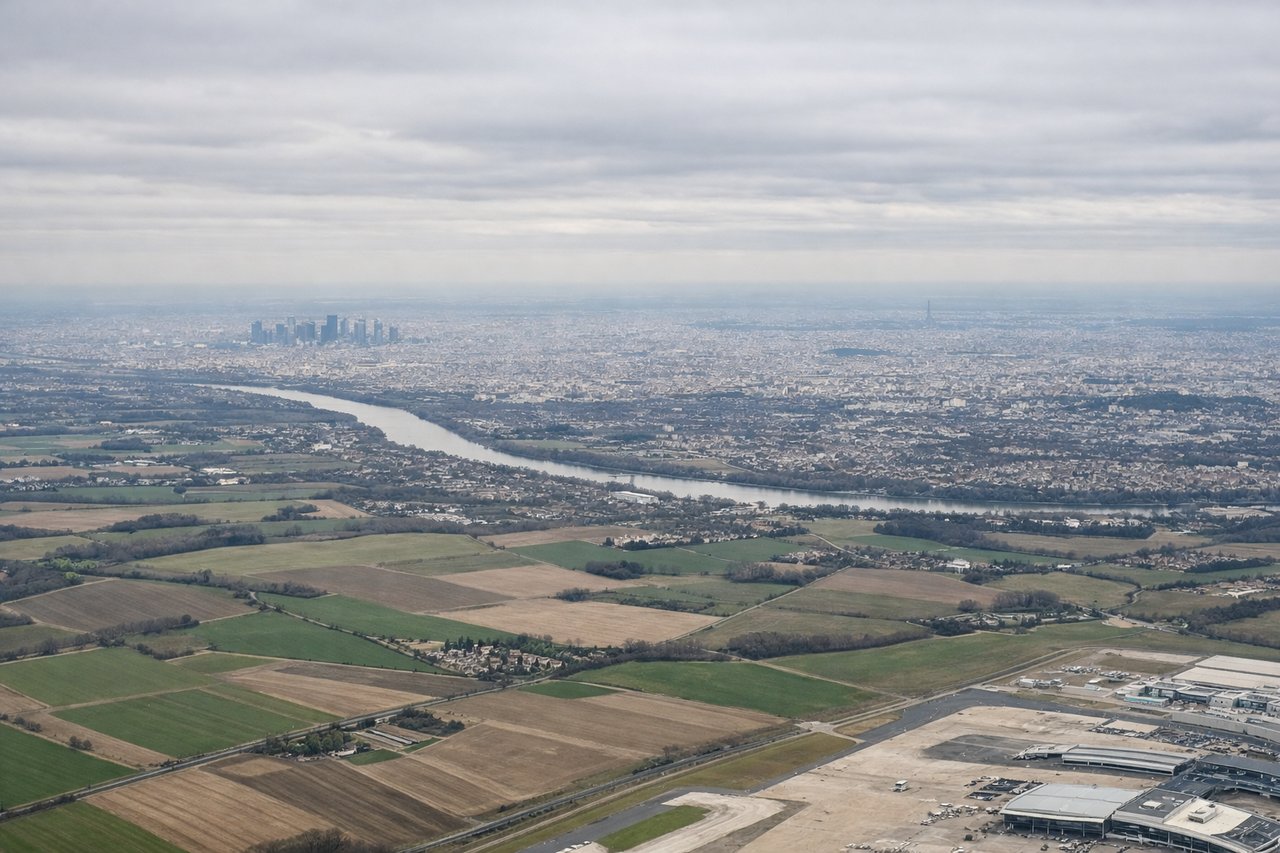
Takeoff from CDG
LEFTDeparting CDG on the westerly '26/27' configuration, aircraft heading toward Asia typically bank left (south) to pick up the southeastern track now used to avoid Russian airspace, putting Paris directly beneath the left side during the turn. Passengers get a clear look at the Eiffel Tower, the Seine, and the La Défense skyline before the city fades behind haze.
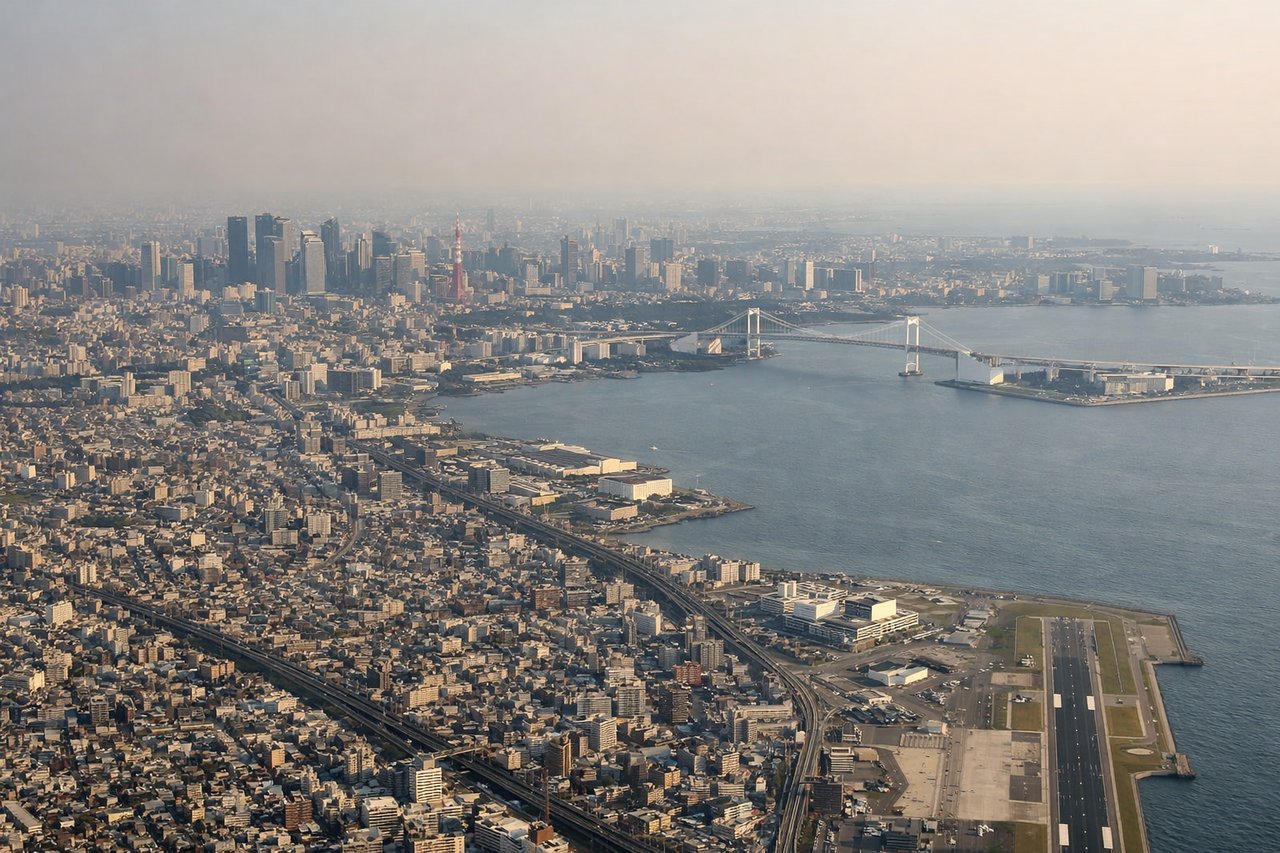
Landing at HND
LEFTIn Haneda's common south-wind arrival flow, planes fly north up Tokyo Bay before landing on 34L/34R, and on the final approach Mount Fuji stands out to the west along with the Tokyo skyline. The right side over Chiba shows mostly flat, industrial waterfront with far less visual interest.
Landmarks on this routeAll landmarks →
Will your flight be in sunlight?
See exactly which side of the plane gets sun and shade at your departure time.
About This Route
Which side of the plane should I sit on flying from Charles De Gaulle (CDG) to Tokyo International (HND)?
Sit on the Left side of the plane for the best views on flights from Paris to Tokyo. The left side delivers the trip's two most dramatic moments—Paris landmarks during the departure turn and Mount Fuji paired with the Tokyo skyline on final approach—while the right side's main advantage is a mid-flight glimpse of the Alps and Central Asian ranges, which doesn't offset the weaker takeoff and landing views.
What can I see during takeoff from Charles De Gaulle in Paris?
During takeoff from Charles De Gaulle (CDG), sit on the Left side for the best views. Departing CDG on the westerly '26/27' configuration, aircraft heading toward Asia typically bank left (south) to pick up the southeastern track now used to avoid Russian airspace, putting Paris directly beneath the left side during the turn. Passengers get a clear look at the Eiffel Tower, the Seine, and the La Défense skyline before the city fades behind haze. Notable sights include: Eiffel Tower, Seine River, La Défense skyscraper district, Sacré-Cœur/Montmartre hill.
What can I see when landing at Tokyo International in Tokyo?
When landing at Tokyo International (HND), sit on the Left side for the best views. In Haneda's common south-wind arrival flow, planes fly north up Tokyo Bay before landing on 34L/34R, and on the final approach Mount Fuji stands out to the west along with the Tokyo skyline. The right side over Chiba shows mostly flat, industrial waterfront with far less visual interest. Notable sights include: Mount Fuji, Tokyo Tower and Minato skyline, Rainbow Bridge, Tokyo Bay.
How long is the flight from Paris to Tokyo?
The flight from Charles De Gaulle (CDG) to Tokyo International (HND) takes 13h 55m.
What does the Paris to Tokyo flight path pass over?
Roughly midway the current Russia-avoidance routing crosses the Caspian Sea region and the arid steppe of Kazakhstan, with the Tian Shan mountain range visible along the Central Asian border before the route continues east toward western China.