The left side wins on both ends of the flight — Mount Fuji and the Tokyo skyline at departure, and a rare southward view of Paris on arrival — while the right side offers mostly open water and flat farmland during these phases.
Flight Path
Route avoids Russian airspace, tracking instead over Mongolia's Gobi Desert, the Tian Shan and Altai mountain ranges of Central Asia, the Caspian Sea, and the Caucasus before crossing into Eastern Europe toward France.
Great circle distance and headings ›
.jpg?width=600)
Phase by phase
Takeoff from HND
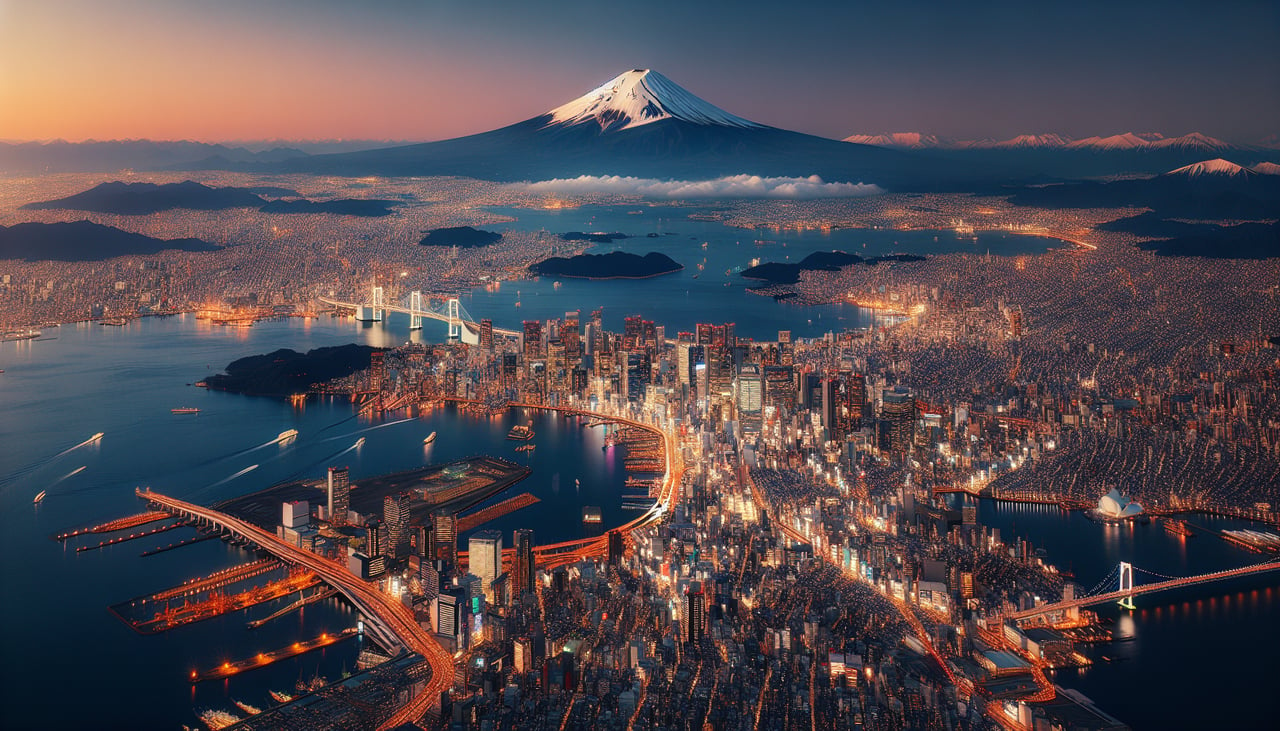
LEFTDeparting HND to the north over Tokyo Bay before turning west, the left side offers a good look back at the Tokyo skyline and, once the aircraft settles onto its westbound heading, a distant view of Mount Fuji's snow-capped cone rising above the Kanto plain. The right side mostly shows open bay water and flat coastline.
Landing at CDG
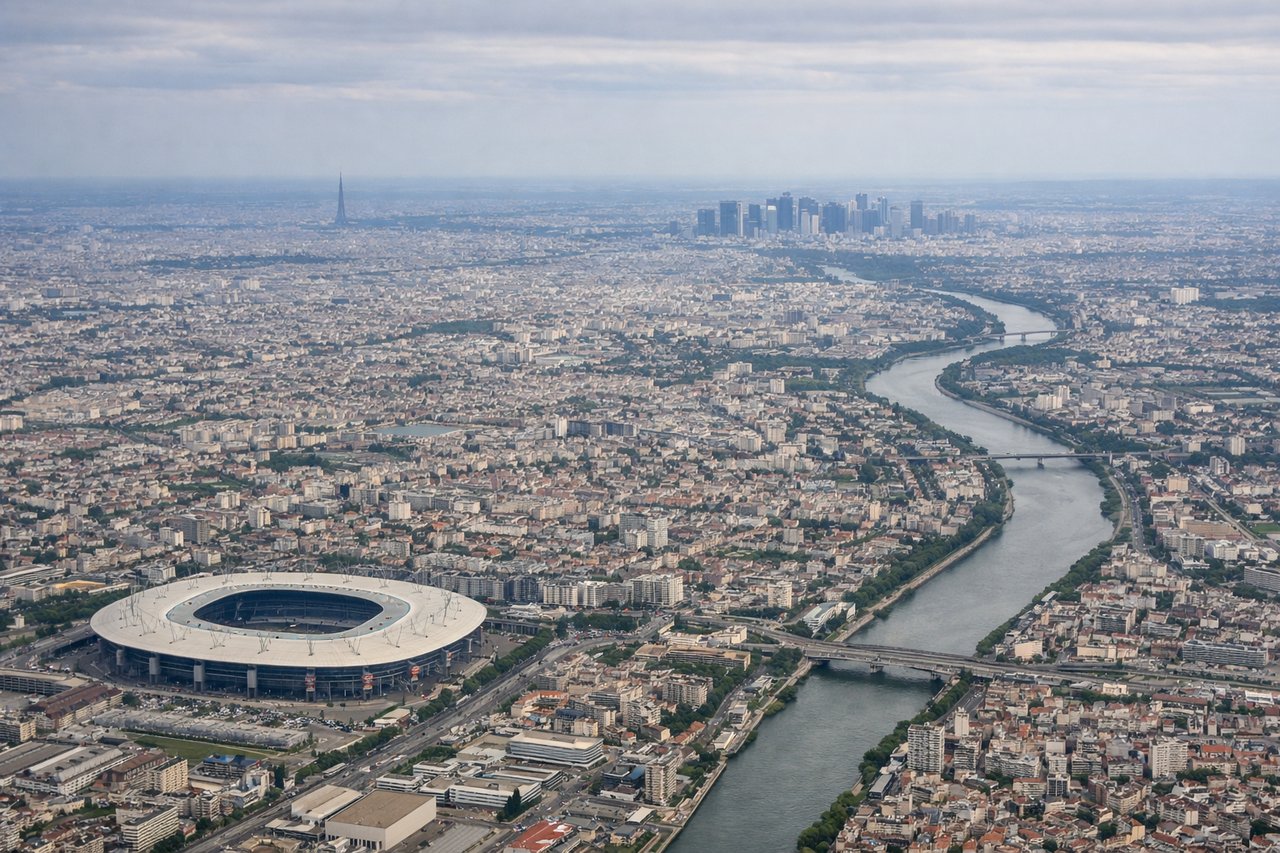
LEFTCDG's westerly approach typically tracks in from the northeast, passing just north of Paris before turning onto final for runways 26/27. Passengers on the left side get a sweeping view south toward the city, with the Seine's loops and central Paris landmarks visible in the distance during the descent.
Landmarks on this routeAll landmarks →
Will your flight be in sunlight?
See exactly which side of the plane gets sun and shade at your departure time.
About This Route
Which side of the plane should I sit on flying from Tokyo International (HND) to Charles De Gaulle (CDG)?
Sit on the Left side of the plane for the best views on flights from Tokyo to Paris. The left side wins on both ends of the flight — Mount Fuji and the Tokyo skyline at departure, and a rare southward view of Paris on arrival — while the right side offers mostly open water and flat farmland during these phases.
What can I see during takeoff from Tokyo International in Tokyo?
During takeoff from Tokyo International (HND), sit on the Left side for the best views. Departing HND to the north over Tokyo Bay before turning west, the left side offers a good look back at the Tokyo skyline and, once the aircraft settles onto its westbound heading, a distant view of Mount Fuji's snow-capped cone rising above the Kanto plain. The right side mostly shows open bay water and flat coastline. Notable sights include: Tokyo Bay, Tokyo skyline (Odaiba/Minato), Mount Fuji, Izu Peninsula coastline.
What can I see when landing at Charles De Gaulle in Paris?
When landing at Charles De Gaulle (CDG), sit on the Left side for the best views. CDG's westerly approach typically tracks in from the northeast, passing just north of Paris before turning onto final for runways 26/27. Passengers on the left side get a sweeping view south toward the city, with the Seine's loops and central Paris landmarks visible in the distance during the descent. Notable sights include: Seine River bends, Paris skyline (Eiffel Tower, Sacre-Coeur), Charles de Gaulle terminal complex, surrounding farmland of the Ile-de-France.
How long is the flight from Tokyo to Paris?
The flight from Tokyo International (HND) to Charles De Gaulle (CDG) takes 14h 15m.
What does the Tokyo to Paris flight path pass over?
Route avoids Russian airspace, tracking instead over Mongolia's Gobi Desert, the Tian Shan and Altai mountain ranges of Central Asia, the Caspian Sea, and the Caucasus before crossing into Eastern Europe toward France.