The Rome departure delivers a genuinely iconic urban and coastal view that outshines the ocean-dominated cruise and the more modest Atlanta arrival; the ten-hour Atlantic crossing offers little to differentiate either side for most of the flight.
Flight Path
Most of the route crosses open North Atlantic Ocean with no land visible for several hours; the flight path may pass near the Azores archipelago before continuing over open water toward the North American coast.
Great circle distance and headings ›

.jpeg?width=600)
Phase by phase
Takeoff from CIA
LEFTDeparting Ciampino toward the northwest, the left side offers a brief but rich view of Rome itself — the Tiber River winding through the historic center, the dome of St. Peter's, and the coastline near Ostia as the aircraft climbs. The right side mainly shows the wooded Alban Hills and Castelli Romani towns, which are pleasant but less iconic.
Landing at ATL
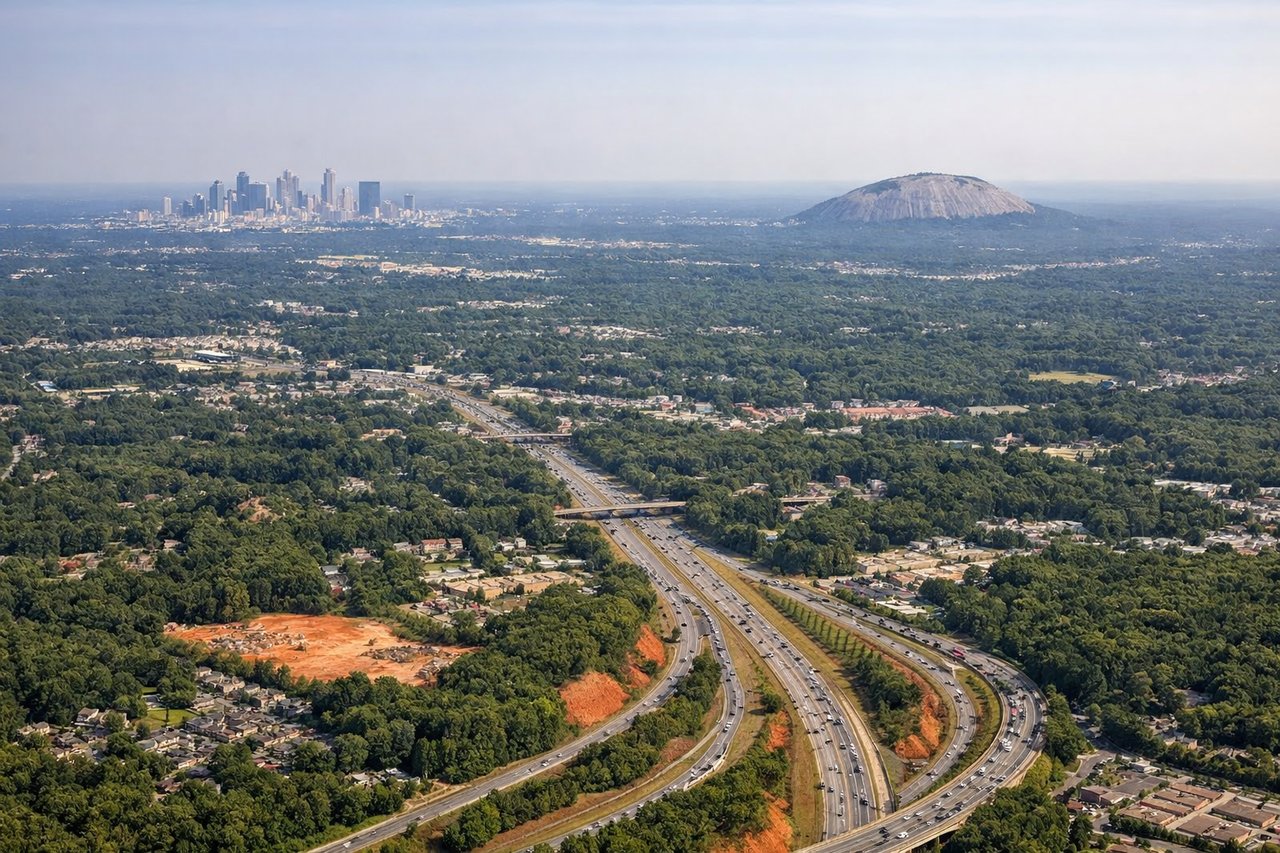
RIGHTOn typical west-flow arrivals into Atlanta, aircraft approach from the east and land heading west, putting downtown Atlanta's skyline on the right side of the cabin during the final descent. The left side during this phase mostly shows suburban Georgia pine forest with little distinctive scenery.
Landmarks on this routeAll landmarks →
Will your flight be in sunlight?
See exactly which side of the plane gets sun and shade at your departure time.
About This Route
Which side of the plane should I sit on flying from Ciampino (CIA) to The William B Hartsfield Atlanta International (ATL)?
Sit on the Left side of the plane for the best views on flights from Rome to Atlanta. The Rome departure delivers a genuinely iconic urban and coastal view that outshines the ocean-dominated cruise and the more modest Atlanta arrival; the ten-hour Atlantic crossing offers little to differentiate either side for most of the flight.
What can I see during takeoff from Ciampino in Rome?
During takeoff from Ciampino (CIA), sit on the Left side for the best views. Departing Ciampino toward the northwest, the left side offers a brief but rich view of Rome itself — the Tiber River winding through the historic center, the dome of St. Peter's, and the coastline near Ostia as the aircraft climbs. The right side mainly shows the wooded Alban Hills and Castelli Romani towns, which are pleasant but less iconic. Notable sights include: Rome historic center and Tiber River, St. Peter's Basilica dome, Ostia coastline, Alban Hills (visible in distance on right).
What can I see when landing at The William B Hartsfield Atlanta International in Atlanta?
When landing at The William B Hartsfield Atlanta International (ATL), sit on the Right side for the best views. On typical west-flow arrivals into Atlanta, aircraft approach from the east and land heading west, putting downtown Atlanta's skyline on the right side of the cabin during the final descent. The left side during this phase mostly shows suburban Georgia pine forest with little distinctive scenery. Notable sights include: Downtown Atlanta skyline, Chattahoochee River, Hartsfield-Jackson terminal complex, Georgia piedmont forest belt.
How long is the flight from Rome to Atlanta?
The flight from Ciampino (CIA) to The William B Hartsfield Atlanta International (ATL) takes 9h 55m.
What does the Rome to Atlanta flight path pass over?
Most of the route crosses open North Atlantic Ocean with no land visible for several hours; the flight path may pass near the Azores archipelago before continuing over open water toward the North American coast.