Rome to Dallas-Fort Worth is 5,616 miles (9,037 km), a flight of about 11 hours 30 minutes.
The left side wins overall for the spectacular Rome and Castelli Romani departure views, which are far more visually distinctive than the flat Texas approach. Mid-flight over the Atlantic and eastern US offers little differentiation between sides, so the takeoff experience tips the balance.
Flight Path
Departing northwest over the Tyrrhenian Sea, the route crosses Corsica and Sardinia, then the Balearic Islands and southern Spain near Valencia, exits Europe over Lisbon and the Portuguese coast, crosses the North Atlantic at roughly 40-45 degrees north latitude, makes landfall over Newfoundland or Nova Scotia, tracks over the Great Lakes region or Ohio Valley, crosses the Mississippi River valley, and descends over the flat rolling plains of Oklahoma and North Texas
Great circle distance and headings ›


Phase by phase
Takeoff from CIA
LEFTCiampino's primary departure runway 15 sends aircraft southeast before turning northwest toward the Atlantic. A left-side seat gives you a clear view back over central Rome, the Tiber River, and the Castelli Romani volcanic hills. The right side faces away toward open countryside southeast of the city.
Landing at DFW
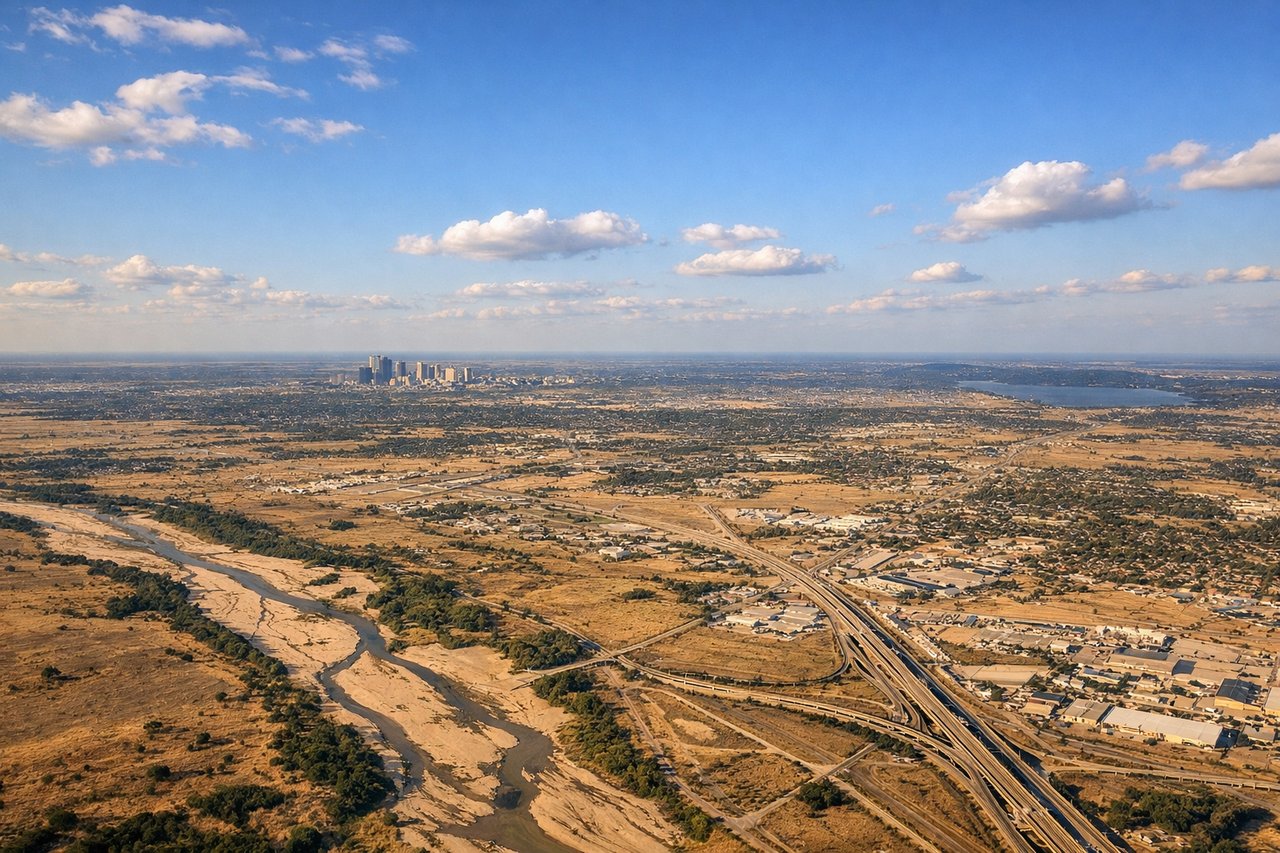
RIGHTDFW typically uses runways 17L/17R or 18L/18R for southerly landings, with aircraft approaching from the north. A right-side seat on final approach gives you the Dallas skyline to the southwest, while left faces Fort Worth. On northerly runway 35 operations, right still captures the sprawling DFW metroplex spread across the Trinity River basin.
Landmarks on this routeAll landmarks →
Will your flight be in sunlight?
Pick a date and time in the Sun Map to watch the sun move across your whole flight.
About This Route
Which side of the plane should I sit on flying from Ciampino (CIA) to Dallas Fort Worth International (DFW)?
Sit on the Left side of the plane for the best views on flights from Rome to Dallas-Fort Worth. The left side wins overall for the spectacular Rome and Castelli Romani departure views, which are far more visually distinctive than the flat Texas approach. Mid-flight over the Atlantic and eastern US offers little differentiation between sides, so the takeoff experience tips the balance.
What can I see during takeoff from Ciampino in Rome?
During takeoff from Ciampino (CIA), sit on the Left side for the best views. Ciampino's primary departure runway 15 sends aircraft southeast before turning northwest toward the Atlantic. A left-side seat gives you a clear view back over central Rome, the Tiber River, and the Castelli Romani volcanic hills. The right side faces away toward open countryside southeast of the city. Notable sights include: Central Rome and the Tiber River bend, Castelli Romani hills and Lago di Albano volcanic crater lake, the Alban Hills ridge, Fiumicino airport and the Tyrrhenian coast in the distance.
What can I see when landing at Dallas Fort Worth International in Dallas-Fort Worth?
When landing at Dallas Fort Worth International (DFW), sit on the Right side for the best views. DFW typically uses runways 17L/17R or 18L/18R for southerly landings, with aircraft approaching from the north. A right-side seat on final approach gives you the Dallas skyline to the southwest, while left faces Fort Worth. On northerly runway 35 operations, right still captures the sprawling DFW metroplex spread across the Trinity River basin. Notable sights include: Dallas downtown skyline with Reunion Tower, the Trinity River floodplain and its wooded corridors, Lake Grapevine to the northeast, the dense suburban grid of Irving and Las Colinas.
How long is the flight from Rome to Dallas-Fort Worth?
The flight from Ciampino (CIA) to Dallas Fort Worth International (DFW) takes about 11 hours 30 minutes. The shortest flight path between them is 5,616 miles (9,037 km); winds and air traffic control usually add a few percent.
What does the Rome to Dallas-Fort Worth flight path pass over?
Departing northwest over the Tyrrhenian Sea, the route crosses Corsica and Sardinia, then the Balearic Islands and southern Spain near Valencia, exits Europe over Lisbon and the Portuguese coast, crosses the North Atlantic at roughly 40-45 degrees north latitude, makes landfall over Newfoundland or Nova Scotia, tracks over the Great Lakes region or Ohio Valley, crosses the Mississippi River valley, and descends over the flat rolling plains of Oklahoma and North Texas