Most of this flight is spent over open ocean with no landmarks on either side, so the deciding factors are the bookends: the right side's Mediterranean approach past Corsica and along the Tyrrhenian coast into Rome offers more sustained, varied scenery than the brief Charlotte skyline glimpse on the left, and the coastal landing sequence is more visually rewarding than the flatter inland Lazio views on the opposite side.
Flight Path
Open North Atlantic Ocean near the flight's most northerly point (around 49°N, roughly the latitude of Brittany or the Grand Banks), far from any coastline; later the route crosses the Bay of Biscay/southern France latitude and passes near Corsica and Elba before descending toward the Italian coast.
Great circle distance and headings ›


Phase by phase

Takeoff from CLT
LEFTCLT typically departs in south flow, and the standard left turn onto an ENE routing swings the aircraft's nose around Uptown Charlotte, putting the skyline and Piedmont rolling terrain on the left side briefly during climb-out. The right side only sees flat rural farmland and suburbs with no comparable feature.
Landing at FCO
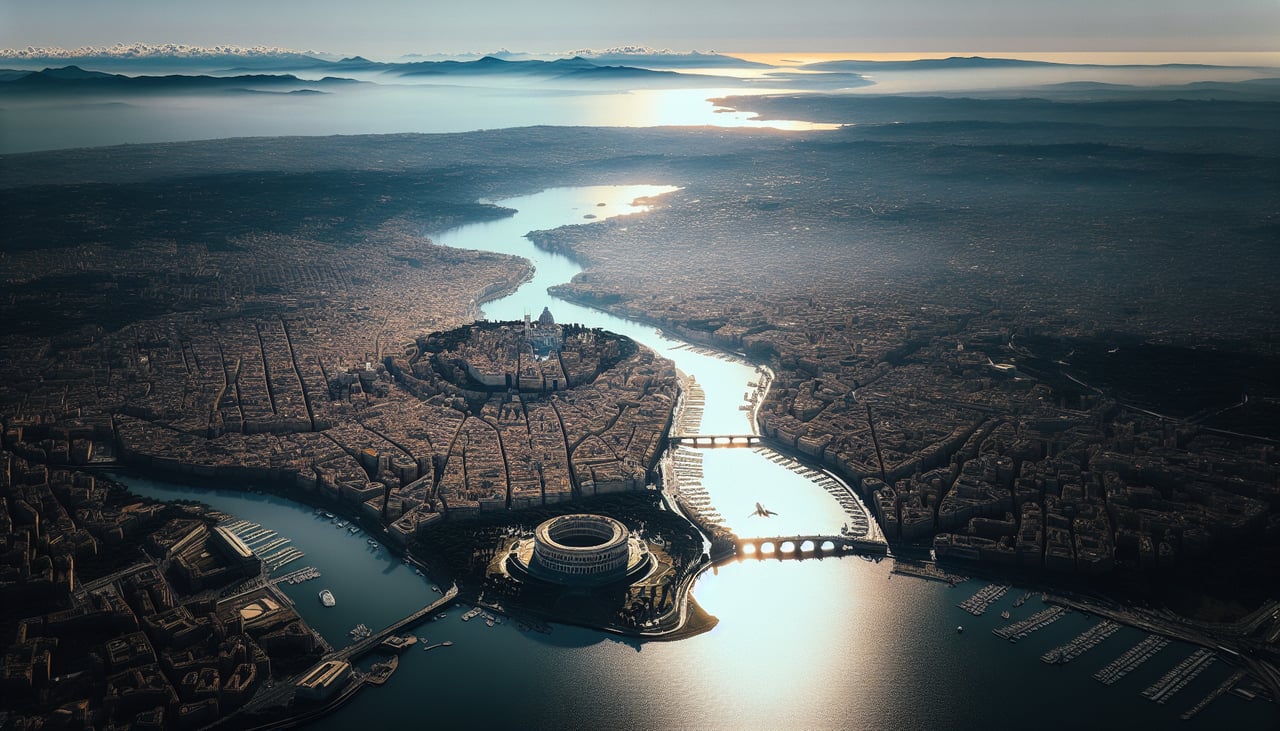
RIGHTArrivals into FCO from the northwest typically track down the Tuscan and Lazio coastline before turning onto final for the north-south runways, putting the Tyrrhenian Sea, beaches, and the Tiber's mouth on the right side. The left side instead shows flatter inland Lazio farmland with only distant, hazy views of Rome.
Landmarks on this routeAll landmarks →
Will your flight be in sunlight?
See exactly which side of the plane gets sun and shade at your departure time.
About This Route
Which side of the plane should I sit on flying from Charlotte Douglas International (CLT) to Fiumicino (FCO)?
Sit on the Right side of the plane for the best views on flights from Charlotte to Rome. Most of this flight is spent over open ocean with no landmarks on either side, so the deciding factors are the bookends: the right side's Mediterranean approach past Corsica and along the Tyrrhenian coast into Rome offers more sustained, varied scenery than the brief Charlotte skyline glimpse on the left, and the coastal landing sequence is more visually rewarding than the flatter inland Lazio views on the opposite side.
What can I see during takeoff from Charlotte Douglas International in Charlotte?
During takeoff from Charlotte Douglas International (CLT), sit on the Left side for the best views. CLT typically departs in south flow, and the standard left turn onto an ENE routing swings the aircraft's nose around Uptown Charlotte, putting the skyline and Piedmont rolling terrain on the left side briefly during climb-out. The right side only sees flat rural farmland and suburbs with no comparable feature. Notable sights include: Uptown Charlotte skyline (Bank of America Corporate Center, Duke Energy Center), Piedmont rolling farmland, suburban Charlotte neighborhoods.
What can I see when landing at Fiumicino in Rome?
When landing at Fiumicino (FCO), sit on the Right side for the best views. Arrivals into FCO from the northwest typically track down the Tuscan and Lazio coastline before turning onto final for the north-south runways, putting the Tyrrhenian Sea, beaches, and the Tiber's mouth on the right side. The left side instead shows flatter inland Lazio farmland with only distant, hazy views of Rome. Notable sights include: Tyrrhenian Sea coastline, mouth of the Tiber River, Fiumicino and Ostia beach towns, Mediterranean horizon.
How long is the flight from Charlotte to Rome?
The flight from Charlotte Douglas International (CLT) to Fiumicino (FCO) takes 9h 15m.
What does the Charlotte to Rome flight path pass over?
Open North Atlantic Ocean near the flight's most northerly point (around 49°N, roughly the latitude of Brittany or the Grand Banks), far from any coastline; later the route crosses the Bay of Biscay/southern France latitude and passes near Corsica and Elba before descending toward the Italian coast.