While the Columbus departure offers modest urban and river scenery, the Taipei landing dominates the flight experience with dramatic volcanic mountains, a major coastal city, and the Taiwan Strait approach. The right side captures the most visually distinctive and geographically varied features across the entire 14+ hour journey, particularly during the final descent where mountain and urban scenery converge.
Flight Path
The flight path crosses the North American continent (Appalachian foothills, Great Plains, Rocky Mountains visible at altitude), then the Pacific Ocean for approximately 10 hours with minimal landmarks, before approaching Asia over the East China Sea. The most notable midpoint feature is the Rocky Mountain range during the westbound climb over the continental US. The final 2-3 hours approach Taiwan from the southwest, crossing the Taiwan Strait with views of the Chinese coast and Taiwan's northern mountains.
Great circle distance and headings ›Phase by phase
Takeoff from CMH
LEFTColumbus sits in relatively flat terrain, but the left (north) side offers views of the Scioto River valley and the downtown skyline during climb-out. The right side faces open farmland with minimal visual interest.
Landing at TPE
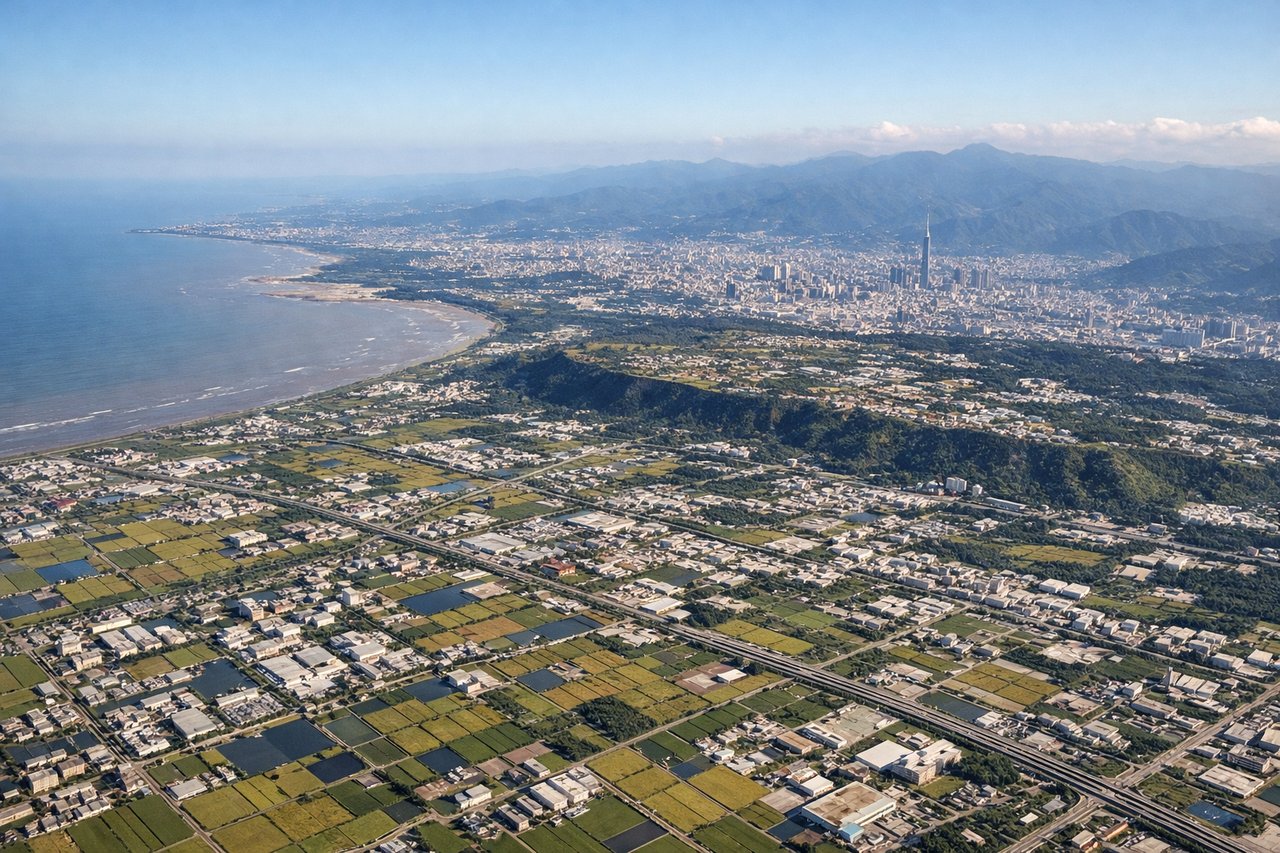
RIGHTThe approach to Taipei from the west crosses the Taiwan Strait and offers dramatic views of Taiwan's northern coast, the Taipei Basin, and the surrounding mountain ranges. The right side captures the coastal approach with Keelung Harbor and the Yangmingshan volcanic peaks. The left side would face open ocean and lack distinctive features.
Will your flight be in sunlight?
See exactly which side of the plane gets sun and shade at your departure time.
About This Route
Which side of the plane should I sit on flying from Port Columbus International (CMH) to Chiang Kai Shek International (TPE)?
Sit on the Right side of the plane for the best views on flights from Columbus to Taipei. While the Columbus departure offers modest urban and river scenery, the Taipei landing dominates the flight experience with dramatic volcanic mountains, a major coastal city, and the Taiwan Strait approach. The right side captures the most visually distinctive and geographically varied features across the entire 14+ hour journey, particularly during the final descent where mountain and urban scenery converge.
What can I see during takeoff from Port Columbus International in Columbus?
During takeoff from Port Columbus International (CMH), sit on the Left side for the best views. Columbus sits in relatively flat terrain, but the left (north) side offers views of the Scioto River valley and the downtown skyline during climb-out. The right side faces open farmland with minimal visual interest. Notable sights include: Scioto River, downtown Columbus skyline, Ohio State University campus area, suburban sprawl transitioning to farmland.
What can I see when landing at Chiang Kai Shek International in Taipei?
When landing at Chiang Kai Shek International (TPE), sit on the Right side for the best views. The approach to Taipei from the west crosses the Taiwan Strait and offers dramatic views of Taiwan's northern coast, the Taipei Basin, and the surrounding mountain ranges. The right side captures the coastal approach with Keelung Harbor and the Yangmingshan volcanic peaks. The left side would face open ocean and lack distinctive features. Notable sights include: Taiwan Strait coastline, Keelung Harbor, Yangmingshan volcanic mountains, Taipei Basin with city sprawl, Tamsui River estuary.
How long is the flight from Columbus to Taipei?
The flight from Port Columbus International (CMH) to Chiang Kai Shek International (TPE) takes 14h 25m.
What does the Columbus to Taipei flight path pass over?
The flight path crosses the North American continent (Appalachian foothills, Great Plains, Rocky Mountains visible at altitude), then the Pacific Ocean for approximately 10 hours with minimal landmarks, before approaching Asia over the East China Sea. The most notable midpoint feature is the Rocky Mountain range during the westbound climb over the continental US. The final 2-3 hours approach Taiwan from the southwest, crossing the Taiwan Strait with views of the Chinese coast and Taiwan's northern mountains.