Right-side seats win overall because the takeoff view of the Great Barrier Reef and Coral Sea is geographically more distinctive and visually dramatic than the landing approach. While the landing offers good suburban and mountain views, the reef patterns visible during Cairns departure are unique and unrepeatable on most commercial routes.
Flown CNS to BWU? Did we get it right?
Flight Path
Cairns to Sydney is 1,222 miles (1,966 km), a flight of about 3 hours 15 minutes.
The flight path crosses inland Queensland, passing west of the Great Dividing Range. Notable features include the Mackay region (sugar cane plains), the Isaac River valley, and the transition from tropical to subtropical landscape. Around the midpoint near Rockhampton, the landscape shifts from coastal ranges to inland plains. The southern half of the route crosses the Brigalow Belt region and approaches the Sydney Basin, with the Blue Mountains becoming visible 60-80 miles before landing.
Great circle distance and headings ›Phase by phase
Takeoff from CNS
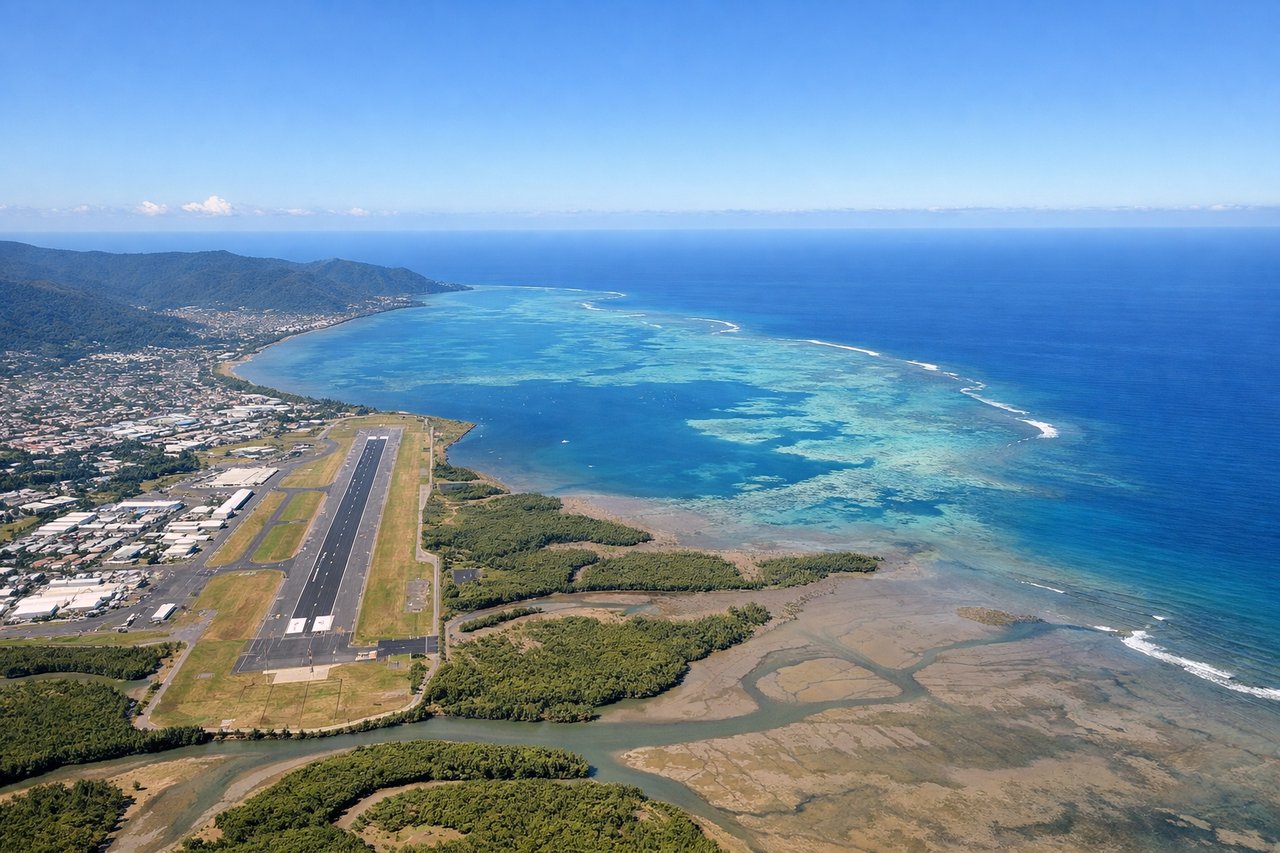
RIGHTRight-side seats capture the Coral Sea and the Great Barrier Reef's outer structures during northeasterly climb-out. Cairns typically departs northeast (runways 15/33), so right seats face seaward immediately after rotation, offering the clearest view of reef patterns and coastal geography.
Landing at BWU
LEFTLeft-side seats provide the best approach view into Bankstown. Aircraft typically approach from the west or northwest (runways 11/29), so left seats face the Cumberland Plain and western Sydney suburbs during descent. This reveals the urban sprawl, the Nepean River valley, and the Blue Mountains escarpment in the distance.
Will your flight be in sunlight?
Pick a date and time in the Sun Map to watch the sun move across your whole flight.
About This Route
Which side of the plane should I sit on flying from Cairns International (CNS) to Sydney Bankstown (BWU)?
Sit on the Right side of the plane for the best views on flights from Cairns to Sydney. Right-side seats win overall because the takeoff view of the Great Barrier Reef and Coral Sea is geographically more distinctive and visually dramatic than the landing approach. While the landing offers good suburban and mountain views, the reef patterns visible during Cairns departure are unique and unrepeatable on most commercial routes.
What can I see during takeoff from Cairns International in Cairns?
During takeoff from Cairns International (CNS), sit on the Right side for the best views. Right-side seats capture the Coral Sea and the Great Barrier Reef's outer structures during northeasterly climb-out. Cairns typically departs northeast (runways 15/33), so right seats face seaward immediately after rotation, offering the clearest view of reef patterns and coastal geography. Notable sights include: Coral Sea (immediate offshore waters), Great Barrier Reef outer ribbon reefs, Trinity Bay, Cairns city and port facilities receding behind.
What can I see when landing at Sydney Bankstown in Sydney?
When landing at Sydney Bankstown (BWU), sit on the Left side for the best views. Left-side seats provide the best approach view into Bankstown. Aircraft typically approach from the west or northwest (runways 11/29), so left seats face the Cumberland Plain and western Sydney suburbs during descent. This reveals the urban sprawl, the Nepean River valley, and the Blue Mountains escarpment in the distance. Notable sights include: Blue Mountains escarpment (distant southwestern horizon), Nepean River valley, Cumberland Plain suburbs (Penrith, Parramatta districts), Bankstown airfield and surrounding industrial areas.
How long is the flight from Cairns to Sydney?
The flight from Cairns International (CNS) to Sydney Bankstown (BWU) takes about 3 hours 15 minutes. The shortest flight path between them is 1,222 miles (1,966 km); winds and air traffic control usually add a few percent.
What does the Cairns to Sydney flight path pass over?
The flight path crosses inland Queensland, passing west of the Great Dividing Range. Notable features include the Mackay region (sugar cane plains), the Isaac River valley, and the transition from tropical to subtropical landscape. Around the midpoint near Rockhampton, the landscape shifts from coastal ranges to inland plains. The southern half of the route crosses the Brigalow Belt region and approaches the Sydney Basin, with the Blue Mountains becoming visible 60-80 miles before landing.